


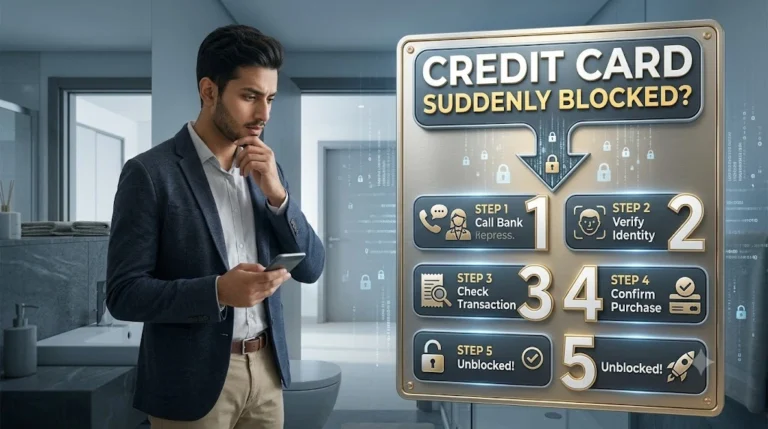
Few things are more stressful than a card that stops working at the worst moment. You’re at the shop counter, at the ATM, or on the checkout page, and the payment just fails. If you’re trying to book a flight or beat a deadline, the panic gets real very fast.
The good news is that most blocked cards can be sorted out if you follow the right steps. Let’s start with why this happens.
Why Do Banks Block Credit Cards?
In most cases, a bank blocks a card to protect you and itself from financial loss. Common reasons include:
- The card was lost or stolen
- There were unauthorised transactions
- Payments were missed or went into default
- A serious recovery case is pending
Other triggers include wrong PIN attempts. Sometimes the cause is much simpler: people accidentally switch off their card in the mobile banking app. So before you worry, it’s smart to find out what actually happened.
5 Steps to Unblock Your Credit Card
1. Check Your Bank Messages and Alerts
Start with your SMS, email, and app notifications. Most banks clearly state why the card was blocked, so the answer may already be sitting in your inbox.
2. Log In to Mobile or Internet Banking
Many banks let you unblock your card yourself. Open the app or net banking portal and look under the “Cards” section. If your bank offers this, you can fix the problem in minutes. It also helps you see why the card was blocked, so you can avoid it next time.
3. Pay Any Pending Dues Right Away
If the block came from unpaid bills, going over your limit, or missing a due date, clear the outstanding amount as soon as you can. That helps unblock the card and also stops more interest from piling up. Banks often restore normal service within a few hours after dues are cleared, though the exact time can vary by bank.
4. Call Customer Care
If the app doesn’t solve it, call the bank’s customer support and complete the verification. When the block comes from suspicious activity, the bank may ask you to confirm your recent purchases before turning the card back on.
5. Ask for a Replacement Card If Needed
Sometimes a card is blocked for good because of fraud, damage, or expiry. In that case, request a new card right away. Do the same if your card is lost, but file an official complaint first. That step keeps your credit record safe.
How to Avoid Future Blocks
Also Read: Best Stocks to Buy This Month
A few simple habits go a long way:
- Pay your bills on time
- Keep your phone number and email updated with the bank
- Turn on transaction alerts
- Never share card details carelessly
Using your card responsibly keeps payments running smoothly and helps build a healthy credit score.
Keep a Backup Plan
A blocked card is far less scary if you have another way to pay. Many people carry a second card for exactly this reason, and it’s worth thinking about whether it suits you. We’ve covered the upsides and downsides in our guide on whether you should have two credit cards.
It also helps to understand how your limit works. If you’ve ever wondered about the number the bank gave you, take a look at why your credit card limit can be higher than your salary. Knowing your limit makes it easier to avoid going over it, which is one of the common reasons for a block.
Think About the Bigger Money Picture
Good card habits are part of a wider money plan. Once your payments are in order, you might want to start putting some savings to work. If you’re curious about investing, you can read our list of the best stocks to buy this month for beginners and long-term investors.
Final Thoughts
A blocked credit card feels like a crisis, but it’s usually a problem you can fix. Check your alerts, try the app, clear your dues, call the bank, and get a replacement if you need one. Do these things calmly, and most issues get solved quickly.