


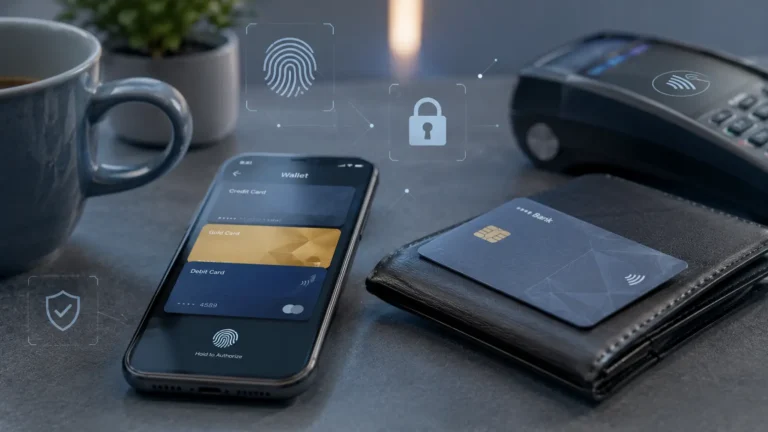
Almost everyone with a smartphone has been asked at some point — do you want to add your bank cards to Apple Pay, Google Pay, or your bank’s app? And most people either say yes without thinking much about it, or say no without really knowing why. The truth is there are legitimate reasons on both sides of this decision. Here’s a complete, honest breakdown of both.
10 Reasons You Might Want to Think Twice
1. Phone theft becomes a financial emergency
If someone steals your phone and gets past your lock screen — which isn’t impossible — they potentially have access to your money. A stolen physical card is bad. A stolen phone with cards linked to it can be considerably worse.
2. Hacking and malware risks
Phones can be infected with malware through dodgy apps, suspicious links, and phishing attacks. If your phone is compromised, card details stored on it become vulnerable in ways they wouldn’t be if they were only in your wallet.
3. Technical glitches can leave you stranded
If your phone dies, freezes, or runs out of battery right at the checkout counter, you have no way to pay — unless you also have a physical card on you. Dependence on technology creates a single point of failure.
4. Not all merchants accept mobile payments
Smaller shops, local vendors, and certain services still don’t accept contactless mobile payments. If your phone is your only payment method, you’re stuck.
Also Read: Best Stocks to Buy This Month
5. Privacy concerns
Every transaction made through a digital payment system is logged, analysed, and often used to build a profile of your spending behaviour. Physical cash leaves no trail. Linked cards leave a very detailed one.
6. App vulnerabilities
Payment apps get updated, and sometimes updates introduce new security bugs before they’re caught and fixed. Being an early adopter of a payment platform can mean being an early victim of its vulnerabilities.
7. False sense of security
People often assume that because their phone requires a fingerprint or PIN, their linked cards are completely safe. But biometric systems can be bypassed, PINs can be observed, and overconfidence about security is itself a risk.
8. Children or others using your phone
If your children, family members, or friends use your phone regularly, a linked card can lead to unintended purchases — whether accidental or intentional.
9. Data breaches at payment platforms
Large payment platforms are attractive targets for hackers. Even if your individual phone security is good, a breach at the platform level can expose the card details of millions of users at once.
10. Over-reliance on a single device
Linking everything to one phone means losing that phone — even temporarily — disrupts your entire financial life. Spreading risk across physical cards and cash provides a buffer that one-device dependency doesn’t.
10 Reasons Linking Your Cards Is Genuinely Convenient
1. Speed at the checkout counter
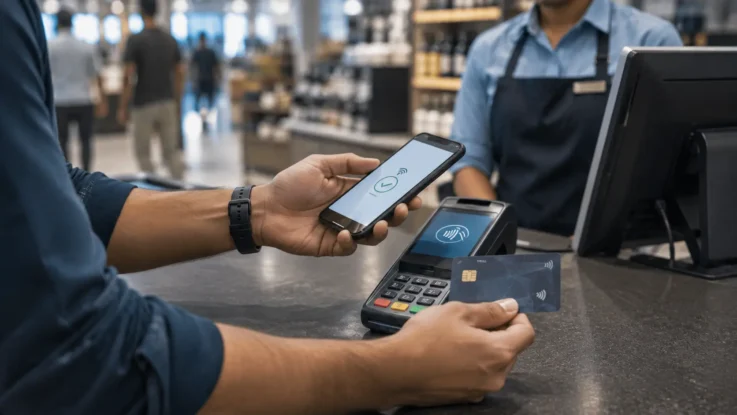
Tapping your phone to pay takes about two seconds. Pulling out your wallet, finding the right card, inserting it, entering a PIN, and putting it back takes considerably longer. For busy daily life, that difference adds up.
2. You’re less likely to forget your wallet
Most people carry their phone everywhere and always. The same isn’t always true of their wallet. Having your cards on your phone means you’re rarely caught completely without a payment option.
3. Multiple cards in one place
Your phone can store cards from multiple banks, credit cards, loyalty programmes, and store cards simultaneously. No bulging wallet, no hunting for the right card — everything is accessible from one device.
4. Real-time transaction notifications
Most mobile payment setups send you an instant notification the moment a transaction occurs. If something suspicious happens, you know about it immediately — often faster than you would with a physical card.
5. Easy card freezing and management
Lost your physical card? Through a banking app, you can freeze it instantly from your phone. This kind of immediate control over your cards is one of the most practically useful aspects of mobile-linked banking.
6. Better encryption than physical cards
Modern mobile payment systems use tokenisation — instead of transmitting your actual card number, they generate a one-time encrypted token for each transaction. This is actually more secure than swiping a physical card, where your real number gets transmitted directly.
7. No card skimming risk
ATM and point-of-sale skimming devices steal physical card information by reading the magnetic stripe. Mobile payments don’t use magnetic stripes, which eliminates this particular type of theft entirely.
8. Travel convenience
Travelling to multiple countries with multiple currencies is far easier when you’re not carrying multiple physical cards. Many global payment apps and linked cards handle currency conversion automatically.
9. Easier expense tracking
Every transaction through a linked card appears automatically in your bank app, often with merchant details, categories, and spending summaries. For anyone trying to manage their budget, this automatic record-keeping is genuinely useful.
10. Remote card management if your phone is stolen
If your phone is stolen, you can remotely lock or wipe it, which immediately removes access to your linked cards. Physical cards, once stolen, require a phone call to your bank and waiting for a replacement — a slower and less satisfying process.
Related Article: Can a Student Open a Demat Account
So What Should You Actually Do?
The honest answer is that linking your cards to your phone is neither purely safe nor purely risky — it depends on how you use your phone, how careful you are about security, and how much you value convenience versus control.
If you use a strong PIN or biometric lock, keep your apps updated, don’t install software from unknown sources, and stay alert to suspicious activity — the convenience benefits are real and the risks are manageable.
If you share your phone frequently, have young children in the house, or simply prefer keeping your financial life separate from your tech life — keeping cards physical and separate makes complete sense.
The wisest approach for most people is probably a middle path — link one card for everyday convenience while keeping at least one physical card for emergencies and situations where your phone can’t help you.