


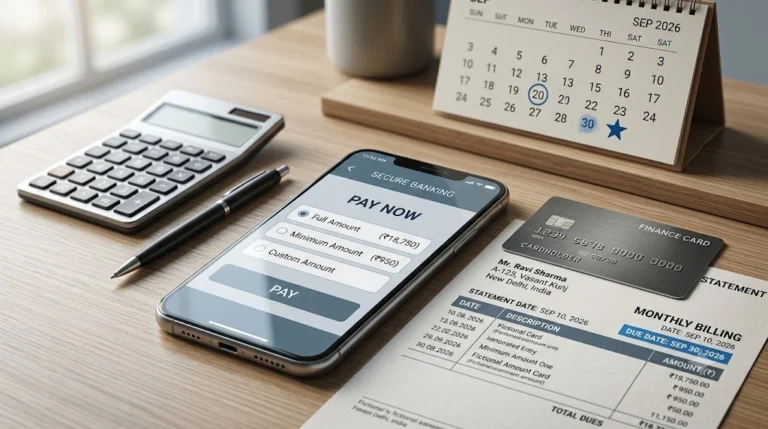
Every credit card user faces this moment at least once a month.
The statement arrives in your email or by SMS. You look at the amount. And then comes the question — should I pay this right now, or should I wait until the due date?
It sounds simple, but the answer touches on your credit score, your financial habits, and how banks actually see you as a borrower. Let’s break it all down clearly.
Immediately or Due Date — Which Is Actually Better?
Here’s the answer that will immediately settle the anxiety many people feel about this question.
It genuinely doesn’t matter — as long as you pay within the deadline.
Whether you pay your credit card bill the same day the statement arrives or on the last possible due date, your CIBIL score is not affected either way. What the credit bureaus care about is one thing — did you pay within the bank’s set timeframe? If yes, your financial record stays completely clean and your score is unaffected.
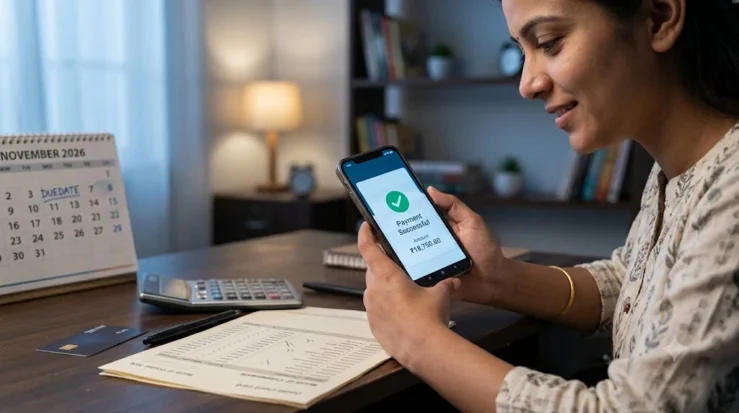
So if you have the money available and paying early gives you peace of mind, go ahead and pay immediately. If you prefer to hold onto the cash for a few more weeks and let it sit in your savings account earning a little interest before paying on the due date, that’s equally fine.
Choose whichever approach works better for your cash flow and personal financial habits. Both are correct. Neither hurts you.
The One Thing That Actually Does Hurt You
While the timing between the statement date and due date is irrelevant, one thing absolutely is not.
Also Read: Best Stocks to Buy This Month
Missing the due date.
Even a single late payment — even by one day — is recorded as a missed payment on your credit history. This is one of the most damaging things that can happen to your CIBIL score, and the effects aren’t minor. A payment made after the bank’s deadline signals to every future lender — home loan companies, car loan banks, new card issuers — that you are not a reliable borrower.
Once your CIBIL score takes this kind of hit, recovering it takes time and consistent good behaviour over months. And during that recovery period, getting approved for a home loan or car loan becomes significantly harder, and the interest rates offered to you tend to be higher.
The simplest protection against this is also the most obvious — set a calendar reminder or an automatic payment instruction well before the due date, and treat that date as completely non-negotiable.
The Minimum Due Trap — Why It’s Worse Than It Looks
Every credit card statement shows you two numbers — the total amount due and the minimum amount due.
The minimum due is always smaller, sometimes dramatically so. And the psychological pull toward paying only that amount is understandable — it feels like you’ve met your obligation, avoided a penalty, and kept some cash in your pocket.
The problem is what happens to the rest of the money.
Whatever you don’t pay in full gets carried forward to the next month, and banks charge interest on this outstanding balance. Credit card interest rates in India typically range from 36% to 48% per annum — among the highest interest rates you’ll encounter on any financial product. That number compounds quickly.
Paying only the minimum due month after month means you’re essentially taking a very expensive loan from your credit card company, one that grows steadily if you’re not paying it down aggressively. And beyond the financial cost, consistently carrying a high outstanding balance has a visible negative impact on your credit score.
The rule is straightforward — always pay the full outstanding amount. If you genuinely cannot afford to pay the full bill in a given month, treat it as a signal to reduce your credit card usage rather than a reason to keep the balance running.
Do Check: 6 Smart Ways to Use Credit Cards
The 30% Rule That Protects Your Credit Score
Paying on time is one part of maintaining a good credit score. How much of your available limit you use is the other part.
Financial experts broadly agree that keeping your credit utilisation ratio — the percentage of your total credit limit that you’re actually using — below 30% is the sweet spot for a healthy CIBIL score.
If your credit card has a limit of ₹1 lakh, try to keep your monthly spending below ₹30,000. Using more than that consistently signals to credit bureaus that you are heavily dependent on credit, which makes you appear riskier to lenders even if you’re paying on time.
This doesn’t mean you can never spend above 30% in a pinch — life happens. But making it a habit to stay within that range will keep your credit score strong and your financial profile looking healthy to any bank or lender who checks it.
Also Read: 7 Best Credit Cards for Online Shopping
Build an Emergency Fund — Your Real Financial Safety Net
Here’s something credit card conversations often miss entirely.
A credit card should never be your emergency fund. It’s a convenient payment tool, not a financial cushion for life’s unexpected expenses. Using a credit card to handle a medical emergency, a sudden job loss, or an urgent home repair might solve the immediate problem, but it creates a debt that can take months to clear and may damage your credit score in the process.
The stronger, smarter approach is to build a separate emergency fund in your bank savings account — enough to cover at least six months of your regular expenses. This fund sits there, untouched, until you genuinely need it. When a real emergency hits, you use the emergency fund rather than reaching for the credit card.
Having this cushion also means you’re never in a position where you can’t pay your credit card bill in full because something unexpected happened that month.
Related Article: 10 Risks and Benefits of Linking Your Bank Cards to Your Phone
Pay your bill anytime before the due date — the exact timing doesn’t affect your score. Never miss the due date. Always pay the full amount rather than just the minimum. Keep your credit utilisation below 30%. And build an emergency fund so your credit card stays a convenience rather than becoming a lifeline.
These five habits, practised consistently, will keep your CIBIL score healthy and your financial life considerably less stressful.