


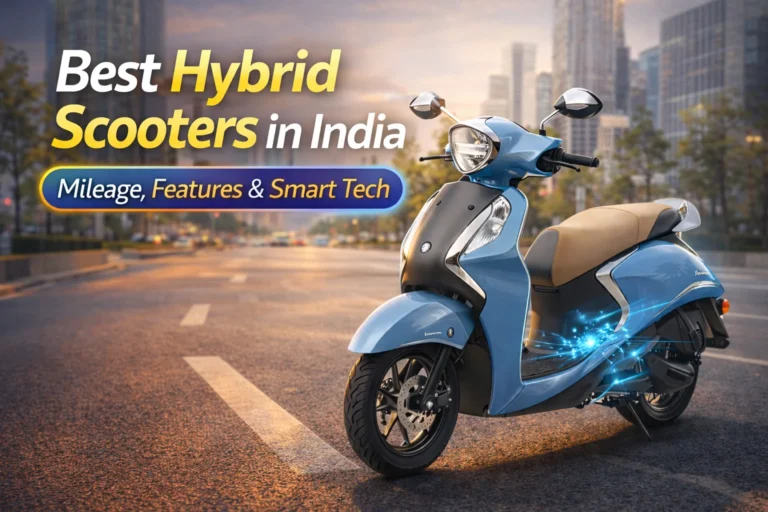
Hybrid Scooters Are Starting to Make a Lot of Sense in India. The conversation around two-wheelers in India has been dominated by electric scooters for a while now. And while EVs are genuinely gaining ground, a lot of everyday riders still have reservations — range anxiety, charging infrastructure, higher upfront costs, and uncertainty about long-term ownership.
That’s exactly where hybrid scooters step in, and in 2026, they’re starting to feel like a genuinely smart middle ground.
These aren’t fully electric scooters. They still run on petrol. But they use a mild-hybrid system — a small electric motor working alongside the engine — to make the whole experience more efficient, smoother, and more comfortable for typical Indian city riding. You get noticeably better mileage, a quieter start, and a more refined feel without any of the infrastructure worries that come with going fully electric.
How Does the Hybrid System Actually Work?
It’s worth understanding this before diving into the specific models, because “hybrid” can mean different things.
In these scooters, the technology is called a Smart Motor Generator system. The electric motor doesn’t independently power the scooter the way it would in a full EV. Instead, it steps in at specific moments — mainly during acceleration — to support the petrol engine and reduce the strain on it.
The result shows up in a few noticeable ways. Starting the scooter is virtually silent because the electric motor handles the initial crank rather than the engine. There’s also a stop-start system that automatically shuts the engine off when you’re sitting at a red light and restarts it the moment you roll the throttle. In Mumbai or Delhi or Bengaluru traffic, where you’re stopping and starting constantly, that adds up to real fuel savings over time.
It’s not a dramatic technological leap, but it’s a practical one — and practical matters when you’re commuting every day.
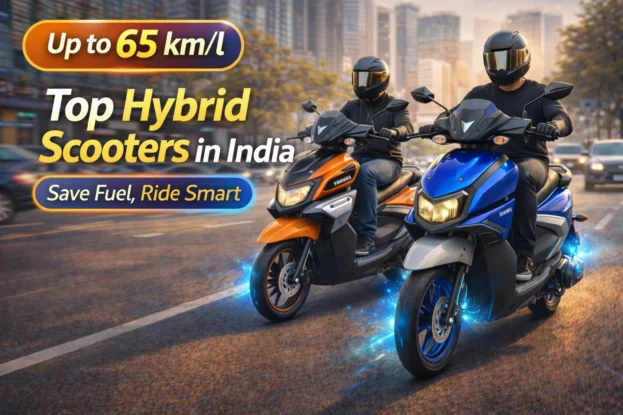
The Best Hybrid Scooters You Can Buy Right Now
The hybrid scooter segment in India is currently led almost entirely by Yamaha. Here’s a quick overview before we go deeper:
| Model | Price (Ex-Showroom) | Engine | Mileage |
|---|---|---|---|
| Yamaha Fascino 125 Fi Hybrid | ₹76,500 – ₹95,000 | 125cc | ~65 km/l |
| Yamaha RayZR 125 Fi Hybrid | ₹86,900 onwards | 125cc | ~60 km/l |
| Yamaha RayZR 125 Street Rally | ₹90,000+ | 125cc | ~60 km/l |
Yamaha Fascino 125 Fi Hybrid — The One Most People Should Consider
If you want a hybrid scooter in India right now and you’re not sure where to start, the Fascino is probably the most well-rounded option on the market.
It runs a 124cc fuel-injected engine paired with the Smart Motor Generator, and real-world mileage comes in around 65 km/l — which is genuinely impressive for a scooter with this level of performance and features. The ride is smooth, the acceleration feels responsive, and the silent start still impresses people who experience it for the first time.
The feature list is solid across variants — full LED lighting, a digital display, Bluetooth connectivity through Yamaha’s Y-Connect app, front disc brake with unified braking, and lightweight handling that makes it easy to manoeuvre in tight traffic. Higher variants get a TFT display, which looks great and adds some modern convenience.
It’s styled to appeal to a broad range of riders rather than leaning too sporty or too conservative. That balance, combined with the efficiency numbers, is why it consistently comes out on top in this segment.
Yamaha RayZR 125 Fi Hybrid — For Riders Who Want Something Sportier
The RayZR uses the same core hybrid setup as the Fascino but wraps it in a noticeably more aggressive package. If the Fascino is the sensible daily commuter, the RayZR is its slightly more energetic sibling.
The body styling is sharper, the graphics lean sporty, and the overall riding feel has a bit more edge to it. Mileage comes in around 58 to 60 km/l — slightly lower than the Fascino but still very good by any reasonable standard.
It’s particularly well-suited for younger riders or anyone who wants their scooter to look like it has a bit of attitude while still being efficient and practical. The Bluetooth connectivity is there, the hybrid assist makes city acceleration genuinely fun, and the lightweight body keeps handling easy.
Yamaha RayZR 125 Street Rally — Same Heart, Tougher Look
The Street Rally is essentially the RayZR taken in a slightly more rugged direction. You get hand guards, block-pattern tyres, and styling elements that give it a more adventurous, almost rally-inspired appearance.
The hybrid technology underneath is identical to the standard RayZR. So if you like the idea of a scooter that looks like it could handle more than just smooth city roads — even if in practice it’s still a city commuter — the Street Rally variant is worth a look.
What the Mileage Numbers Actually Mean for You
The headline figure of 65 km/l on the Fascino sounds impressive, and it genuinely is — but it’s worth contextualizing. These numbers reflect relatively favourable conditions. In heavy stop-and-go traffic, real-world mileage might sit a bit lower depending on your riding style and route.
That said, even the more conservative real-world figures for hybrid scooters put them comfortably ahead of most regular 125cc petrol scooters. If you’re commuting daily, even a modest improvement in fuel efficiency adds up significantly over months of riding.
The quick acceleration from the electric assist also makes these scooters feel more capable in traffic than the engine size alone would suggest.
Also Read: 2026 Maruti Suzuki Baleno Facelift: Expected Features, Safety Upgrades, and Engine Details
What’s Coming Next — Upcoming Hybrid Scooters to Watch
The segment is set to expand, and there are two models worth keeping an eye on.
Yamaha Grand Filano Hybrid 125 was shown at the Bharat Mobility Expo and generated a lot of attention. It’s positioned as a more premium, comfort-focused hybrid option — expected to be priced somewhere around ₹1.20 to ₹1.40 lakh when it eventually launches. No confirmed date yet, but it looks like a natural step up from the Fascino for buyers who want more refinement.
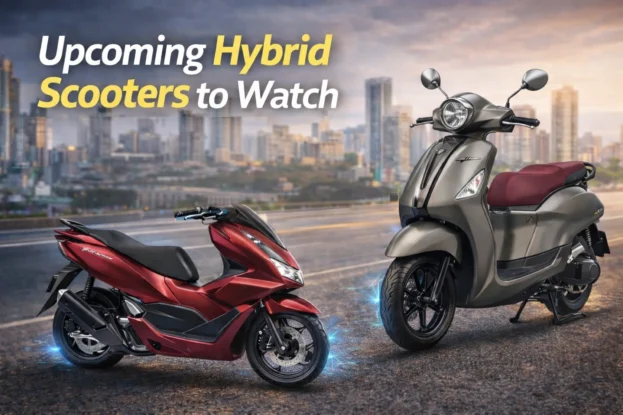
Honda PCX e:HEV is Honda’s answer to this space — a 125 to 160cc hybrid that’s already available in international markets. It’s a more performance-oriented machine with higher torque from the hybrid system, and it looks genuinely impressive on paper. Whether it makes it to India, and at what price, is still unclear. But if Honda does bring it here, it would immediately give Yamaha some real competition.
Why Hybrid Makes Practical Sense for Indian Roads
Indian city traffic is almost purpose-built to demonstrate the benefits of hybrid technology. Frequent signals, slow-moving congestion, constant acceleration from standstill — all of these are exactly the conditions where the stop-start system and electric power assist make the most difference.
The maintenance side of things is also straightforward. Unlike full EVs, hybrid scooters don’t require charging infrastructure, don’t carry range anxiety, and can be serviced through the same familiar petrol scooter service network. For riders who travel long distances, ride in areas with limited charging infrastructure, or simply aren’t ready to make the full EV switch, that reliability is a significant practical advantage.
Also Read: New Maruti SUV (Y43) Launch Under ₹7 Lakh: Price, Specs, Features and What to Expect
The Bottom Line
Hybrid scooters aren’t going to replace electric ones eventually — but right now, in 2026, they occupy a genuinely useful space in the Indian two-wheeler market.
If you want better mileage than a regular petrol scooter, a more refined riding experience, and none of the charging concerns of a full EV — a hybrid scooter is worth serious consideration. Yamaha currently owns this segment, and all three of their hybrid models are capable, well-priced, and well-suited to Indian conditions.
For most city commuters, the Fascino is the easiest recommendation. For sportier riders, the RayZR. And for those who like a bit of visual attitude, the Street Rally variant adds character without changing what makes the platform work.