


The Maruti Suzuki Baleno has had a good run. It’s been one of those cars that quietly sells in large numbers month after month, without needing to shout about it. Comfortable, efficient, easy to own — it’s the kind of hatchback that makes sense for a wide range of buyers.
But the premium hatchback segment in India has gotten sharper. The Hyundai i20 and Tata Altroz have pushed the bar higher on features and safety, and Maruti knows it. The 2026 Baleno facelift looks like a direct response to that pressure — an update focused on the areas where the current model has been showing its age. Here’s what we’re expecting when it arrives.
The Outside Gets a Fresher Look
Nothing dramatic is expected on the exterior, but the changes should be noticeable enough to distinguish the facelifted car from the current model.
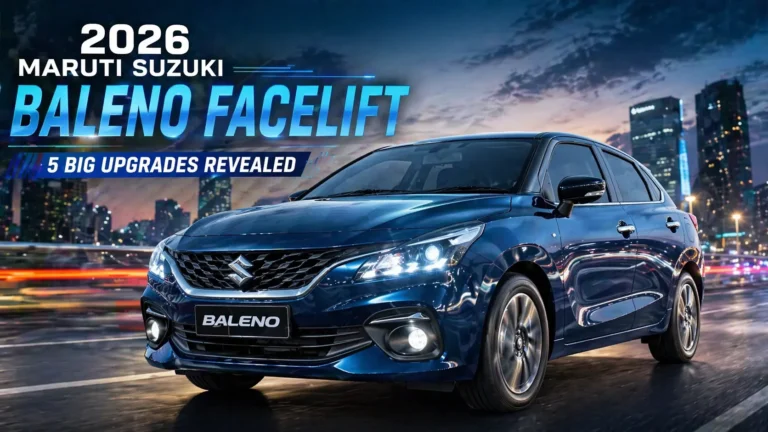
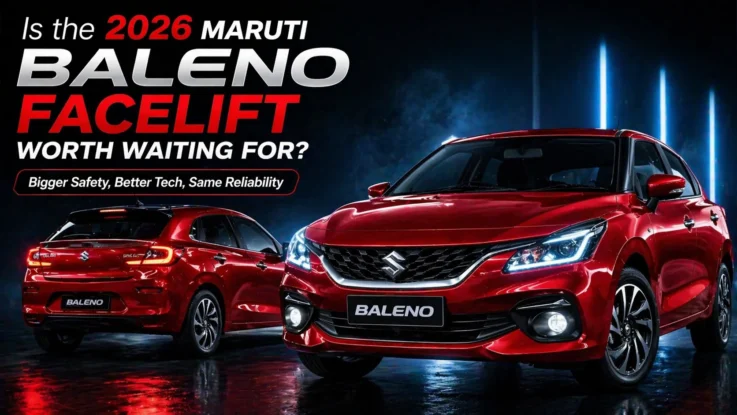
The front end is likely to get the most attention — a redesigned grille, sharper LED headlamps, and a more sculpted bumper that gives the car a slightly sportier feel without straying too far from the Baleno’s established look. At the back, expect updated LED tail lamps and a tweaked bumper to round things off.
The overall silhouette will stay familiar, which is probably the right call. The Baleno already has a clean, proportionate shape that works well. The facelift is about freshening it up rather than reinventing it.
Inside — More Premium, Better Finished
The cabin is where most buyers spend their time, and this is where Maruti seems to be putting in genuine effort.
The dashboard layout isn’t expected to change dramatically, but the materials and finish quality should see a noticeable step up. New upholstery options, better quality trims, and ambient lighting are all on the cards — the kind of touches that make you feel like you’re sitting in a more expensive car than you actually paid for.
New interior colour themes are also likely, giving buyers more reason to visit the showroom and spend time picking their configuration. For urban buyers who spend long hours commuting, a more refined cabin environment makes a real difference to daily satisfaction.
Bigger Screen, Better Connectivity
Technology is clearly going to be a headline area for this facelift. The infotainment system is expected to get a larger touchscreen — possibly bigger than the current unit — with wireless Android Auto and Apple CarPlay as standard.
Connected car features should also get an upgrade, with real-time vehicle tracking, remote functions, and voice command capability becoming more capable and more intuitive. These features have become table stakes in this segment, and the updated Baleno needs to hold its own against rivals that already offer them well.
Safety — Finally Getting the Attention It Deserves
This is arguably the most important part of the update, and the area where the current Baleno has faced the most criticism.
The 2026 facelift is expected to bring six airbags as standard across variants — not just in top trims. That’s a significant shift and one that reflects how much buyer expectations around safety have changed in India over the last few years.
Beyond airbags, expect a 360-degree camera, electronic stability control, hill hold assist, and improved braking systems to be part of the package. These aren’t just feature list additions — they’re features that genuinely make a difference in real-world driving, especially in crowded urban conditions and on unfamiliar roads.
If Maruti gets this right, it addresses one of the main reasons buyers have been looking at the Altroz or i20 over the Baleno in recent times.
Engine — Same Trusted Unit, Possibly Smoother
No major powertrain overhaul is expected here. The 1.2-litre petrol engine that currently does duty in the Baleno is likely to carry over, possibly with some light tuning to improve refinement or drivability rather than outright performance.
That engine has a solid reputation — good fuel efficiency, low running costs, and enough performance for everyday use. Most Baleno buyers aren’t looking for a performance car, and Maruti knows its audience well enough not to fix what isn’t broken.
Both manual and automatic gearbox options will likely continue, which covers the full range of buyer preferences in this segment.
Quick Feature Overview
| Category | What’s Expected |
|---|---|
| Exterior | New grille, sharper LED headlamps, updated bumpers |
| Interior | Premium upholstery, ambient lighting, new colour themes |
| Infotainment | Larger touchscreen, wireless Android Auto & Apple CarPlay |
| Safety | 6 airbags standard, 360-degree camera, ESC, hill hold |
| Engine | 1.2L petrol, refined tuning |
| Transmission | Manual and automatic |
Price and Launch Timing
An exact price hasn’t been confirmed yet, but a modest increase over the current model is expected given the added features and safety upgrades. Maruti will almost certainly keep it competitive — pricing is one of the brand’s sharpest tools, and they know how to use it.
The launch timing is widely anticipated to land sometime in 2026, with the festive season being the most likely window. October and November are when car demand in India peaks, and that timing would give the updated Baleno maximum visibility right when buyers are actively in the market.
Also Read: Hyundai Ioniq 3 Electric Hatchback Revealed: Range, Specs, Features and Key Highlights
How It Lines Up Against the Competition
The i20 and Altroz are strong cars, and they’ve both pushed Maruti to take this facelift seriously. The i20 in particular offers a polished package with strong safety scores and a premium feel inside. The Altroz has built a reputation for solidity and value.
The 2026 Baleno facelift isn’t trying to completely outclass either of them — it’s trying to close the gap in the areas where it’s been trailing, particularly safety and technology, while holding onto its advantages in service network, resale value, and overall ownership cost. That’s a realistic and sensible approach.
Should You Wait for It?
If you’re in the market for a premium hatchback right now and the Baleno is on your list, it’s worth waiting to see what the facelift delivers — especially on the safety front. Six standard airbags and a proper suite of driver assistance features would make it a considerably more complete package than what’s currently on sale.
If you need a car immediately and can’t wait, the current Baleno is still a solid buy. But for anyone with the flexibility to hold off a few months, the updated version looks like it could be the better version of an already good car. More details on variant-wise pricing and features will surface as the launch gets closer. Keep it on your radar.