


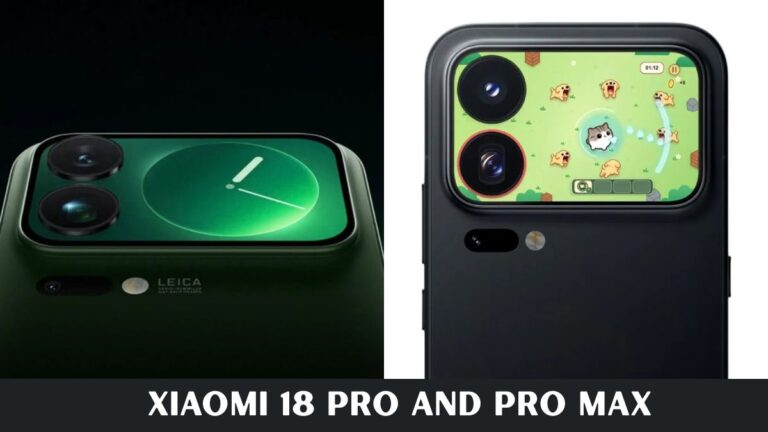
Xiaomi is gearing up for one of its biggest flagship launches of the year, with the Xiaomi 18 Pro and Xiaomi 18 Pro Max set to debut in China on September 23. Ahead of the event, Xiaomi has already revealed a fair bit about what’s coming, and between massive batteries, Leica-branded cameras, and a genuinely interesting new display feature, there’s plenty to unpack even before the official launch.
The Battery Upgrade Everyone’s Talking About
Let’s start with the headline number. The Xiaomi 18 Pro will pack a 7,000mAh battery, while the Xiaomi 18 Pro Max steps things up considerably with an 8,500mAh cell. That’s 1,500mAh more than the standard Pro model, roughly 21 percent more capacity on paper, and it’s also 1,000mAh larger than what the Xiaomi 17 Pro Max offered last year.
Xiaomi says the new battery cells use 32 percent silicon, and silicon anodes generally allow more charge to be stored compared to traditional graphite-based materials, without needing a proportionally bigger phone to fit it all in. The catch is that silicon expands during charging, which means Xiaomi has had to be careful with cell design, durability, and thermal management to make this work reliably.
Worth remembering too, a bigger battery on paper doesn’t automatically mean 21 percent longer real-world battery life, since screen brightness, network use, gaming and software efficiency all play a role in actual day-to-day endurance. If big battery numbers are what draws you in, this isn’t the only recent launch worth a look either. Lava’s Virat Curve 5G also leans heavily into battery life, packing a 6,000mAh cell at a considerably more affordable price point.
A Privacy Display Built Right Into the Screen
One of the more genuinely novel features here is Xiaomi’s new privacy display, built directly into the phone’s screen rather than relying on an external screen protector. When privacy mode is switched on, the person looking straight at the phone sees everything normally, while anyone viewing from the side sees a much darker, harder-to-read display.
According to reports, brightness visible from the side can drop to around just 1 percent once you’re past a 60-degree viewing angle, making it genuinely difficult for people nearby to glance at sensitive information on your screen.
This runs on what Xiaomi is calling Super Pixel 2.0 display technology, using new M11 light-emitting material capable of hitting up to 4,000 nits of peak brightness, while also claiming to be more power efficient than conventional high-resolution panels.
Cameras and the Secondary Rear Display
Both phones are expected to feature Leica-branded triple rear camera systems, including a 200-megapixel primary sensor and a 200-megapixel periscope telephoto camera, alongside a 50-megapixel ultra-wide lens.
Xiaomi clearly wants camera performance to remain a central selling point for the Pro line, especially against strong competition from Apple, Samsung, Vivo, and Oppo in China’s crowded premium segment.
The series will also carry forward Xiaomi’s secondary rear display, first introduced with the Xiaomi 17 series, now reportedly larger and sitting flush with the camera module. With HyperOS 4, users will be able to generate custom AI-designed cards for that secondary screen simply by describing what they want, adding a genuinely fun personalization layer, and assuming the software execution holds up in daily use.
Also Read: Google launches Googlebook laptops at $899
Processor and Pricing
Xiaomi has confirmed the phones run on a 2 nm platform but hasn’t officially named the chipset yet, though reports point toward Qualcomm’s Snapdragon 8 Elite Gen 6 Pro.
The timing lines up interestingly too, with Qualcomm’s own Snapdragon Summit running September 22 to 24 in Hawaii, raising real speculation about whether Xiaomi could be among the first brands using a brand new top-tier Snapdragon chip.
Pricing hasn’t been officially announced either, though early reports suggest the Pro Max could land around CNY 5,999 in China, similar to last year’s Pro Max starting price. As for India, there’s no confirmed launch timeline yet, though some reports point toward a possible December arrival.
The September 23 event should finally clear up the remaining details, chipset confirmation, full camera specs, and region-specific pricing, so it’s worth keeping an eye out once the dust settles.