


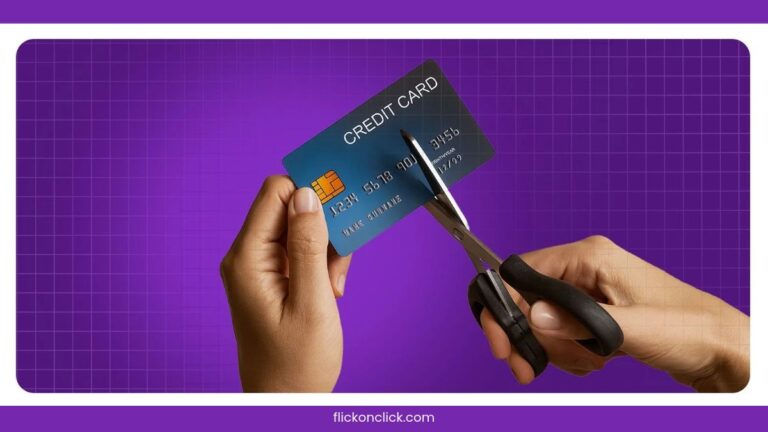
Unused Credit Card: A card you never use can feel useless. It sits in a drawer, you forget the PIN, and one day you wonder if you should just close it. The idea sounds neat, but credit scores do not care how tidy your wallet looks. They look at limits, history, and patterns. So closing a card can move your score even if your spending stays the same.
Your utilisation ratio is the first thing to change
Credit utilisation simply means the share of your total credit limit that you use. When you close a card, your total limit falls. If you keep spending the same amount, the percentage goes up, and your profile starts to look more stretched.
Here is a simple example. Say you have two cards with a limit of Rs 2 lakh each and you spend about Rs 60,000 a month.
| Situation | Total limit | Monthly spend | Utilisation |
|---|---|---|---|
| Both cards open | Rs 4 lakh | Rs 60,000 | 15 percent |
| One card closed | Rs 2 lakh | Rs 60,000 | 30 percent |
Nothing changed in your life, but the ratio doubled. This is why many people see a small dip in their score after closing a card, mainly if they already use a good part of their limit each month.
Closing an old card can shorten your credit age
Length of credit history also matters. Older accounts show lenders that you have handled credit well for a long time. If the card you want to close is your oldest one, the average age of your accounts can drop.
This matters even more if you have only one or two credit products. With a thin credit file, every change has a louder effect than it would for someone with many long-running accounts.
It also removes a safety cushion
Even if you never plan to use that card again, its limit still helps you. It keeps your total available credit high and your utilisation low. It also gives lenders a sense of comfort when they check your report, especially when you apply for a home loan or a car loan. So the card you think of as doing nothing may be quietly supporting your profile.
When closing the unused credit card makes sense
You should not keep a card just to chase a perfect score. There are good reasons to close one.
If the card has an annual fee and the benefits do not cover it, closing it is wise. Paying a fee every year for something you do not use is simply wasted money. If you have a habit of overspending, fewer cards can work as a safety net. A slightly lower score costs less than carrying debt at high interest.
And if you never check the card at all, it can become a risk. Fraud on a forgotten card gets noticed late, which makes it more expensive to fix. If a card ever gets blocked suddenly, our guide on how to unblock a credit card in 5 simple steps can help.
How to close a card with less damage
If you do decide to close one, a few small choices can reduce the impact. Avoid closing your oldest card that has no fee. Closing a newer one usually causes less trouble for your credit history.
Do not close a card right before a big loan application. If a home loan is on your mind, it is better to keep your profile steady for a few months. Also check your usual monthly spending and the limits on your other cards before you act. If closing the card would push you into high utilisation, spend less for a couple of cycles or wait until your other limits go up.
The easy option for a free card
If the card is lifetime free, the simplest choice is to keep it. Lock it, or turn off online and international use in the issuer app, and store it safely. Once in a while, use it for a small purchase you would make anyway, and pay the bill in full. That keeps the account active without turning it into a spending trap.
If you plan to travel abroad, it may also help to read how to choose the best credit card for international travel before you decide which cards to keep or drop.
And since many people think about savings and safe money at the same time, you can also see the gold price today for November 28, 2026, where rates fell again after a two-day rally.
The takeaway
Closing an unused card is not always a mistake, but it is rarely neutral. The most common result is a higher utilisation ratio, and sometimes you also lose the strength of an old account. If the card is costly, stressful, or risky, close it with care. If it is free and harmless, keeping it open is often the easiest way to protect your score without changing your lifestyle.