


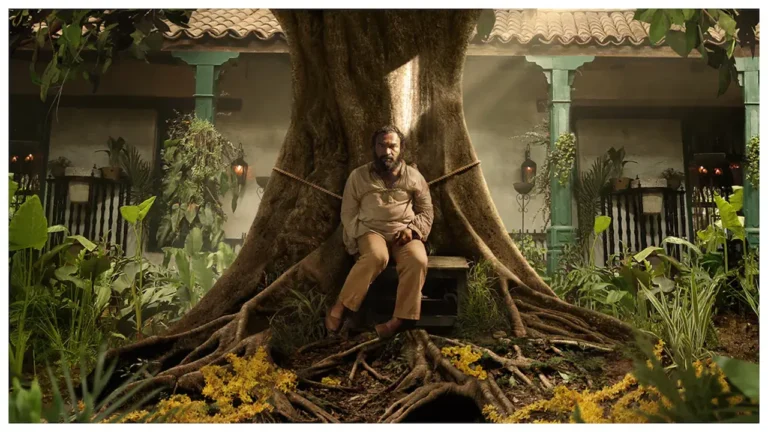
One Hundred Years of Solitude Season 2 Review: ★★★★☆ (4/5)
One Hundred Years of Solitude Season 2 handles an almost impossible adaptation with real care, delivering a sharper and more focused continuation of the Buendia family saga even as it stumbles in a few smaller moments.
Rating: ★★★★☆ (4/5)
Platform: Netflix
Genre: Drama, Historical
Based on: Gabriel Garcia Marquez’s novel
Language: Spanish
Episodes: 8
Adapting One Hundred Years of Solitude was never going to be easy. Gabriel Garcia Marquez’s novel is one of the most celebrated books in world literature, and turning something so dense and layered into a television series comes with enormous risk.
Beyond the sheer scale and budget needed to recreate the fictional town of Macondo in Spanish, as Marquez himself insisted, there is a bigger problem. Truly great literature is incredibly difficult to translate to the screen without losing something essential along the way.
It helps to think of this the same way many viewers reacted to Christopher Nolan’s recent adaptation of The Odyssey. Nolan took an ancient myth and turned it into a polished, spectacle-driven blockbuster that succeeded commercially, even as purists pushed back against the changes.
One Hundred Years of Solitude faces a similar challenge. No matter what choices the show makes, it was never going to satisfy everyone. That is exactly why Netflix’s decision to commit fully to this story, spreading it across two seasons and sixteen episodes total, deserves credit. There was a lot to lose here, but the balance leans toward success.
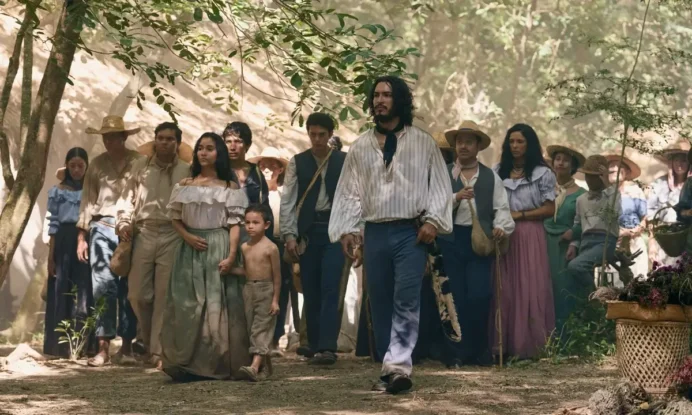
Season 2 asks viewers to settle back into the rhythm of Macondo, with its tangled family tree full of repeating names like Arcadio and Aureliano, its blend of personal and political drama, and its layered attempt to tell the story of a family, a country, and in some ways the world itself.
The season opens a little slowly, picking up with the fading power of Colonel Aureliano Buendia and the quiet unraveling of his once-dominant family. But once it finds its footing, this half of the story moves in a more focused and classical way compared to the first season.
The heart of this season belongs to three characters: the twin brothers Aureliano Segundo and Jose Arcadio Segundo, along with Fernanda del Carpio, the wife of one of the twins.
Their relationships bring the deepest family tension in the show, exploring the pull between excess, religious control, and everything caught in between.
Fernanda’s presence adds real fire to the story, especially through her difficult relationship with her strong-willed sister-in-law Remedios, one of the show’s most unpredictable characters.
Alongside these personal dramas, Season 2 spends much more time on how Macondo changes as it opens up to the outside world. The arrival of the railroad marks the beginning of this transformation, bringing with it a version of progress that promises improvement but does not consider the cost.
Soon, Macondo becomes almost unrecognizable, swept into short-lived prosperity followed by the arrival of a powerful banana company and the exploitation that comes with it. What looks like development on the surface slowly plants the seeds for real conflict and violence.
This is where the show becomes most political and, in some ways, most relevant today. The story’s ideas about greed, outside interference, and false promises of progress feel surprisingly familiar even now, decades after Marquez first wrote them.
Similar Article: The Legend of Karna Review
Combined with the family drama, the show’s spiritual elements, and its gentle touches of magical realism woven into everyday life, Season 2 makes clear just how ambitious this adaptation really is.
The season is not perfect. Certain storylines repeat themselves, some ideas get simplified, and a few characters occasionally feel thinner than they should. These issues are understandable given the scale of adapting such a massive novel, and they do not take away from the show’s overall achievement.
Director Laura Mora and her team manage to pull off something genuinely difficult, breaking down Marquez’s complex novel and putting it back together in a way that feels respectful rather than rushed.
In the end, Season 2 proves that no adaptation, no matter how well made, can fully replace the novel itself. But as a tribute to one of literature’s greatest works, this version earns its place.