


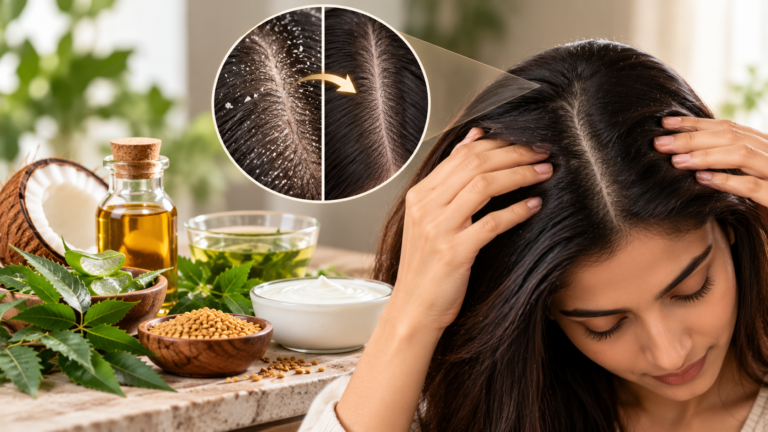
Dandruff has a way of showing up at the worst possible time. You wear a dark shirt, run your fingers through your hair, and suddenly you’re dealing with white flakes on your shoulders that feel impossible to ignore. But beyond the visible embarrassment, persistent dandruff is often a sign that something on your scalp is genuinely out of balance.
Why Dandruff Happens in the First Place
Most people treat dandruff like a cleanliness problem. It isn’t. Dandruff is primarily caused by an overgrowth of a yeast-like fungus called Malassezia, which lives naturally on everyone’s scalp. When it multiplies beyond a normal level, it irritates the scalp and speeds up the skin cell turnover process. The result is those flakes you see.
Several things can trigger this imbalance:
- Excess sebum production, which feeds Malassezia
- A weak immune response on the scalp
- Chronic stress, which disrupts hormone levels
- Poor gut health, which affects skin indirectly
- Cold, dry weather that strips natural moisture
- Harsh shampoos that damage the scalp barrier
This is why someone can wash their hair every day and still have dandruff. The issue isn’t surface dirt. It’s what’s happening underneath.
Home Remedies That Can Genuinely Help
A lot of the advice floating around online about dandruff home remedies is either vague or overhyped. But a few remedies do have real logic behind them.
Tea tree oil has antifungal properties and has shown some effectiveness in reducing Malassezia when used consistently in small amounts diluted with a carrier oil. Apple cider vinegar, when diluted and used as a rinse, temporarily adjusts the scalp’s pH, making it less hospitable to fungal overgrowth. Neem is one of the older Ayurvedic ingredients with solid antifungal and antibacterial activity, and using neem-infused oil or water as a pre-wash treatment is genuinely useful.
Aloe vera soothes inflammation and can reduce the itching that makes dandruff worse through scratching. And while it sounds too simple, massaging your scalp regularly with warm oil improves circulation, loosens flakes, and helps regulate sebum glands that have gone into overdrive.
None of these are overnight fixes. But used consistently over three to four weeks, they can meaningfully reduce flaking without disrupting your scalp the way medicated shampoos sometimes do.
The Connection Between Dandruff and Hair Loss
Here’s something most people don’t connect: chronic dandruff can contribute to hair thinning over time. When the scalp is inflamed and the follicle openings are clogged with flaky buildup, hair growth slows. Constant scratching weakens the hair shaft near the root. And the fungal inflammation itself can irritate follicles enough to push more hairs into the shedding phase prematurely.
This is why someone with long-standing dandruff sometimes notices that their hair seems thinner than it used to be. The two problems often share the same root cause, which is a scalp environment that has become imbalanced.
Rebuilding a Healthier Scalp Environment
Getting rid of flakes is only part of the solution. To actually support hair regrowth, you need to focus on restoring the scalp’s health from the inside out.
Dietary changes matter here. Foods high in zinc, B vitamins, and omega-3 fatty acids help regulate both oil production and the immune response on the scalp. Managing stress through sleep and exercise reduces the cortisol spike that makes sebaceous glands more active. Drinking enough water keeps skin hydrated from within, which reduces the dry, flaky patches that worsen dandruff.
Traya, a hair health brand that works on root cause analysis, uses a combination of Ayurvedic scalp treatments and internal health protocols specifically because dandruff and hair fall are rarely just scalp problems.
How Long Before You See Results
Scalp health doesn’t change overnight. Most people start to see a real reduction in flaking within three to four weeks of consistent care, but the scalp’s microbiome takes longer to fully stabilize. Hair regrowth, if there has been thinning, typically takes at least two to three months before visible improvement appears.
ALSO READ : Why Leave-In Treatments Are Replacing Heavy Oils in Daily Hair Care
Final Thoughts
Dandruff is manageable, but it responds better to understanding than to panic. If you treat it as a scalp ecosystem problem rather than a hygiene issue, you choose the right remedies, adjust your diet, and stay consistent. Most people find that the flakes come under control, and in many cases, the hair health they thought they had lost starts to come back too.