


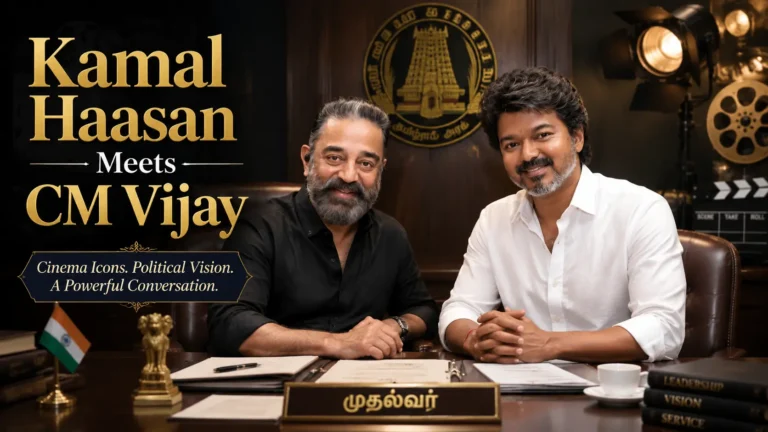
When two people of this stature sit down for a conversation, Kollywood pays attention. Kamal Haasan’s recent meeting with CM Vijay quickly became one of the more significant industry developments in recent memory — not just because of who was in the room, but because of what was on the table.
Kamal Haasan came representing real concerns from producers, distributors, and theatre owners who have been navigating a genuinely difficult period for Tamil cinema. The discussion centered on what the industry needs to move forward, and the list of issues raised was both practical and long overdue.
Tamil Film Industry Seeks Stronger Government Support
The landscape for Tamil cinema has shifted considerably in a short period of time. OTT platforms have changed how audiences consume content, production costs have kept rising, and the financial damage from piracy continues to mount. Against that backdrop, industry stakeholders have been pushing for policy-level support that acknowledges these realities.
A reduction in entertainment tax was among the central requests put forward during the meeting, along with stronger backing for small and medium-budget productions. The logic is straightforward — when filmmakers aren’t carrying the full financial risk alone, they’re more willing to take creative chances. And that’s ultimately good for everyone, including audiences.
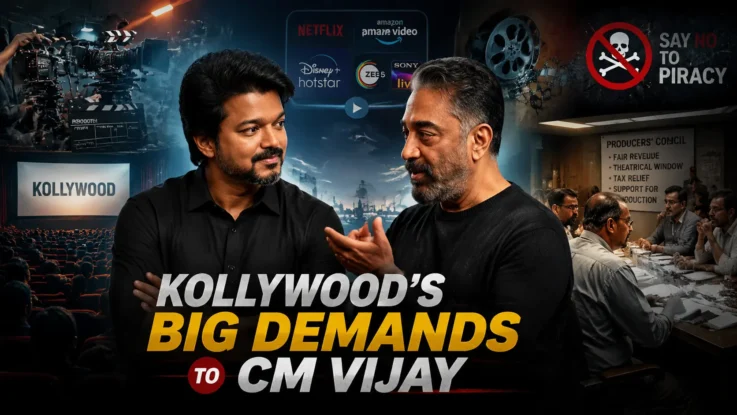
Anti-Piracy Measures Become a Major Topic
Piracy is one of those problems that the industry has been talking about for years without seeing enough action. Films leak online within hours of release, sometimes before the first show is even over, and the financial damage is immediate and significant.
Kamal Haasan reportedly pushed hard for stricter enforcement and faster legal responses against illegal content-sharing platforms. The ask is for the government to treat piracy with the urgency it deserves — real-time monitoring, swift takedowns, and meaningful consequences for those running these platforms. For regional cinema in particular, which often operates on thinner margins than big-budget Bollywood productions, a single piracy leak can be genuinely devastating.
Demand for Special Movie Screenings
The culture around big Tamil film releases — particularly fan-driven first-day celebrations and early morning shows — is something the industry takes seriously, and for good reason. Opening-day numbers matter enormously, and special screenings play a direct role in how a film performs at the box office in its crucial first weekend.
The request for permission to hold these screenings came up during the discussion. There’s also a secondary argument being made that faster legal access to films through special shows can reduce the incentive for audiences to turn to piracy.
Kamal Haasan Highlights Need for OTT Support
The conversation didn’t stay limited to theatres. Kamal Haasan also raised the question of how the state government can better support Tamil content in the digital space. With streaming platforms now a major part of how films reach audiences — both within Tamil Nadu and globally — having infrastructure and policy support for regional digital distribution matters.
Independent filmmakers and smaller production houses stand to benefit most from this. Not every film needs a wide theatrical release to find its audience, but it does need proper digital distribution channels to reach them.
Subsidies for Quality Cinema Discussed
Alongside the commercial concerns, there was also a conversation about supporting films that might not have blockbuster budgets but carry genuine artistic and cultural value. Smaller films with strong stories often get squeezed out by the marketing power and screen count that big productions command.
Government-backed subsidies for quality cinema could create some breathing room for filmmakers working in that space — encouraging more experimental work, more culturally rich storytelling, and content that helps Tamil cinema maintain and expand its global reputation beyond just its commercial output.
Why This Meeting Matters for Kollywood
The significance of Kamal Haasan and Vijay being in the same room discussing these issues isn’t lost on anyone. Between them, they carry enormous influence — in cinema, in public life, and in how Tamil culture is perceived nationally and internationally. A conversation at this level sends a signal that the industry’s challenges are being taken seriously at the highest levels.
Tamil cinema has grown into one of India’s most powerful film industries, with audiences spread across the world. But growth doesn’t make the structural problems go away, and this meeting was an acknowledgment that those problems need real solutions rather than continued delay.
Fans React to Kamal Haasan and Vijay’s Interaction
Social media lit up predictably when news of the meeting broke. Fans of both personalities were vocal in their support, and the broader response was largely positive — people appreciated seeing major figures from the industry and government actively engaging with these issues rather than speaking past each other.
The image of the two meeting carried its own symbolic weight for many fans, and conversations about what might actually change as a result have been running across platforms ever since.
Tamil Cinema Continues to Evolve
Kollywood has genuinely transformed over the past decade. Films that began as regional productions have gone on to massive pan-India success. International recognition has grown. The craft and ambition on display in Tamil cinema regularly match and sometimes exceed anything else being made in the country.
But the industry is also competing in a more complex environment than it was ten years ago. Streaming, changing viewer habits, rising costs — these forces don’t pause while the industry figures out how to respond to them. Meetings like this one are a necessary part of that response.
Also Read: Top 10 Unsolved Mysteries in India That Still Don’t Have Complete Answers
What Industry Experts Are Saying
Trade analysts have largely welcomed the demands that were raised. Tax relief, anti-piracy enforcement, digital support, and subsidies for meaningful content — these are things that would create practical, tangible improvements across the board, from major studios down to independent filmmakers.
There’s also a wider economic argument. A thriving film industry generates employment, supports tourism, and keeps cultural production alive in ways that go beyond entertainment. Government investment in cinema isn’t just supporting an industry — it’s supporting everything that industry touches.
The Spotlight Now Moves to Future Decisions
The meeting happened. The issues were raised. Now the question that everyone in the industry is asking is what actually changes.
Producers and theatre owners are watching closely for policy announcements that follow through on the spirit of the discussion. And for the broader audience, there’s genuine hope that this conversation marks the beginning of a more sustained effort to protect and grow one of India’s most beloved cultural exports.