



EXAM Review: ⭐⭐☆☆☆ (2/5)
EXAM starts with a strong and socially relevant premise, highlighting corruption in competitive exams and the struggles of deserving aspirants. While the initial episodes create intrigue and Dushara Vijayan delivers a sincere performance, the series gradually loses momentum due to repetitive storytelling, weak antagonists, and overstretched drama.
The realistic setup and emotional core work in parts, but inconsistent writing and rushed resolutions prevent the show from becoming a gripping thriller. Watchable for its theme, but it ultimately falls short of its potential.
Every year in India, millions of students and their families pour years of preparation, money they can barely afford, and hope they’ve been carefully rationing into government recruitment exams. And every year, news breaks about paper leaks — scams that wipe out all of that in one corrupt transaction, benefiting people who paid for answers while devastating the ones who didn’t.
This is the subject EXAM is working with. It’s emotionally loaded, socially urgent, and almost completely unexplored in mainstream OTT storytelling. Backed by Pushkar and Gayatri — the duo behind Vikram Vedha — and directed by A. Sarkunam, the show arrives with genuine credentials and a premise that should be impossible to make boring.
Somehow, it finds a way.
Streaming on: Prime Video Director: A. Sarkunam Cast: Dushara Vijayan, Aditi Balan, Abbas, and others
What Works — And It Does Work, Initially
The first two episodes of EXAM are genuinely good. The setup is tight and the atmosphere feels specific rather than generic — the fictional town of Thykara has a rural texture that grounds the story in something that feels real rather than recreated. The misty cinematography and Sam CS’s restrained background score both work hard to establish a world where stakes are quietly enormous.
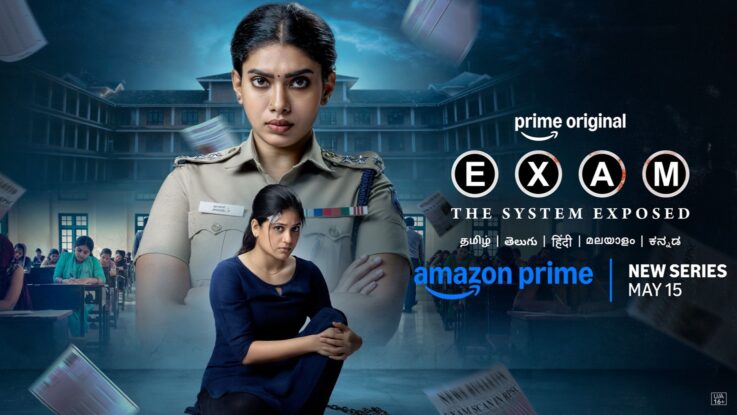
Jhansi, played by Dushara Vijayan, is an infiltrator working to expose a large-scale scam surrounding the Regional Public Service Exam. The early ambiguity around her exact role and intentions creates genuine suspense. The impersonation storyline — her working her way into the system to understand it from inside — is the right mechanism for this kind of story, and the show uses it well in the opening stretch.
SP Maramalli, played by Aditi Balan, makes an immediate impression. Her screen presence is authoritative without being theatrical — she’s the kind of character whose competence you believe without needing it demonstrated repeatedly. The chemistry between the two leads gives the early episodes an emotional core that makes you lean forward.
The show also captures something true about the specific desperation of competitive exam culture in India — the pressure on students, the financial sacrifices of families, the institutional stakes of exams that determine not just careers but entire life trajectories. In the first two episodes, you feel that weight.
And Then It Starts Unraveling
The third episode is where you start noticing things. The pacing slows slightly in places it shouldn’t. A subplot gets introduced that doesn’t immediately connect to the central investigation. The antagonists, who should be getting more defined and more threatening, start feeling vague.
By the middle of the season, the problems have compounded. What began as a focused investigative thriller has expanded into something much looser — more subplots, more characters who don’t justify their screen time, more scenes that cover ground the show has already covered without moving the story forward.
The procedural elements that set in — phone tracking, CCTV footage review, and chase sequences — are competently executed but feel like a retreat from the specific social reality the show was engaging with so effectively at the start. These are the tools of a generic crime thriller, not the tools of a show about exam corruption. The show stops being about what makes exam corruption specific and devastating and starts being about catching bad guys, which is a much less interesting story in this context.
The Biggest Missed Opportunity
The central criticism of EXAM isn’t that it’s badly made — it’s that it’s badly prioritized.
The most emotionally devastating thing about competitive exam scams isn’t the investigation that catches the perpetrators. It’s what happens to the students. The one who prepared for four years and failed by three marks while someone who bought the paper passed. The family that sold land to fund coaching and ended up with nothing. The young person who walks out of an exam hall knowing the result was decided before they walked in.
EXAM barely goes there. It mentions the students, it gestures toward the injustice, but it never gets close enough to a specific aspiring candidate for the emotional reality to land. The show is more interested in the mechanics of catching the scammers than in the human cost of the scam itself, and that inversion of priorities is what makes the final product feel hollow despite the seriousness of its subject.
The difference between a good social thriller and a mediocre one is often exactly this: does the show make you feel the injustice, or does it just describe it? EXAM describes it.
The Performances Are Carrying More Weight
Dushara Vijayan is doing genuine work here, particularly in the earlier episodes where the writing is giving her material worth investing in. Her portrayal of Jhansi has an emotional specificity that makes the character feel like a person rather than a narrative device. Some of the more intense scenes in the second half ask her to project a level of intimidation and authority that the script hasn’t fully built toward, and she does her best with what she’s been given — which is the polite way of saying the writing lets her down.
Aditi Balan’s SP Maramalli is consistently the strongest element of the show across all episodes. The character is underwritten by the final third in ways that waste the groundwork the early episodes laid, but Balan’s performance remains grounded and real throughout. She makes choices other actors would have made differently and more conventionally, and the show is better for it.
Abbas and several supporting actors are given setups that suggest interesting characters and then not given the follow-through to develop them. This is a recurring frustration — the show introduces people and then doesn’t know what to do with them.
The Second Half Problem
The second half of EXAM suffers from a specific ailment that affects a lot of OTT series: it runs out of story before it runs out of episodes.
The tension built in the first half dissipates rather than builds. Revelations that should feel explosive arrive flat because the pacing leading into them has been too slow and too repetitive. The confrontations feel predictable. The resolutions feel hurried — which is a strange combination, because the show has spent episodes being too slow and then rushes through the moments that actually matter.
The implausibility of Jhansi’s continued presence inside the system — which was manageable as a suspension of disbelief in the early episodes — becomes harder to maintain as the show stretches it further than the premise can support. The antagonists never become genuinely threatening, which means the danger Jhansi faces never feels fully real.
Also Read: Inspector Avinash Season 2 Review — Randeep Hooda Powers Through a Familiar but Gripping Crime Saga
Technically Fine, Narratively Frustrating
The production quality is consistent throughout. The cinematography — particularly the rural landscape sequences — is genuinely good. The background score by Sam CS does its job without overexplaining the emotional content. The show looks like something that was made with care and resources.
None of which addresses the screenplay, which is where EXAM loses the argument it was making so effectively in its opening hours.
Flickonclick Verdict
EXAM is a show that earns a two-star rating while simultaneously making you wish it had earned four. The subject matter is exactly what Indian OTT needs more of — specific, socially urgent, rooted in a reality that millions of people live with. The leads are strong. The opening is genuinely compelling.
Then the writing fails the premise, the pacing dissipates the tension, and the emotional specificity that made the early episodes work gets replaced by procedural mechanics that could belong to any crime thriller anywhere.
Watch the first two episodes. They’re good enough to make you understand what the show was trying to be. Whether you continue beyond that depends on your tolerance for a thriller that keeps the form but gradually loses the substance.
For a show about an issue this important, that’s a genuinely disappointing conclusion to arrive at.
Rating: 2/5