


If you run a small food stall, a tea shop, or a tiny restaurant, you already know the drill.
Every time the gas runs out, someone has to wrestle with a heavy 19 kg commercial cylinder — carrying it up stairs, moving it around a cramped workspace, and hoping it doesn’t knock something over in the process. It’s been that way for decades, and most small business owners have simply accepted it as part of the job.
That might be about to change.
What the Government Is Planning
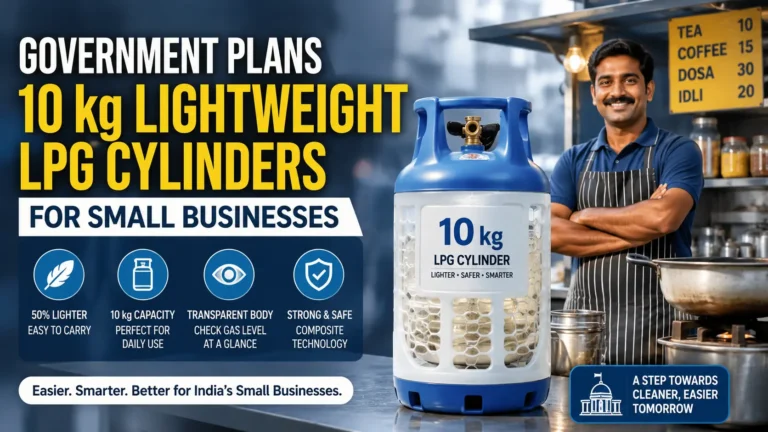
State-owned oil giants Indian Oil (IOC), Bharat Petroleum (BPCL), and Hindustan Petroleum (HPCL) are reportedly preparing to roll out 10 kg lightweight composite LPG cylinders for both domestic and commercial use.
This long-awaited proposal aims to eliminate the gruelling physical toll of managing traditional 19 kg commercial tanks, offering a seamless, highly practical fuel alternative for millions of vendors, students, and tenants nationwide.
The plan is still being finalised, but the direction is clear — India’s three major oil marketing companies are working toward making gas cylinders significantly more manageable for the people who need them most.
What Makes These Cylinders Different
The new cylinders aren’t just smaller versions of the existing steel tanks. They represent a genuine technological step forward.
Engineered from high-density polyethylene (HDPE) composite technology, these next-generation cylinders weigh roughly 50% less than their steel counterparts.
That alone is a significant quality of life improvement for anyone who has ever had to manhandle a full commercial cylinder up a narrow staircase or through a tight kitchen entrance.
But the design benefit goes beyond just weight. The cylinders feature a translucent body, which is a smart design that allows users to visually track remaining gas levels at a glance, ensuring timely refills and preventing sudden disruptions to daily business operations.
For a street food vendor in the middle of the lunch rush, being able to see how much gas is left without guessing is genuinely useful. No more cooking on empty halfway through service.
Who Benefits the Most
This update is particularly meaningful for three groups of people who have had very limited options until now.
Small vendors and food stall owners — The existing 19 kg commercial cylinder is simply too heavy and too large for many mobile or space-constrained businesses. A 10 kg option that’s lighter, easier to move, and available through the same familiar distribution network changes the equation entirely.
Tenants and paying guests — Many people living in rented accommodation cannot get a domestic LPG connection because the landlord already has one. A lightweight 10 kg commercial cylinder would give them a practical, affordable alternative that doesn’t require navigating complicated documentation or landlord approval.
Migrant workers — People who move frequently for work often struggle with the logistics of LPG connections. A smaller, more portable cylinder with no connection formalities would make clean cooking fuel accessible in situations where it currently isn’t.
Why This Matters for India’s Clean Cooking Push
India has made significant progress in expanding LPG access over the past decade, particularly through the Pradhan Mantri Ujjwala Yojana, which has connected millions of households to clean cooking fuel. But there remain gaps — especially among mobile workers, small business operators, and people in informal living arrangements.
A lighter, more flexible 10 kg cylinder specifically addresses those gaps. It doesn’t require a permanent address. It doesn’t require a large storage space. And it doesn’t require the physical strength to move a nearly 20 kg tank every time you need a refill.
Also Read: Noida International Airport Begins Passenger Flights
What Happens Next
The rollout is still in the planning and preparation stage. IOC, BPCL, and HPCL are working on the details, and no official launch date has been announced yet. The proposal needs to go through the standard regulatory and pricing process before cylinders actually appear in the market.
But the direction is clear, and the intent is there.
For millions of small business owners, tenants, and mobile workers across India who have been navigating the inconvenience of oversized gas cylinders for years, this update is genuinely welcome news. Lighter, smarter, and more practical — the 10 kg composite cylinder looks like a long-overdue fix to a very everyday problem.