


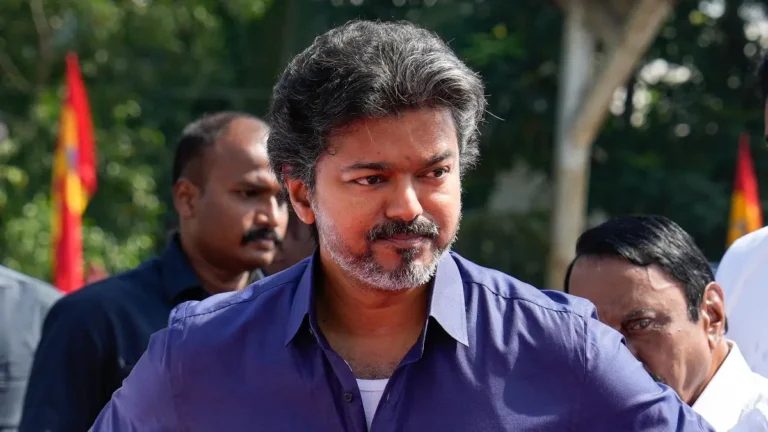
Tamil Nadu Chief Minister C. Joseph Vijay has announced two significant welfare measures aimed at easing household costs and making public transport more accessible across the state.
The first — the ‘Annapoorani Super 6’ scheme — will provide eligible families with financial support covering three LPG cylinders every year. The second — the ‘Vetri Payanam’ scheme — expands free government bus travel to cover more routes and more categories of passengers.
The LPG benefit is expected to begin around Pongal in January. The expanded bus travel scheme kicks in on October 2, Mahatma Gandhi’s birth anniversary.
Three Free LPG Cylinders Every Year
Under Annapoorani Super 6, eligible households will receive reimbursement for the cost of three LPG cylinders annually. The benefit goes to the female head of the family through Direct Benefit Transfer — meaning the money lands directly in her bank account after she completes the normal booking and purchase process.
The state government has estimated the scheme will cost around Rs 4,000 crore per year and is expected to benefit more than 1.30 crore families.
The structure is worth noting. This isn’t a free cylinder at the point of booking — families purchase the cylinder through the usual process, and the reimbursement follows. The scheme is designed to reduce the pressure of rising cooking gas costs for households that are finding those expenses difficult to absorb.
Who Can Get the LPG Benefit?
The scheme covers families with an annual income of up to Rs 2.5 lakh, along with certain economically weaker households falling into specified categories.
Small and marginal farmer families and families of differently abled persons are also included in the eligibility criteria. Reimbursements will be calculated based on official billing data from oil marketing companies, so beneficiaries will need to follow the standard LPG booking process to qualify.
LPG Scheme to Start From Pongal
The government plans to launch the first phase of the LPG scheme during the Pongal festival in January, and preparatory groundwork is already underway.
The timing reflects the scheme’s broader focus on women’s financial wellbeing. The female head of the household is the primary beneficiary — both in terms of who receives the Direct Benefit Transfer and in terms of who the scheme is designed to support most directly.
Free Bus Travel Scheme Gets a Major Expansion
The Vetri Payanam scheme already provides free bus travel to women, but the announcement expands it significantly. From October 2, eligible women and transgender persons will be able to travel free on a wider range of government bus services.
One of the most notable aspects of the expanded scheme: no income ceiling and no limit on the number of trips. Unlike many welfare programmes that restrict eligibility based on household income, Vetri Payanam, as expanded, will be available regardless of what a person earns.
Which Buses Will Be Covered?
The expansion covers Express, Limited Stop Service (LSS), and Deluxe government buses in metropolitan and urban areas. It also applies to ordinary-fare government buses operating in mofussil and hilly regions.
The inclusion of intercity and express categories is significant. For daily commuters travelling between towns for work or education and for those in more remote areas who depend on hilly-region services, the expanded coverage could meaningfully reduce monthly transport costs.
Rs 6,000 Crore Annual Cost
The Tamil Nadu government has estimated the expanded Vetri Payanam scheme will cost approximately Rs 6,000 crore annually — a substantial commitment that reflects the scale of the expansion and the number of beneficiaries expected to benefit.
By removing both the income ceiling and the trip limit, the government is positioning this as a universal public transport benefit for women and transgender persons rather than a targeted welfare measure for specific income groups.
More Women-Focused Schemes Announced
The LPG and transport measures sit alongside several other women-focused initiatives highlighted in the announcement, including Singa Pen, Thaimaman Thangamothiram, Vetri Magalir Adugal Valarppu, and Annanin Seer. These programmes cover women’s safety, social development, and livelihood opportunities as part of the government’s broader agenda under the Vetri Vision Document.
Together, the cluster of announcements signals a concentrated focus on reducing the everyday financial burden on women and on improving their mobility and access to opportunity across the state.
Related Article: Dharmendra Pradhan Resigns as Education Minister
What the New Schemes Mean for Families
For households within the income threshold, the LPG scheme could yield meaningful annual savings — three cylinders’ worth of costs reimbursed directly to the female head of household, reducing one of the more persistent sources of domestic expense.
For commuters, the Vetri Payanam expansion could be even more impactful. No income cap means the benefit isn’t restricted to those who can prove financial need. No trip limit means frequent travellers — those using government buses daily for work or study — get the most out of it. And the extension of Express, LSS, and Deluxe services in urban areas addresses the reality that many daily journeys require exactly those bus categories.
Both schemes are expected to become central parts of Tamil Nadu’s welfare landscape: the LPG benefit starting around Pongal in January and the expanded free travel kicking in on October 2.