


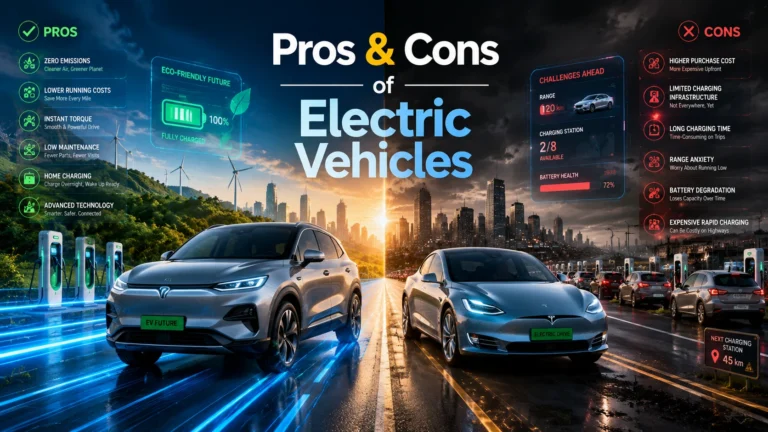
Electric vehicles have gone from being a curiosity to a genuine mainstream option in a remarkably short time. But buying one is still a significant decision, and the truth is that EVs aren’t the perfect choice for everyone. Before you make the switch, it helps to understand both what you gain and what you’re actually giving up. Here’s a look at 10 advantages and 10 drawbacks worth thinking through.
10 Pros of Electric Vehicles
1. Zero Tailpipe Emissions
EVs produce no direct exhaust emissions, which matters both for urban air quality and for reducing your personal contribution to greenhouse gas output. For anyone who cares about their environmental footprint, this is the headline benefit.
2. Lower Fuel Costs
Electricity is considerably cheaper than petrol or diesel per mile traveled, and EVs are more efficient at converting energy into movement. Some drivers report spending under $5 for roughly 300 miles of range. Over years of ownership, those savings add up meaningfully.
3. Lower Maintenance Costs
No engine oil changes, no spark plugs, no transmission fluid, no exhaust system to worry about. EVs have significantly fewer mechanical components than conventional cars, which translates directly into fewer things that can go wrong and lower servicing bills overall.
4. Instant Torque and Smooth Performance
Press the accelerator and the response is immediate. EVs deliver full torque from a standstill, which makes city driving genuinely enjoyable and highway overtaking effortless. There are no gear changes to interrupt the experience.
5. Easy to Drive
No clutch, no gear stick, no complicated engine management to think about. EVs are genuinely simple to operate, which makes them particularly well-suited to stop-start city driving where a conventional car can feel like hard work.
6. Home Charging Convenience
Plug in overnight and wake up to a full battery. For most daily drivers, this eliminates petrol station visits entirely. The electric grid reaches almost everywhere cars are parked, giving you flexibility that petrol-powered cars simply can’t match.
7. Advanced Technology
Large touchscreens, seamless smartphone integration, remote pre-heating and cooling from your phone, over-the-air software updates — EVs tend to come loaded with technology that feels genuinely useful rather than just impressive on a spec sheet.
8. Energy Security
Using electricity instead of petrol reduces dependence on oil supply chains and allows energy to be sourced from renewables. As solar, wind, and hydro generation grows, EVs become progressively cleaner over their lifetime without any change to the car itself.
9. Safety Benefits
The heavy battery pack sits low in the chassis, giving EVs a lower center of gravity that reduces rollover risk. Many EV models consistently score well in independent crash testing, and the structural design often benefits from having no traditional engine at the front.
10. Government Incentives
Many countries offer meaningful purchase incentives, tax credits, reduced registration fees, and free or discounted parking for EV owners. Depending on where you live, these can make a significant dent in the higher upfront cost.
10 Cons of Electric Vehicles
1. Higher Purchase Price
EVs typically cost more to buy than equivalent petrol cars, often by a substantial margin. While prices have been falling and entry-level options are more available than before, the initial outlay remains a real barrier for many buyers.
2. Limited Charging Infrastructure
Charging networks have expanded considerably, but coverage is still uneven. In rural areas and less-developed regions, finding a reliable public charger can be genuinely difficult, and long-distance travel requires more planning than it does in a petrol car.
3. Charging Takes Time
Filling a petrol tank takes five minutes. Charging an EV takes anywhere from 30 minutes on a rapid charger to several hours on a slower home unit. For some lifestyles this is barely an inconvenience. For others, it’s a real practical limitation.
4. Range Anxiety
Most EVs offer somewhere between 150 and 300 miles on a single charge. That covers the vast majority of everyday journeys comfortably, but range anxiety — the nagging worry about running out of battery — remains a real psychological factor for many drivers, particularly on longer trips.
5. Expensive Public Rapid Charging
Home charging is cheap. Highway rapid chargers are a different story, often costing as much per mile as petrol when you factor in the rates. For regular long-distance drivers, this significantly reduces the fuel cost advantage that makes EVs financially attractive.
6. Battery Degradation
EV batteries lose some capacity over time, typically over 12 to 15 years of use in moderate climates. Most manufacturers offer warranties covering around 8 years or 100,000 miles, but battery replacement outside that period can cost anywhere from $5,000 to $15,000.
7. Extra Weight Creates Safety Considerations
The large battery packs make EVs significantly heavier than comparable petrol cars. That extra weight increases the energy absorbed in collisions with lighter vehicles and contributes to higher road surface wear. It’s a real tradeoff worth understanding.
8. Electricity Generation Still Has an Emissions Footprint
Zero tailpipe emissions doesn’t mean zero environmental impact. If the electricity charging your car comes from coal-fired power stations, the overall emissions picture is considerably less clean than it appears. The environmental benefit of EVs depends heavily on your local energy grid.
9. Bigger Isn’t Always Greener
A large, heavy EV consuming significant electricity may not be meaningfully cleaner than a smaller, fuel-efficient conventional car, especially in regions where the grid still relies heavily on fossil fuels. The environmental case isn’t automatic — it depends on what you’re driving and where.
10. Social Friction
This one is real but often underestimated. EV owners regularly encounter unsolicited opinions, skepticism, and challenges from people committed to conventional vehicles. It’s a minor issue in the grand scheme, but it’s worth knowing it comes with the territory for now.
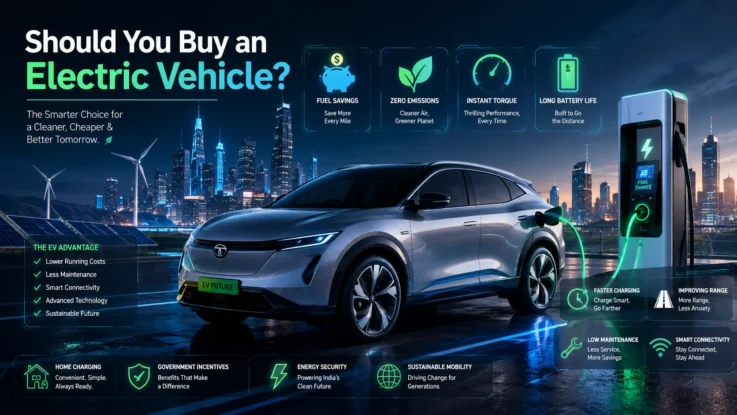
Should You Buy an EV?
| Factor | Verdict |
|---|---|
| Environment | Zero tailpipe emissions |
| Operating Costs | Lower fuel and maintenance |
| Performance | Instant torque, smooth driving |
| Convenience | Home charging, simple to drive |
| Technology | Advanced features as standard |
| Purchase Price | Higher upfront cost |
| Charging | Slower, infrastructure still patchy |
| Range | Limited per charge |
| Battery Life | Gradual degradation over time |
| Weight | Heavier than equivalent petrol cars |
Also Read: Top 10 Best Electric Cars in India
EVs make the most sense for people who do most of their driving around town, have access to home charging, and care about reducing their emissions. If you regularly cover long distances, live somewhere with poor charging infrastructure, or are working with a tight budget, a hybrid or conventional car may still be the more practical choice for now.
The direction of travel is clear though. Battery costs are falling, ranges are improving, and charging networks are expanding. The case for EVs will only get stronger over the coming years.