


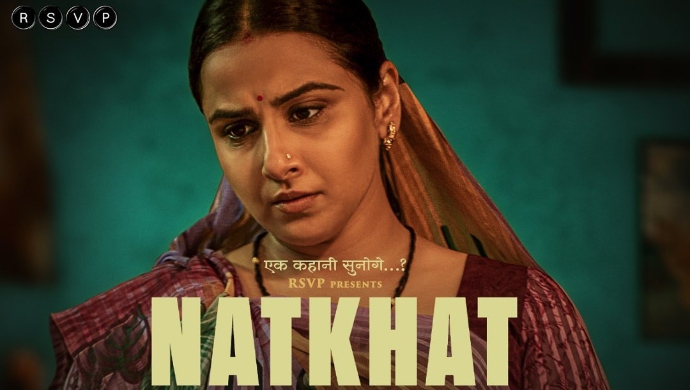
How does a society quietly manufacture a predator? It doesn’t happen with grand, dramatic declarations. It happens in the mundane, quiet corners of domestic life over a shared meal, through a grandfather’s dismissive chuckle, or via an uncle’s knowing smirk. It happens when a young boy’s casual cruelty is laughed off as a rite of passage.
Streaming on Disney+ Hotstar, the Shaan Vyas-directed short film Natkhat is a searing, 33-minute exploration of how systemic misogyny is inherited. In a country where women navigate a constant, exhausting landscape of insecurity and threat to their very lives, this film doesn’t just ask for our attention, it demands our conscience. It is a vital, urgent watch for every parent, educator, and young boy growing up under the heavy shadow of Indian patriarchy.
The Evolution of Casual Cruelty
The narrative takes us inside a traditional, multi-generational household in rural India, where patriarchy is as commonplace as the daily chores. The story revolves around Sonu, a seven-year-old boy whose childhood innocence is being steadily eroded by the toxic masculinity of the adult men around him.
The emotional core of the film shifts during a deeply unsettling dinner scene. Sonu casually boasts to his father (Raj Arjun), grandfather (Atul Tiwari), and uncle (Sparsh Shrivastav) about a schoolyard incident. When a young girl stands up to his friend, Sonu’s immediate solution is chillingly precise: “Take her to the jungle, then she will never trouble you again.” The horror of this moment doesn’t come from the child’s words alone, but from the reaction of the adults. The elders smile. The casual threat of abduction and violence is treated as a sign of male dominance and wit. In less than two minutes, screenwriters Shaan Vyas and Annukampa Harsh brilliantly expose the true origin point of India’s rape culture: the family dinner table, where entitlement is nurtured and fed.
Healing Through Heritage: The Art of Storytelling
What elevates Natkhat from a grim social commentary into a piece of profound cinema is how the conflict is met. Sonu’s mother, Surekha, overhears her son’s toxic boast. She doesn’t resort to screaming or physical punishment, recognizing that meeting aggression with violence only validates the cycle. Instead, she turns to an ancient, deeply human remedy: the bedtime story.
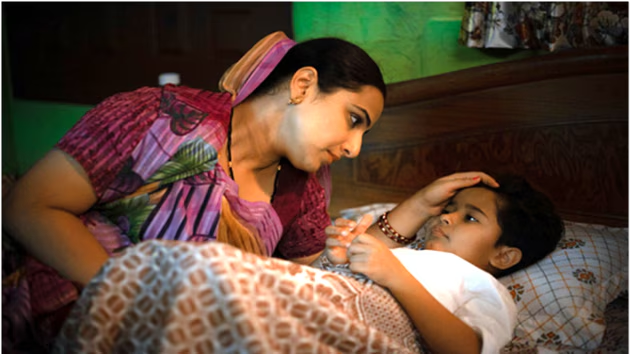
As she comforts her son, Surekha crafts an allegorical fable about animals, power, and empathy. Through this story-within-a-story, she gently deconstructs the ideas of male supremacy that her son has begun to absorb. The filmmaking here is exquisite. It avoids preachiness entirely, relying instead on the quiet intimacy of maternal love to reprogram a child’s hardening heart.
Vidya Balan: The Quiet Revolutionary
Vidya Balan, who also co-produced the project, delivers a performance that reminds us why she remains one of the most impactful actors of our generation. As Surekha, she portrays a woman completely trapped by the very patriarchy she is trying to save her son from. She lives behind a veil (ghoonghat), her presence minimized by the men of the house, and her body bearing the hidden scars of domestic abuse.
Balan’s brilliance lies in her restraint. There are no explosive outbursts. Instead, her performance is entirely internal visible in the desperate, haunting look in her eyes as she realises a terrifying truth, she may not be able to liberate herself from the men in her home, but she has a fleeting window of time to stop her son from becoming one of them. Balan’s consistent choice to use her platform for such socially conscious, gut-wrenching stories deserves immense applause.
A Poetic Triumph: Sanika Patel’s Debut
The emotional weight of the entire short film rests squarely on the shoulders of its child protagonist. In an extraordinary casting choice, the role of the young boy Sonu is played by a debutante child actress, Sanika Patel.
Placing a young girl in the role of a boy being conditioned by misogyny adds a layer of profound irony and heartbreaking poignancy to the film. Patel’s performance is nothing short of a revelation. She captures the malleable nature of a child with frightening authenticity moving effortlessly from a carefree kid playing cricket, to a chilling mimic of adult male entitlement, and finally to a child weeping with the sudden, heavy realization of empathy. Her performance is the absolute soul of the film.
Also read: Main Vaapas Aaunga Review: Imtiaz Ali Tells a Partition Love Story That Will Break Your Heart
The Verdict: A Lesson for the Next Generation
Natkhat is a direct, uncompromising challenge to the dangerous “boys will be boys” rhetoric that continues to compromise women’s safety across India. It reminds us that the dismantling of patriarchy cannot be outsourced to the legal system or the police; it must begin at home, during bedtime stories, and through the values we pass down to our sons.
Every young boy and man in this country needs to sit down with this film. It forces us to confront a vital question: Are we raising a generation that values equality, or are we quietly cultivating the very threats women fear every day? Natkhat is a brief but monumental piece of art that proves while we cannot change the world overnight, we can change the future by changing how we raise our boys.