


There is a particular kind of frustration that comes from being on a dating app for six months, going on a handful of perfectly pleasant first dates, and somehow still being exactly where you started. You matched, you chatted, you met for coffee — and nothing went anywhere. The app is not entirely to blame. But the environment an app creates does shape the kind of interactions that happen inside it.
Hinge got popular precisely because it tried to fix this problem. Its whole brand promise — “designed to be deleted” — is aimed at people who are tired of swiping aimlessly and actually want to meet someone worth keeping. The prompt-based profiles, the conversation-first approach, the nudge to take things offline — all of it is designed to feel less like a game and more like actual dating.
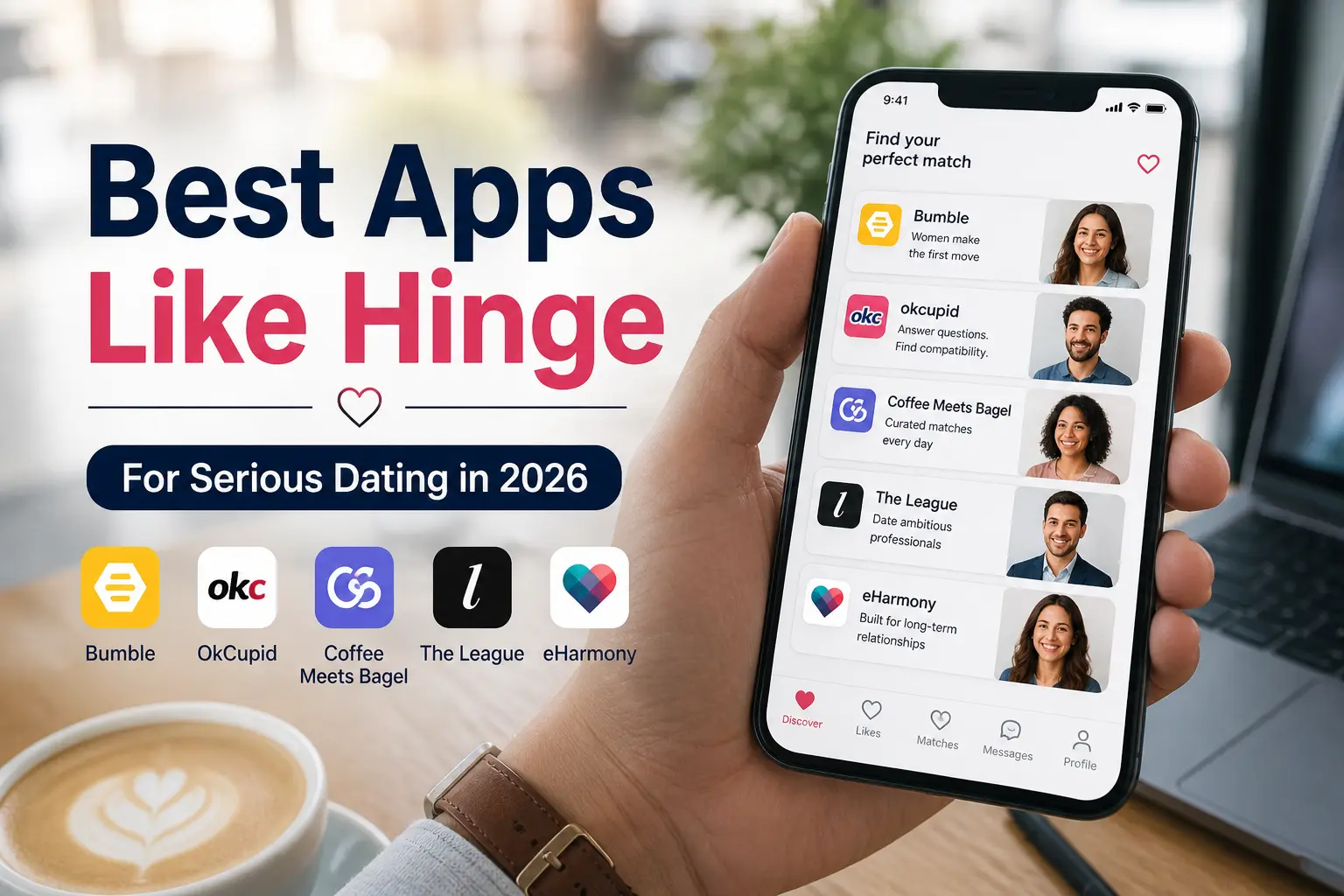
But Hinge is not for everyone. Some people find the subscription costs add up quickly. Others feel like conversations stall and go nowhere despite the format. Some simply want a different dynamic, a different user base, or a different level of relationship seriousness. If that sounds familiar, this guide covers five of the best alternatives to Hinge for people who are genuinely looking for serious dating.
Table of Contents
What Actually Makes a Dating App Good for Serious Relationships?
Before diving into specific apps, it helps to be clear on what separates a serious-relationship-friendly app from a casual one. The difference is rarely about the name or the marketing. It comes down to a few things.
First, the user intent on the platform matters more than anything else. An app that makes it easy to signal — and filter for — relationship goals gets better results for serious daters. Second, the profile depth matters. Apps that force you to say something real about yourself, rather than just posting six photos and hoping for the best, tend to attract people who are putting genuine effort in. Third, the matching mechanism shapes the experience. Unlimited swiping creates a consumer mindset. Curated matches or limited daily interactions create more intentional engagement.
Every app on this list does at least two of those three things well. None of them is perfect, but all of them are meaningfully better than most of the alternatives for someone who is dating with real intent.
1. Bumble — The Closest to Hinge, With One Key Difference
If you like Hinge’s feel but want to try something adjacent, Bumble is the most natural first stop. The interface is familiar — photos, a short bio, some prompt-style question answers, and a matching system that lets you see a bit of someone’s personality before you decide whether to connect.
The defining feature of Bumble on straight matches is that women send the first message. Men match and wait. If the woman does not message within 24 hours, the match disappears. This creates two things that Hinge does not always manage: urgency and intentionality. A woman who sends a message on Bumble has actively chosen to invest in that conversation. A man who responds quickly is demonstrating the same. The 24-hour window filters out the people who match but never actually intend to talk.
Bumble also has a large user base in most major cities globally, which matters practically. More users means more potential matches that are actually geographically relevant to you. The app has a relationship-goals filter, so you can signal — and look for — people who are specifically interested in something serious.
- Best for: People in their 20s to early 40s who want Hinge’s serious-dating energy with a larger, active user pool
- One honest caveat: The 24-hour expiry can feel stressful, and the app’s premium features — like extending matches — add cost quickly
2. OkCupid — For People Who Want More Than Surface-Level Matching
OkCupid has been around long enough that some people dismiss it as outdated. That is a mistake. Among the mainstream dating apps, it has one of the most sophisticated compatibility systems available for free — and if Hinge’s prompts appealed to you because they went a layer deeper than a photo, OkCupid takes that idea several layers further.
The core of OkCupid is a questionnaire — and not a short one. You can answer hundreds of questions covering your values, lifestyle preferences, political views, relationship expectations, and personality traits. The app uses your answers to calculate a compatibility percentage with other users. You can see not just who someone is, but how closely your answers align on things that actually matter in a long-term relationship.
This makes OkCupid genuinely useful for people who want to filter for compatibility rather than just attraction. You can set your profile to indicate you are looking for a serious relationship, and you can filter matches to show only people who have done the same. The free version is functional enough that you can get real value without paying, though the paid A-List membership removes ads and gives access to advanced filters.
OkCupid is also notably inclusive — it has extensive options for LGBTQ+ users and non-binary individuals, which is an area where Hinge has improved but still lags behind.
- Best for: People who want compatibility-driven matches and do not mind investing time in a detailed profile
- One honest caveat: The sheer volume of questions can feel overwhelming at first — but answering more of them genuinely improves your match quality
3. Coffee Meets Bagel — For People Who Are Tired of Infinite Swiping
If Hinge’s format appeals to you but you find yourself falling into the same endless scroll trap you were trying to escape on Tinder, Coffee Meets Bagel is worth trying. The entire app is built around a deliberately slow, curated approach to matching.
Instead of a queue of profiles to swipe through whenever you feel like it, Coffee Meets Bagel sends you a small number of curated matches — called “Bagels” — each day. You review them, like or pass, and if there is mutual interest, you are connected and given a limited window to start a conversation. Matches expire if neither person initiates, which again creates the same urgency and intentionality that makes the experience feel more like real dating and less like browsing a catalog.
The profiles lean toward brevity but encourage substance. There are icebreaker prompts and conversation starters built in, which removes some of the awkward opening-message pressure. The app’s user base skews toward urban professionals who are genuinely looking for relationships — partly because the slow, curated format naturally filters out people who just want quick validation from mass-liking.
It is worth noting that Coffee Meets Bagel is not as large as Bumble or OkCupid in terms of raw user numbers. If you are in a smaller city or town, the match volume may be limited. In major urban centres, it works considerably better.
- Best for: Busy professionals who want quality matches over quantity and find the typical dating app format mentally exhausting
- One honest caveat: Limited daily matches mean slower progress — this is a feature, not a bug, but it requires patience
4. The League — Hinge’s More Selective, Career-Focused Sibling
The League is honest about what it is, which you can either appreciate or find off-putting depending on your perspective. It is a dating app designed explicitly for ambitious, career-driven professionals, and it screens applicants before they can join. LinkedIn integration, educational background, and professional standing are all part of the vetting process. There is a waitlist in most cities, and membership — especially at higher tiers — costs considerably more than other apps.
What you get in return is a smaller, curated pool of matches where most people share a certain level of professional ambition and life direction. Profiles are detailed. Relationship intent is expected to be serious. The match volume is low — typically three potential matches per day — but the caliber is the point. You are not swiping through hundreds of incomplete profiles hoping for one real connection.
The League works best for people in their late 20s to late 30s who are settled enough in their careers to want a partner who understands that world, and who value a sense of peer-level connection in a relationship. It does not work well for people who want a large, active user pool or who are put off by the social stratification the vetting implies.
- Best for: Urban professionals in finance, tech, law, medicine, or consulting who want matches at a similar life stage and ambition level
- One honest caveat: The premium pricing and waitlist can be frustrating, and the smaller pool means fewer options in many cities outside major metros
5. eHarmony — When You Are Done Playing and Want Something Real
eHarmony occupies a different end of the serious-dating spectrum from everything else on this list. Where Hinge, Bumble, and OkCupid are modern apps that happen to be good for serious daters, eHarmony is a platform that was built from the ground up for one specific purpose: long-term compatibility and marriage-track relationships.
The matching process starts with a detailed personality questionnaire that draws on psychological research into compatibility and relationship satisfaction. It is long — easily 30 minutes or more — and it covers personality traits, values, communication styles, and what you are looking for in a partner with a level of specificity that no other app comes close to. The algorithm uses those results to generate matches it believes have genuine long-term potential, rather than just showing you attractive people who live nearby.
The user base on eHarmony skews older than most of the other apps on this list — the 30s to 50s range is where it is strongest. Most users come to eHarmony explicitly because they are ready for something serious. There is less ambiguity about intent, which removes a lot of the uncertainty and game-playing that makes apps like Tinder and even Hinge frustrating for serious daters.
The main trade-off is cost and interface. eHarmony is one of the more expensive dating platforms, and its design feels less sleek than the newer apps. In some markets, the user base is also smaller than Bumble or OkCupid, which can limit daily match volume.
- Best for: People in their 30s, 40s, or 50s who are explicitly looking for a long-term relationship or marriage and want a platform where that is the norm, not the exception
- One honest caveat: The high subscription cost and time-intensive setup are real barriers — this is an investment, not a casual download
Quick Comparison: All 5 Apps at a Glance
| App | Closest Hinge Feature | Key Difference | Age Range | Best For |
| Bumble | Prompt-based profiles | Women message first; 24-hr expiry | 20s–40s | Large pool, serious intent, fast conversations |
| OkCupid | Question-driven profiles | Deep questionnaire + compatibility % | 25s–45s | Compatibility-first matching, value alignment |
| Coffee Meets Bagel | Curated, thoughtful matches | Few daily matches, match expiry | 25s–40s | Busy professionals, anti-swipe-fatigue |
| The League | Profile depth + intentionality | Vetted professionals only; premium pricing | 28s–40s | Career-focused daters wanting peer-level matches |
| eHarmony | Serious relationship intent | Psychology-based matching; marriage-track | 30s–50s | Long-term relationship or marriage-ready daters |
How to Pick the Right App for You — A Simple Decision Guide
The right answer depends on two things: what bothered you about Hinge, and how serious you are about the outcome. Here is a simple way to think through it.
- If Hinge felt good but you want a bigger pool or faster conversations: Bumble is the most natural move. It is the closest experience with a larger active user base in most cities.
- If you felt like Hinge matched you with people you had little in common with: OkCupid’s compatibility questionnaire is designed exactly to fix that problem. The more questions you answer, the better it works.
- If the constant swiping and app-checking was mentally draining: Coffee Meets Bagel removes that pressure almost entirely. You check it once a day, review a handful of matches, and get on with your life.
- If you want to date within a specific professional or educational peer group: The League is built for that. It is expensive but honest about what it is.
- If you are done with apps that feel like casual entertainment and want something that takes long-term partnership seriously from day one: eHarmony is the one. Invest the time in the setup, and the intent of the platform will work in your favour.
One practical note: most serious daters find that using two apps simultaneously — one larger pool app like Bumble and one more curated app like Coffee Meets Bagel or eHarmony — gives better results than relying on a single platform. Different apps attract different people, and covering two bases without burning out on either is a reasonable approach.
Also Read: Hinge vs Bumble vs Tinder: Which Dating App Is Best for Serious Relationships?
Apps That Matches Your Intent: Not Just Your Photos
Every app on this list has its frustrations. None of them is a guaranteed path to meeting the right person. What they do — the best of them, used well — is increase the probability that the people you are spending time with are actually looking for the same things you are. That is worth more than it sounds.
Hinge had the right instinct when it called itself “designed to be deleted.” The goal is not to be on the app forever — it is to be on it long enough to find someone worth getting off it for. The five alternatives here share that same philosophy, in different formats and for different kinds of people. The best one for you is the one that matches how you actually want to date, not the one with the most downloads.
Figure out which one fits your lifestyle, put genuine effort into your profile, and be honest about what you are looking for. That combination — the right platform plus real effort plus clear intent — is what actually changes the outcome.
Note: App features, pricing, and user availability vary by region and may have changed since publication. Check each app’s official website or app store listing for the most current information before signing up.