


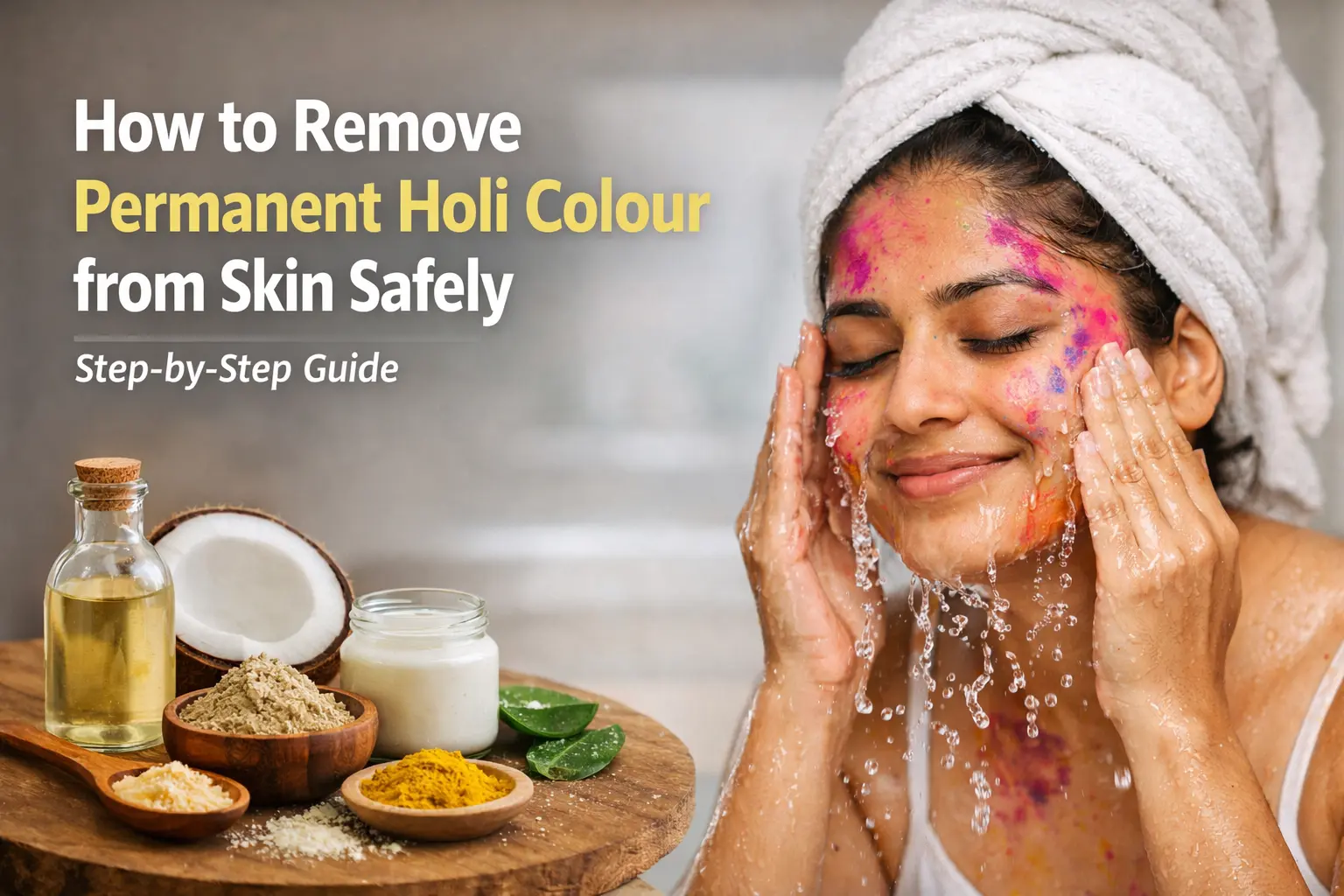
Holi is all fun and colours — until they simply refuse to come off. If you’re searching for how to remove permanent Holi colour from skin, you’re probably staring at the mirror wondering how those dark reds, blues, and greens managed to stick so stubbornly. Synthetic Holi dyes can cling to your skin for days, especially if the wrong removal methods are used.
And the real tension begins when you have an important meeting, office presentation, college class, or event the very next day. Walking in with visible patches of pakka holi colour on your face is not exactly ideal — and aggressive scrubbing only makes things worse.
The good news? With the right step-by-step approach, you can remove even stubborn Holi colour safely without damaging your skin barrier, triggering breakouts, or causing redness.

Whether you have normal, oily, dry, sensitive, or acne-prone skin, these gentle methods work.
Let’s get started..
Before You Start – The Golden Rule
Never scrub aggressively right after Holi. Harsh rubbing can push colour deeper into the skin, cause micro-tears, and make irritation worse. Instead, follow a soft, layered routine and let each step do its work gently.
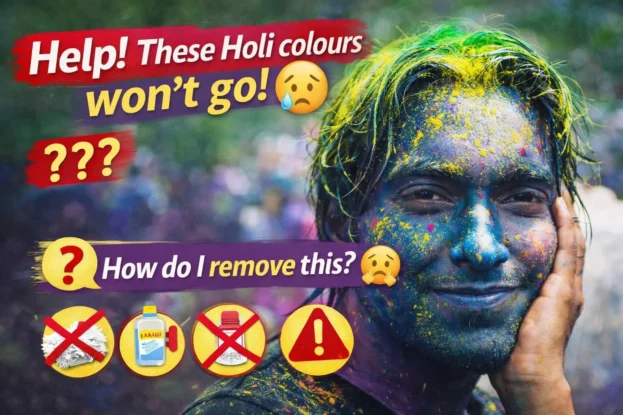
Patch test first if you have sensitive skin or any active skin condition before applying any mask or remedy.
10 Steps to Remove Permanent Holi Colour from Skin
Step 1 – Rinse with Lukewarm Water First
Before anything else, stand under lukewarm (not hot) water for a few minutes and let it run over the coloured areas. Hot water opens pores and can fix the dye even deeper into your skin, so always keep the temperature moderate.
What to use: Plain lukewarm water, your hands or a soft cotton cloth. No loofah.
Step 2 – Massage with a Light Oil (Coconut, Almond or Olive)
Oil is your best friend for dissolving Holi colour. Apply a thin layer of coconut oil, sweet almond oil, or olive oil on stained skin and massage gently in small circles for 5–10 minutes. The oil breaks down the colour pigments without causing any friction damage.
What to use: Cold-pressed coconut oil, almond oil, or olive oil. Soft cotton pads to wipe off.
Step 3 – Cleanse with a Gentle, Sulfate-Free Face Wash
After the oil has broken down the colour, wipe it off with cotton and follow up with a mild, pH-balanced cleanser. This removes the oily residue along with the colour. Avoid harsh soaps, strong fragrances, or anything with scrub beads at this stage.
What to use: Gentle sulfate-free cleanser or baby wash.
Avoid: Scrub-based cleansers, foaming soaps with high fragrance, or anything that leaves your skin feeling tight.
Step 4 – Apply a Gram Flour (Besan) and Curd Pack
Mix 1–2 tablespoons of gram flour (besan) with plain curd or milk and a pinch of turmeric. Apply this paste on stained areas, leave for 5–10 minutes, then massage gently with wet fingers and rinse off. Gram flour provides mild natural exfoliation while curd lifts colour without irritation.
What to use: Besan, plain curd or milk, a pinch of turmeric, optional rose water.
Step 5 – Use a Multani Mitti (Fuller’s Earth) Mask for Very Stubborn Stains
For dark, “permanent” patches that won’t budge, mix Multani mitti with milk or rose water into a smooth paste. Apply on stained areas, let it semi-dry, then rinse gently without scrubbing hard. Multani mitti draws out impurities while staying gentle on the skin.
What to use: Multani mitti, milk or rose water, soft towel.
Step 6 – Soothe with Pure Aloe Vera Gel
After cleansing, apply a thin layer of aloe vera gel. It calms redness, cools irritated skin, supports the skin’s barrier repair, and helps loosen remaining pigment over time.
What to use: Pure aloe vera gel, optionally mixed with a few drops of rose water or honey.
Step 7 – Try a Gentle Oatmeal or Coffee Scrub – Only After 24 Hours
If colour persists the next day and your skin feels fine, use a very mild scrub: finely ground oatmeal with yogurt, or fine coffee grounds with honey. Massage softly and rinse.
What to use: Oatmeal powder or fine coffee grounds, curd or honey.
Skip this step if your skin is red, itching, or irritated.
Step 8 – Moisturize After Every Removal Session
Every time you cleanse or apply a mask, follow up with a gentle, non-comedogenic moisturizer. Repeated cleansing dries out skin and weakens the skin barrier. Lock in hydration to help your skin recover faster.
What to use: Lightweight gel-cream or moisturizer suited to your skin type.
Step 9 – Repeat Short, Gentle Routines Instead of One Harsh Session
Do a shorter, gentler routine once or twice a day rather than one aggressive scrubbing session. Your skin handles repeated gentle sessions much better. You’ll avoid redness, peeling, and barrier damage.
Simple daily routine: oil massage → gentle cleanse → besan/aloe mask → moisturize. Repeat until colour is gone.
Step 10 – Avoid These “Quick Fixes” – They Damage Your Skin
Many people reach for bleach, neat lemon juice, or rough loofahs when colour won’t come off. This is a mistake. These strip the skin barrier, cause burns, and can worsen pigmentation.
Never use: Bleach creams, undiluted lemon juice, rough pumice stones, high-strength chemical peels, or baking soda scrubs.
If you develop burning, rash, swelling, or persistent redness, stop all DIY treatments and consult a dermatologist.
Also Read: Trending Holi Songs in 2026
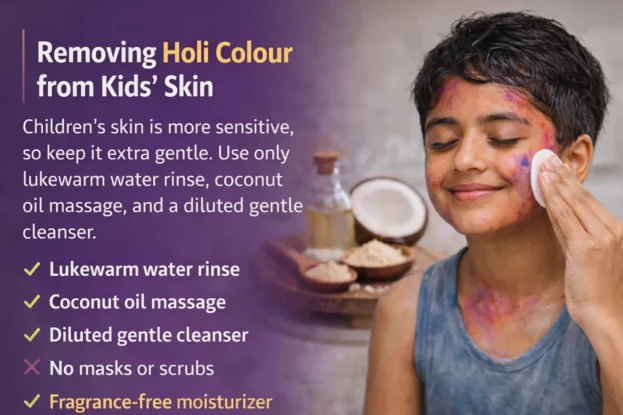
Removing Permanent Holi Colour from Kids Skin
Children’s skin is more sensitive, so keep it extra gentle. Use only lukewarm water rinse, coconut oil massage, and a diluted gentle cleanser. Skip all masks and scrubs unless colour is very persistent. Follow up with a fragrance-free moisturizer.
Tips for Sensitive and Acne-Prone Skin
- Always use cold-pressed, unrefined oils – purer and gentler on skin.
- Skip the scrub step entirely if you have active breakouts.
- Use micellar water as an alternative to oil for the face – it’s very gentle and effective.
- Never apply lemon juice directly on acne or open wounds.
- If skin reacts, stop all removal methods and apply pure aloe vera gel and a barrier cream until it settles.
What to Do If Your Skin Gets Irritated
- Apply pure aloe vera gel and leave it on.
- Use a fragrance-free, soothing moisturizer.
- Use a cold compress if there is swelling or burning.
- If symptoms worsen or last more than 2–3 days, see a dermatologist.
Frequently Asked Questions
How long does permanent Holi colour take to fade naturally?
Without treatment, stubborn Holi colour can take 3–7 days to fade depending on your skin type and the colour used. A consistent gentle routine speeds this up significantly.
How many times a day should I cleanse to remove Holi colour?
Once or twice a day is enough. Cleansing more than that strips your skin’s natural oils and weakens the skin barrier, causing more irritation.
Can I use lemon juice to remove Pakka Holi colour?
Neat lemon juice is too acidic and can cause burns and photosensitivity. Gram flour and oil are much safer and equally effective alternatives.
Is baking soda safe for removing Holi colour from skin?
No. Baking soda disrupts the skin’s natural pH and can cause irritation, dryness, and breakouts. Stick to gentler options like besan, oatmeal, or Multani mitti.
Which oil works best for removing Pakka Holi colour?
Coconut oil is the most effective and easily available. For oily or acne-prone skin, sweet almond oil is lighter and less likely to clog pores.
How do I remove dark red or blue Holi colour from my face?
Dark colours need patience. Use oil massage, follow with a besan-curd pack, and if needed apply a Multani mitti mask. Repeat over 2–3 days rather than trying to remove it all at once.
Pro Tip: Prepare your skin BEFORE Holi! Apply coconut oil or a thick moisturiser all over your skin and hair before playing. This creates a barrier that prevents colours from penetrating deep, making removal much easier afterwards.
Quick Summary
The best way to remove permanent Holi colour from skin also famously known as pakka colour, is through a calm, patient routine: lukewarm water → oil massage → gentle cleanse → natural mask (besan, Multani mitti, or aloe vera) → moisturize. Repeat once or twice daily until colour fades. Avoid bleach, lemon juice, and rough scrubbing – they damage your skin far more than the colour ever would.
This article is for informational purposes only. If you experience severe skin reactions, burning, or rashes, please consult a dermatologist.