


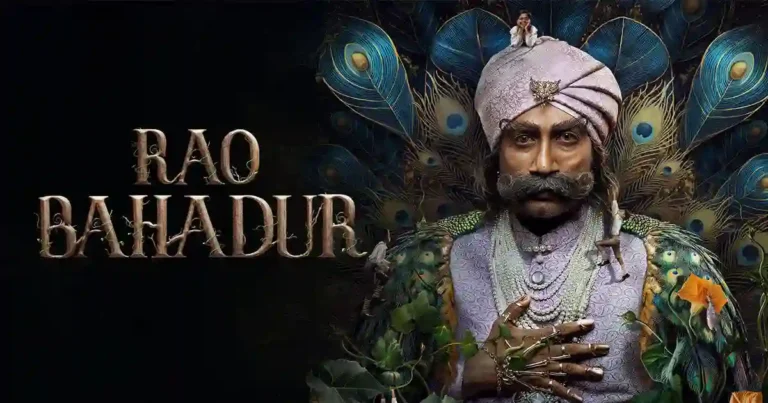
Rao Bahadur Review: ★★★☆☆ (3/5)
Venkatesh Maha delivers a thought-provoking blend of satire, magical realism, and social commentary, powered by one of Satyadev’s finest performances in a slow-burning story that challenges social prejudices and inherited beliefs. Rao Bahadur is now playing in theatres.
Rating: ★★★☆☆ (3/5)
Director: Venkatesh Maha
Release: July 3, 2026
Language: Telugu
Cast: Satyadev, Deepa Thomas, Vikas Muppala
Genre: Satire, Magical Realism, Period Drama
Telugu cinema does not often make films like this. Rao Bahadur is not a mass entertainer. It has no action sequences designed to get the theatre cheering, no commercial formula holding it together, and no interest whatsoever in telling you what you already expect to hear.
What it has instead is a genuine creative vision, a willingness to be difficult in service of something meaningful, and a central performance from Satyadev that might be the finest of his career.
The story begins at a deathbed. Ramappa Rao Bahadur, the last living descendant of a once-proud royal family, is lying in a room surrounded by confused doctors. He is medically a mystery — something about his condition cannot be explained by science alone.
As the film slowly unpeels his history, moving between 1968 and 1991, it reveals a story that is not really about royalty at all. It is about what gets passed down through generations. The obsessions with bloodline, skin colour, caste, and lineage that families inherit and never question. The psychological weight that history places on people who had no choice in being born into it.
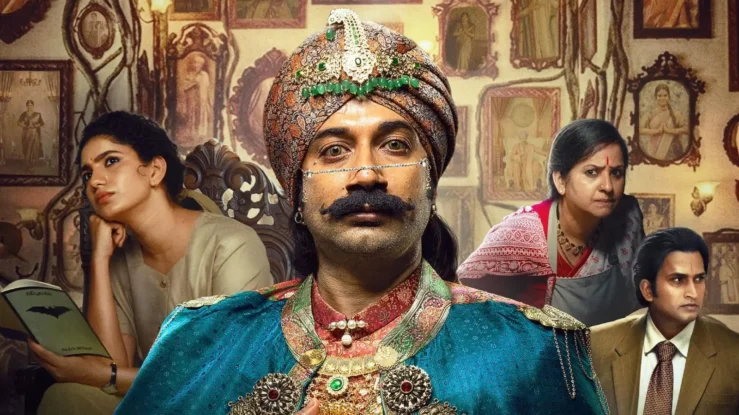
Director Venkatesh Maha handles this material through satire, philosophy, magical realism, and a very specific kind of deadpan humour that keeps the film from becoming a lecture. He asks hard questions about inherited privilege and social prejudice without ever turning the film into a sermon. That restraint is difficult to maintain across two-plus hours, and he mostly manages it.
The first thirty minutes are genuinely hard going.
The world of Bhuvanalayam takes time to establish — the peculiar dialect, the period setting, the magical realist tone. These opening scenes are slow, occasionally confusing, and test your patience before the story earns your trust. Stick with it. The film finds its rhythm and becomes something increasingly absorbing in the second half, building toward a climax that lands with real emotional weight.
Satyadev is extraordinary. His Ramappa is a man caught between the pride of his heritage and the damage that heritage has done to him — arrogant and vulnerable at the same time, occasionally funny in ways that make the sadness hit harder. It is a layered, physically and emotionally demanding performance, and there is probably not another actor in contemporary Telugu cinema who could have pulled it off with this much specificity.
The actress playing Achamma, the source of much of the film’s warmth and most of its best humour, walks away with several of the film’s most memorable moments. Deepa Thomas as Renuka and Vikas Muppala as Achari both grow in importance as the story develops, and both handle that growing weight convincingly.
Similar Read: Alpha Movie Review
The screenplay is rich with symbols and metaphors that reward close attention. A symbolic act of resistance by Renuka against her husband is one of the film’s finest visual ideas. A birthday counting scene says far more than its words. A quietly devastating Sanjay Gandhi reference blends history and satire with elegant precision.
Technically, the film is consistently strong. The music supports rather than competes. The cinematography captures both the mystical atmosphere and the period setting with real craft.
Rao Bahadur is not a film for everyone. But for those willing to give it the patience it asks for, it offers something genuinely rare — a Telugu film with something real on its mind and the creative courage to say it in its own unusual way.
Rao Bahadur is now playing in cinemas.