


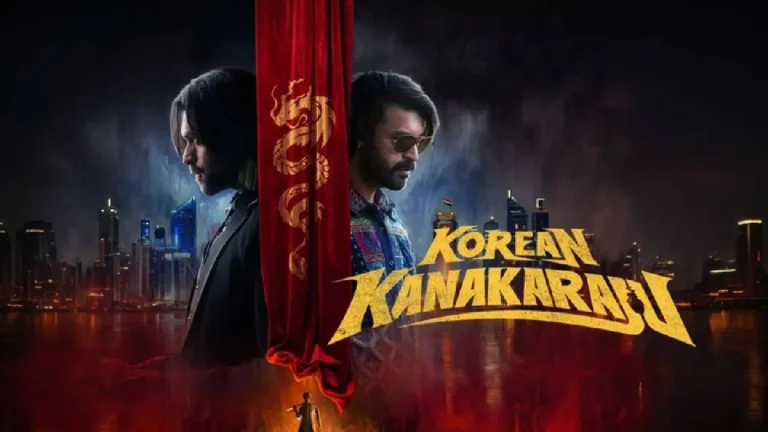
Korean Kanakaraju Review: ★★☆☆☆ (2/5)
Korean Kanakaraju had a genuinely fresh premise about cultural collision between Rayalaseema and Korea, but the film wastes it on lazy stereotypes and a weak second half. Satya’s comic timing is the only thing keeping it watchable.
Rating: ★★☆☆☆ (2/5)
Genre: Horror Comedy
Language: Telugu
Runtime: 2 hours 36 minutes
Director: Merlapaka Gandhi
Cast: Varun Tej, Ritika Nayak, Satya
Korean Kanakaraju had one of the most interesting premises Telugu cinema has attempted in a while. The idea of exploring the real-life cultural mixing between Rayalaseema and Korea, brought together by a car manufacturing plant, is genuinely fresh territory.
Unfortunately, the film takes that promising setup and turns it into little more than an excuse to mock an entire culture for cheap laughs, and that choice weighs down everything else it tries to do.
The story follows Kanakaraju, played by Varun Tej, a carefree young man from a village in Anantapur who falls for a girl working at a Korean car plant in Penukonda, played by Ritika Nayak. His simple, easygoing life takes a strange turn after a run-in with his rival leads to a freak accident, and Kanakaraju ends up possessed by the spirit of a Korean man.
From there, the film tries to blend horror, comedy, and cultural collision into one package, but it never quite figures out how to make all three work together. Varun Tej clearly put in real effort here. He trained in both the local Anantapur dialect and Korean for the role, and it shows.
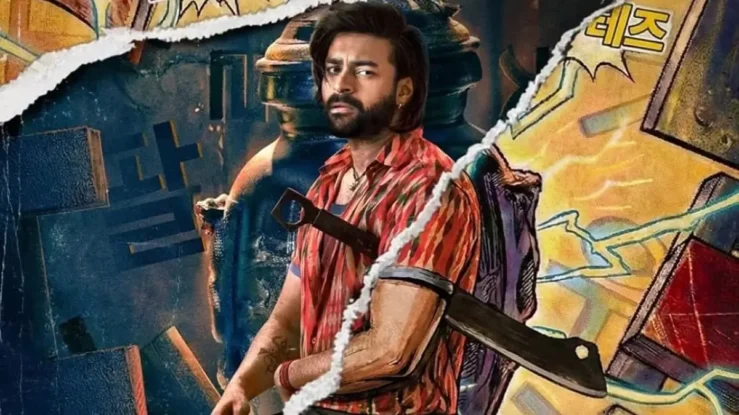
As the village boy, he is charming and full of easy energy, reminding audiences why he was once seen as one of Telugu cinema’s most promising talents. When the Korean spirit takes over, his physical transformation is noticeable and committed.
The problem is not his performance. The problem is that the Korean character he is playing has almost no depth or backstory, existing only to give Varun something visually different to do on screen.
Ritika Nayak gets an even rougher deal. Her character is written as a walking collection of K-pop cliches, someone who randomly drops Korean words into conversation and names her dog after a K-pop idol.
Her only real trait is wanting to move to Korea one day. The film treats her genuine enthusiasm for Korean culture as something to laugh at, which feels especially strange for a movie that is supposedly about two cultures coming together.
The one performer who consistently makes the film work is Satya. His comic timing carries several scenes in the first half, and his chemistry with Varun Tej produces most of the movie’s genuine laughs. Without him, the film would struggle to hold attention even in its stronger moments.
Speaking of the first half, while it is watchable thanks to Satya, the stereotyping is hard to ignore even here. This story is set in a real place where an actual Korean community lives and works alongside local Telugu speakers. Making fun of how they speak or eat is not clever comedy, it is just lazy mockery dressed up as cultural humor.
Things fall apart completely in the second half. The jokes start repeating themselves, the horror elements turn into predictable jump scares you can see coming from a mile away, and the emotional beats feel unearned because the screenplay never took the time to build toward them.
Similar Article: Ohh My Dog Movie Review
The climax leans almost entirely on AI-generated visuals and CGI that look weightless and unconvincing, making for a genuinely uncomfortable watch.
On the technical side, cinematographer Manojh Reddy deserves credit for using warm tones in the village scenes and cooler tones for the Korean gangster segments, creating a visual language that at least helps track the story’s shifts.
Thaman S’s already popular songs do their job, but no music can save scenes that simply are not written well. At two hours and thirty-six minutes, the film also overstays its welcome by a good twenty minutes.
Korean Kanakaraju had the ingredients for something genuinely special. Instead, it settled for mockery over curiosity, and the result is a film that squanders its own best idea.