


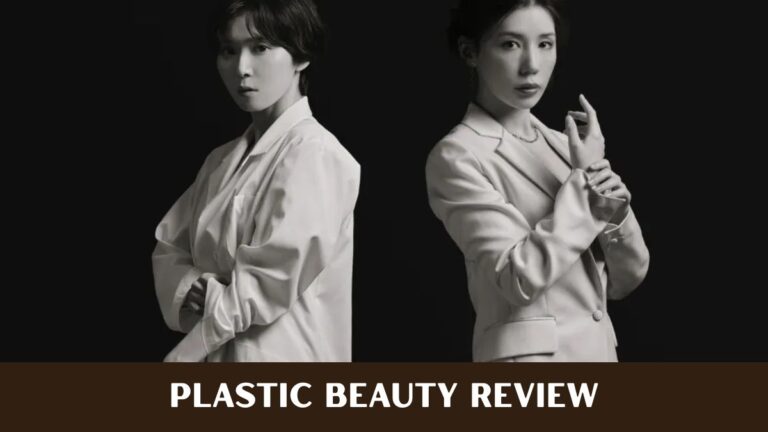
Plastic Beauty Review: 3.5/5
Plastic Beauty is an emotionally rich drama that uses the world of cosmetic surgery to ask genuinely thoughtful questions about identity and self-worth, elevated by strong lead performances, even though its runtime drags in places.
| Rating | Platform | Genre | Episodes | Director |
|---|---|---|---|---|
| 3.5/5 | Netflix | Medical Drama | 8 | Yuki Saito |
| Cast | Character |
|---|---|
| Mayu Matsuoka | Numata Fumi |
| Riisa Naka | Tohyama Rin |
| Shotaro Mamiya | Supporting role |
| Minami Tanaka | Supporting role |
Netflix’s Plastic Beauty takes a subject usually reduced to vanity and glamour and turns it into a genuinely thoughtful eight-episode drama about identity, self-worth, and the many different reasons people choose to change how they look.
Set inside the cosmetic surgery industry, the series blends melodrama, tense surgical scenes, and a compelling rivalry between two doctors, all while refusing to hand viewers easy answers about whether cosmetic surgery is a force for good or harm.
At the center of the story is Numata Fumi, a gifted doctor who ends up working in the very industry she once looked down on.
As she spends more time in this world, her perspective starts to shift, even as she deals with family struggles, personal setbacks, and a reputation that seems to be crumbling for reasons that feel deliberately engineered.
What makes the show work is that it never rushes to judge her, or the industry itself, choosing instead to show multiple sides of the same coin and letting viewers draw their own conclusions.
The heart of the series lies in the clash between Fumi and Tohyama Rin, another brilliant doctor with a very different approach to medicine. Fumi’s entire philosophy is built around saving lives, full stop. Rin, on the other hand, challenges that thinking by asking a different question entirely: what if the goal isn’t just extending someone’s life, but actually improving its quality?
That single idea pushes both Fumi and the audience to look past the surface-level vanity often associated with cosmetic procedures and consider the deeper, more personal reasons people choose elective surgery in the first place.
The show smartly avoids giving absolute answers about whether cosmetic surgery is inherently powerful or harmful, because honestly, there isn’t one. Instead, the different patients who walk through Rin’s clinic each bring their own perspective, adding real nuance to a conversation that could easily have been reduced to something far more simplistic.
One of the series’ smartest choices is acknowledging just how much modern life, especially social media, has changed the way people see themselves. Constant comparison has taken a real toll on people’s mental health, and the show recognizes that for some, cosmetic procedures can genuinely be empowering rather than purely superficial.
At the same time, it doesn’t shy away from showing how that same desire can spiral into something obsessive and dangerous. The series walks that line carefully, exploring the emotional pressure that pushes people toward changing their appearance, sometimes even framing it as a matter of life and death.
Much of what makes Plastic Beauty so engaging comes down to its two leads. Mayu Matsuoka brings real grit and conviction to Fumi, playing someone firmly rooted in her own ethics who still finds room to genuinely understand what her patients want and need.
Riisa Naka, meanwhile, does excellent work revealing the vulnerability hiding underneath Rin’s tough, no-nonsense exterior, gradually showing her as someone who genuinely wants to do right by her patients. Watching both characters grow and slowly recognize how similar they actually are gives the show real emotional weight.
Where the series stumbles is in its pacing. At eight episodes, Plastic Beauty runs longer than it probably needs to, and certain episodes pile on complications that slow the momentum down considerably. A subplot involving Fumi’s family also leans a little too heavily into melodrama, feeling somewhat disconnected from the show’s stronger central themes.
Even with those pacing issues, Plastic Beauty succeeds because it treats its subject with real nuance and empathy. It isn’t really about the surgeries themselves, but about the people choosing them and the doctors performing them, and by the end, it makes a compelling case that there isn’t one correct reason to want to change how you look, and none of those reasons deserve to be dismissed.
If character-driven dramas exploring identity and fear are more your speed, our review of Not a Stranger and our review of The Doll are both worth checking out too.