

Close Menu
FlickonclickFlickonclick
    Facebook X (Twitter) Instagram Pinterest
    FlickonclickFlickonclick
    Facebook X (Twitter) Instagram
    Contact Us
    • Home
    • Entertainment
      • OTT
        • Amazon Prime Video
        • Amazon miniTV
        • Amazon MX Player
        • JioHotstar
        • Netflix
        • ShemarooMe
        • SonyLiv
        • ULLU App
        • Zee5
      • Reviews
        • Movie Reviews
        • Web Series Review
      • Cast Salary & Budget
      • Music
      • Box Office Collection
      • Celebrity
        • Biography Corner
        • Photos
        • Wealth
    • Lifestyle
      • Dating & Relationships
      • Fashion
      • Product Reviews
      • Travel
      • Food
      • Fitness
    • Technology
      • Smartphones
    • Finance
      • Cryptocurrency
      • Startups
    • Sports
    • Latest News
      • India
      • Global
      • Trending
    • More
      • About Us
      • Advertise with Us
      • Contact Us
      • Privacy Policy
      • Disclaimer
      • Cookie Policy
    FlickonclickFlickonclick
    Home » Finance » India Approves Field Trials for Polymer Banknotes: What ₹10 and ₹20 Plastic Notes Mean for You
    Finance

    India Approves Field Trials for Polymer Banknotes: What ₹10 and ₹20 Plastic Notes Mean for You

    The government has greenlit one billion polymer notes each in ₹10 and ₹20 denominations for field trials — here's what these plastic currency notes are, why India needs them, and what happens next
    By Mohan NasreAugust 11, 2026Updated:August 11, 20265 Mins Read
    Facebook Twitter WhatsApp Email
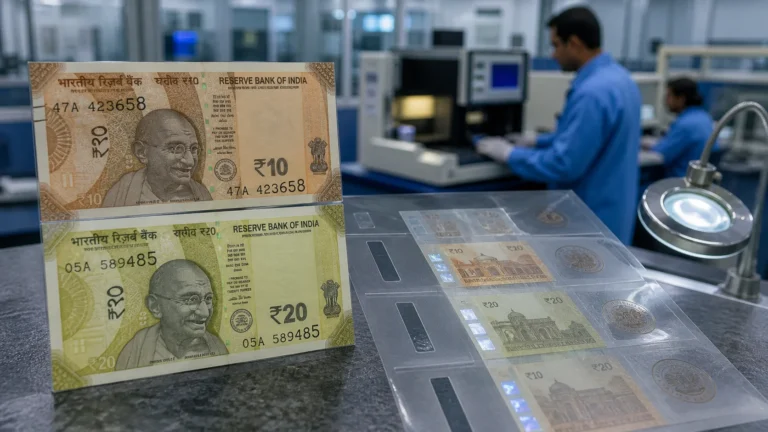
    India Approves Field Trials for Polymer Banknotes - What ₹10 and ₹20 Plastic Notes Mean for You

    The next time you pull a ₹10 or ₹20 note out of your wallet, it might feel a little different from what you’re used to. Not paper. Not cotton. Something closer to a thin, flexible sheet of plastic.

    India has officially taken a significant step toward introducing polymer banknotes into circulation. The government has approved a proposal from the Reserve Bank of India to conduct field trials of one billion polymer notes each in the ₹10 and ₹20 denominations — and if those trials go well, these plastic notes could eventually enter regular circulation alongside the paper currency we’ve all grown up with.

    The Finance Minister confirmed this development in a written reply to the Rajya Sabha, marking the first time a field trial of this scale has been formally approved for India’s currency system.

    What Exactly Are Polymer Banknotes?

    If you haven’t come across them before, polymer banknotes are currency notes made from a thin, transparent plastic film rather than the traditional cotton-based paper used for conventional currency.

    They look and feel quite different from what most Indians are familiar with. They’re cleaner to handle, more flexible in a particular way, and significantly more resistant to the kind of wear and tear that makes paper notes crumple, tear, and go limp after a few months of use.

    They also tend to be harder to fake, since printing on polymer requires specialised processes that counterfeiters find far more difficult to replicate. Several countries have adopted polymer notes for part or all of their currency — Australia, the United Kingdom, Canada, and Singapore among them.

    Australia was actually one of the first in the world to move to polymer currency at scale, and the results have been largely positive in terms of durability and security.

    India has experimented with polymer notes before on a very limited pilot basis in select cities, but nothing approaching the scale of what has now been approved.

    Why ₹10 and ₹20 Specifically?

    The choice of ₹10 and ₹20 denominations for the trial makes practical sense.

    Also Read: Best Stocks to Buy This Month

    These are the notes that change hands most frequently in everyday transactions — at tea stalls, vegetable vendors, local shops, and in change given at petrol pumps and markets. Because they circulate so constantly, they also wear out the fastest. A ₹10 note that passes through dozens of hands every day doesn’t last long in paper form — it gets dirty, damp, torn, and needs to be replaced far sooner than higher-denomination notes that are handled more carefully.

    Polymer notes last significantly longer than paper notes — estimates suggest they can last two to three times as long before needing replacement. In theory, that means fewer reprints, less waste, and lower long-term cost to the government, even if the initial production cost per note is higher than paper.

    Testing with low-denomination, high-circulation notes also gives the RBI the best real-world data on how polymer holds up in Indian conditions — the humidity, the heat, the dust, the sheer volume of daily transactions that these notes go through.

    Will Paper Notes Be Replaced?

    This is the question most people will ask, and the answer right now is a clear no.

    The government has been specific about this — polymer notes are proposed to be issued alongside existing paper notes, not as a replacement for them. The intention is a parallel system where both types of currency circulate together, at least during and immediately after the trial period.

    Any broader decision about whether to move entirely to polymer — or to expand it to other denominations — would only come after the field trials provide enough real-world data to make that call. That’s not a decision being made today.

    What’s the Timeline?

    Honestly, nobody knows yet — and the government has been upfront about that.

    The Finance Minister confirmed that the procurement process is still in its early stages. The RBI hasn’t finalised the polymer substrate sourcing, printing arrangements, or the specific locations where the trial notes will be circulated. Because all of these practical details are still being worked out, it isn’t possible to give a firm date for when these notes will actually appear in your wallet.

    What we do know is that the policy decision has been made. The approval is in place. The process is moving forward, even if slowly.

    Similar Read: Comparing Online Bike Insurance Quotes? Check These Three Things

    The Bigger Picture

    This move is part of India’s broader effort to modernise its currency infrastructure. The RBI has been exploring ways to improve both the durability and security of banknotes in circulation for several years, and polymer currency has consistently been one of the options on the table.

    The security argument is particularly relevant in India’s context. Polymer notes are significantly harder to counterfeit than paper notes — the transparent windows, the specialised printing, and the material itself all create barriers that make faking them far more difficult. For a country that has dealt with counterfeit currency as a persistent challenge, that’s not a small consideration.

    For ordinary citizens, the practical impact — whenever these notes do arrive — will likely be gradual and barely noticeable at first. You’ll receive a slightly stiffer, shinier ₹10 or ₹20 note as change at some point, and life will carry on as normal. But behind that small change is a meaningful shift in how India thinks about and manages its currency for the long term.

    India Polymer Banknotes
    Previous ArticleThe End of Oak Street Cast Salary and Movie Budget: Inside $85 Million Sci-Fi Gamble
    Next Article What Is Proteinmaxxing and Is Eating More Protein Actually Good for You?
    Mohan Nasre

      With over 2000 articles and blogs to his name for Flickonclick, Mohan Nasre is a versatile content writer skilled in multiple niches, including entertainment, technology, finance, news, lifestyle, fitness, and more. His dynamic writing style and ability to adapt to diverse topics have made him a go-to writer for high-quality, engaging content that resonates with readers across various industries.

      Related Posts

      Global July 14, 20264 Mins Read

      Why Oil Companies Are Not Rushing to Expand E85 Fuel — And What It Means for India’s Ethanol Plans

      Cryptocurrency July 7, 2026Updated:July 28, 20263 Mins Read

      Crypto Options Are No Longer Just for Pros: How Retail Traders Are Using Calls, Puts, and Hedging Strategies

      Product Reviews July 5, 2026Updated:July 5, 202613 Mins Read

      Top 12 Best Cap Brands in India That Combine Style, Comfort, and Durability

      Product Reviews June 30, 2026Updated:July 1, 202612 Mins Read

      15 Best Trolley Bags in India — Top Picks for Cabin, Check-in, and International Travel

      Trending June 23, 20264 Mins Read

      India Eyes Isobutanol-Blended Diesel After Flex-Fuel Push: What It Means for Drivers

      Trending June 8, 2026Updated:June 9, 20266 Mins Read

      5 Upcoming Flex Fuel Cars in India That Could Be Introduced Anytime Soon

      Technology June 2, 2026Updated:June 2, 20266 Mins Read

      Tata Technologies Secures SAP Authorization, Expands AI and Cloud Transformation Services

      Trending May 31, 2026Updated:June 4, 202610 Mins Read

      Top 10 Best Electric Cars in India: Which EV Should You Buy?

      Latest Articles

      What Is Proteinmaxxing and Is Eating More Protein Actually Good for You?

      August 11, 2026

      India Approves Field Trials for Polymer Banknotes: What ₹10 and ₹20 Plastic Notes Mean for You

      August 11, 2026

      The End of Oak Street Cast Salary and Movie Budget: Inside $85 Million Sci-Fi Gamble

      August 11, 2026

      The End of Oak Street Release Date: When Is Anne Hathaway Starrer Sci-Fi Thriller Releasing?

      August 11, 2026

      Bharat Bhhagya Viddhaata OTT Release Date: When And Where To Watch Kangana Ranaut Starrer Film

      August 11, 2026

      The Traitors Season 2 Release Date: When and Where to Watch the Upcoming Reality Show

      August 11, 2026

      Where to Watch India’s Got Latent Season 2 Bonus Episode 2 ft Badshah, Sourav Joshi, Harssh Limbachiyaa, Rajat Sood

      August 10, 2026

      Reacher Season 4 on Prime Video — Release Date, Episode Schedule, Cast and Plot

      August 10, 2026

      Cocktail 2 OTT Release Date and Platform: When and Where to Watch the Shahid Kapoor, Kriti Sanon and Rashmika Mandanna Film

      August 10, 2026

      Nando Between Two Worlds Netflix Release Date, Cast, Plot and All You Need to Know

      August 10, 2026
      About Flickonclick

      Flickonclick brings you the latest updates across entertainment, lifestyle, tech, and more. Stay informed with trending news and stories that matter.

      Facebook X (Twitter) Instagram
      Latest Articles
      • What Is Proteinmaxxing and Is Eating More Protein Actually Good for You?
      • India Approves Field Trials for Polymer Banknotes: What ₹10 and ₹20 Plastic Notes Mean for You
      • The End of Oak Street Cast Salary and Movie Budget: Inside $85 Million Sci-Fi Gamble
      • The End of Oak Street Release Date: When Is Anne Hathaway Starrer Sci-Fi Thriller Releasing?
      Important Links
      • About Us
      • Advertise with Us
      • Contact Us
      • Cookie Policy
      • Disclaimer
      • Home
      • Privacy Policy
      • Terms & Conditions
      © 2026 Flickonclick. All Rights Reserved

      Type above and press Enter to search. Press Esc to cancel.