



Many people love wearing perfume, but for some, a strong scent can trigger sneezing, headaches, or a blocked nose within minutes. If you have ever wondered whether perfume is actually bad for your sinuses, you are not alone. This guide breaks down what happens inside your nose when you smell perfume, who is most affected, and what you can do about it.
Can Perfume Really Affect Your Sinuses?
Yes, for some people it can. Perfumes contain fragrance chemicals and volatile compounds that can irritate the lining inside the nose. In most cases, this is not a true allergy. It is usually a reaction called non-allergic rhinitis, which means the nose reacts to strong smells even though the immune system is not actually fighting an allergen.
Common Symptoms People Notice
People who are sensitive to strong fragrances often report:
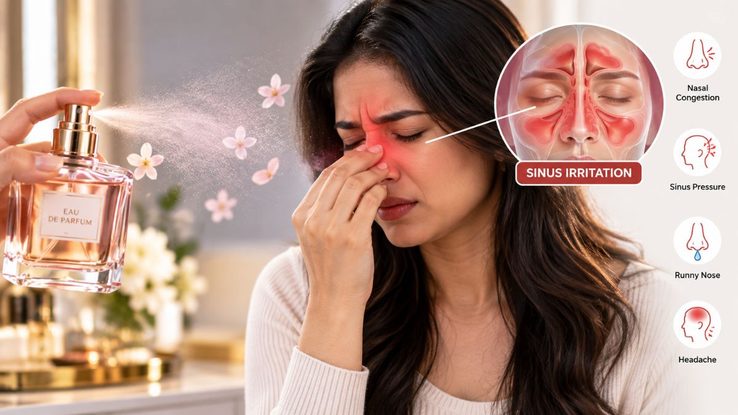
- A blocked or runny nose
- Sudden sneezing
- Headaches or a feeling of pressure, especially around the forehead and eyes
- Watery or itchy eyes
- Coughing or a tight feeling in the chest, in people who already have asthma or sinus issues
These symptoms can start within minutes of smelling a strong perfume and usually settle down once you move away from the scent.
Why Does This Happen?
Inside the nose, there is a nerve called the trigeminal nerve. This nerve reacts to strong smells and chemical irritants, separate from the nerves that let you actually smell things. When perfume is strong, this nerve can get irritated, causing swelling, congestion, or a headache, even without a true allergic reaction.
People who already have chronic sinusitis, allergic rhinitis, or asthma tend to have a more sensitive nasal lining. This makes them react faster and more strongly to perfumes, air fresheners, and other strong scents.
Trending Article: Top 10 Health Benefits of Flaxseeds
Who Is More Likely to Be Affected?
Some groups are more prone to sinus reactions from perfume:
- People with asthma
- People with chronic sinusitis or frequent sinus infections
- People who already have allergic rhinitis
- People who get frequent migraines or tension headaches
- People with fragrance sensitivity or chemical sensitivity
Tips to Reduce Sinus Irritation from Perfume
If you love perfume but notice it affects your sinuses, these small changes can help:
- Choose lighter, alcohol-free, or natural fragrances instead of strong synthetic ones
- Spray perfume on clothes instead of directly near the nose and neck
- Keep rooms well ventilated instead of using heavy scents in closed spaces
- Avoid layering multiple scented products, such as perfume, deodorant, and scented lotion, at the same time
- Use an air purifier at home if you are sensitive to smells in general
When Should You See a Doctor?
If perfume regularly causes blocked nose, headaches, or breathing trouble, it is a good idea to get it checked. An ENT specialist or allergist can find out whether it is a true allergy or non-allergic rhinitis, and suggest the right treatment. This may include nasal sprays, avoiding known triggers, or other simple steps to manage symptoms.
Frequently Asked Questions
Is perfume sensitivity the same as a perfume allergy? Not always. Most people who react to perfume have non-allergic rhinitis, where the nose reacts to irritation rather than a true allergic response. A doctor can help tell the difference through proper evaluation.
Can natural perfumes also cause sinus problems? Yes, even natural essential oils can irritate the nose in sensitive people. The reaction depends on how strong the scent is and how sensitive a person’s nasal lining is, not just whether the perfume is natural or synthetic.
Is it common for perfume to trigger headaches? Yes, strong fragrances are a well-known trigger for headaches and migraines in sensitive individuals, because of how they affect the trigeminal nerve inside the nose.
Should people with asthma avoid perfume completely? Not necessarily, but people with asthma should be cautious around strong fragrances, since these can sometimes trigger coughing or breathing difficulty. It is best to talk to a doctor about personal triggers.
Disclaimer: This article is for general information only and should not replace professional medical advice. If you have ongoing sinus symptoms, please consult an ENT specialist or allergist.