


No Diwali feels complete without a bright rangoli at the doorstep. The colourful patterns welcome guests, add a festive glow to the home and, as per tradition, invite Goddess Lakshmi on the night of Lakshmi Puja. Whether you have a big courtyard or a small flat entrance, there is a rangoli design that will fit your space and your skill level.
With Diwali 2026 falling on Sunday, November 8, here are the 10 best rangoli designs for Diwali, from easy rangoli designs for beginners to detailed patterns that will make your home stand out. Each design comes with the colours you need, the time it takes and simple steps to make it.
Best Rangoli Designs for Diwali 2026: Quick List
| Rangoli design | Difficulty | Time needed | Best for |
|---|---|---|---|
| Lotus Flower Rangoli | Medium | 1 to 1.5 hours | Main entrance |
| Diya Rangoli | Medium | 1 hour | Lakshmi Puja night |
| Peacock Rangoli | Hard | 2 hours | Courtyard or living room |
| Dot (Kolam) Rangoli | Easy | 30 to 45 minutes | Beginners |
| Mandala Rangoli | Medium to hard | 1.5 to 2 hours | Large spaces |
| Marigold Flower Rangoli | Easy | 45 minutes | Eco-friendly homes |
| Lakshmi Charan Rangoli | Easy | 30 minutes | Puja room and doorway |
| Geometric Rangoli | Easy | 45 minutes | Modern homes |
| Corner Rangoli | Easy | 30 to 45 minutes | Small flats |
| Kalash Rangoli | Medium | 1 hour | Puja area |
Things You Need to Make Rangoli
Before you start, keep these basic things ready:
- Rangoli colours or coloured powder
- White rangoli powder or rice flour for outlines
- Chalk to draw the rough design first
- A bangle, bowl or plate to draw perfect circles
- A spoon, cone or paper funnel for fine lines
- A small sieve or tea strainer to fill large areas evenly
- Fresh flowers, petals and diyas for decoration (optional)
Tip: Clean and dry the floor well before starting. Rangoli colours stick better and look brighter on a dry surface.
1. Lotus Flower Rangoli
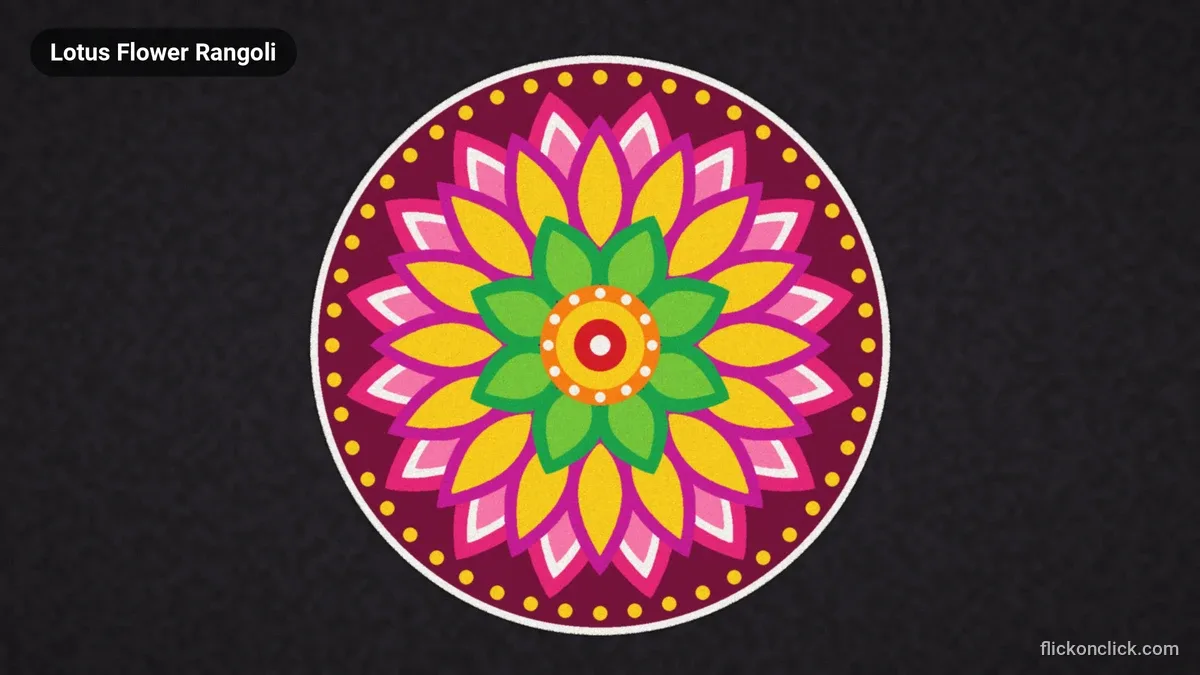
The lotus is closely linked with Goddess Lakshmi, which makes this one of the most popular rangoli designs for Diwali. Layers of pink, yellow and white petals open out from a bright centre, giving the look of a blooming flower.
Colours needed: Pink, magenta, yellow, green, orange, red and white
How to make it:
- Draw a big circle with chalk and mark the centre.
- Make a small circle in the middle and fill it with orange, yellow and red rings.
- Draw eight green leaves around the centre.
- Add two rows of long petals around the leaves, one in magenta and one in pink.
- Outline the petals in white and finish with a border of yellow dots.
2. Diya Rangoli
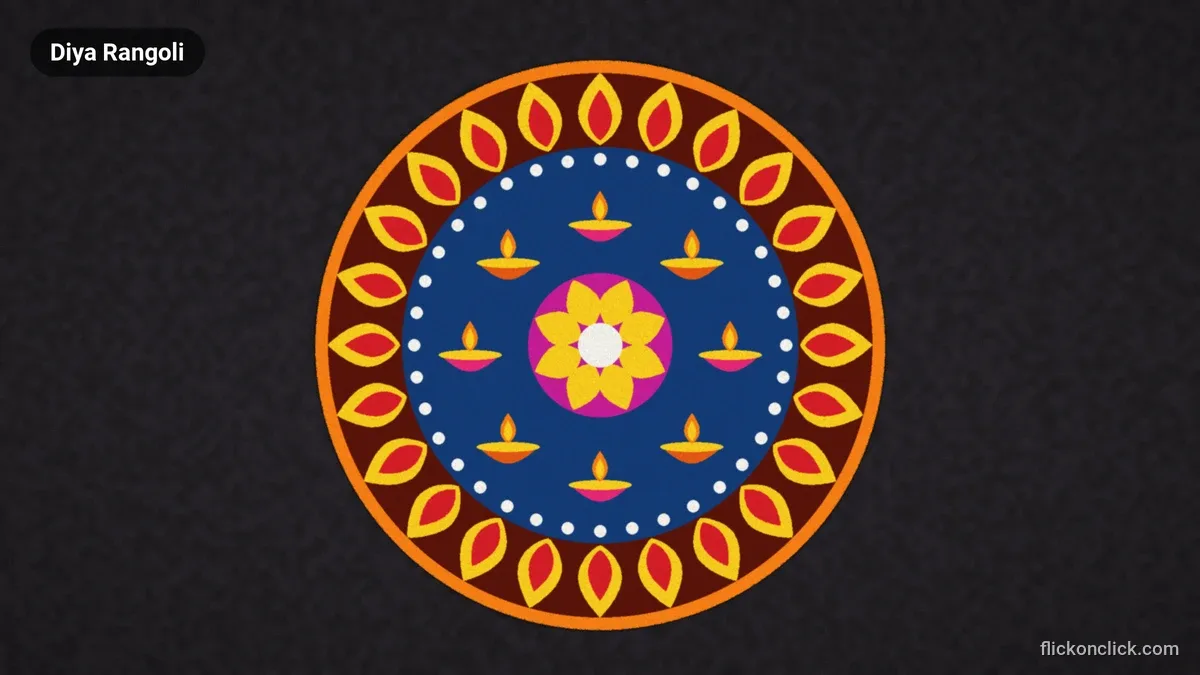
Diwali is the festival of lights, and a diya rangoli captures that spirit perfectly. In this design, small diyas are drawn in a circle around a flower, with a flame-like border on the outside.
Colours needed: Orange, yellow, red, dark blue, pink and white
How to make it:
- Draw a large circle and fill the inner part with dark blue.
- Draw eight diyas in a circle, each with an orange or pink base and a yellow flame.
- Add a small flower in the centre.
- Make a border of yellow and red flame shapes on the outside.
- Place real diyas around the rangoli in the evening for a glowing look.
3. Peacock Rangoli
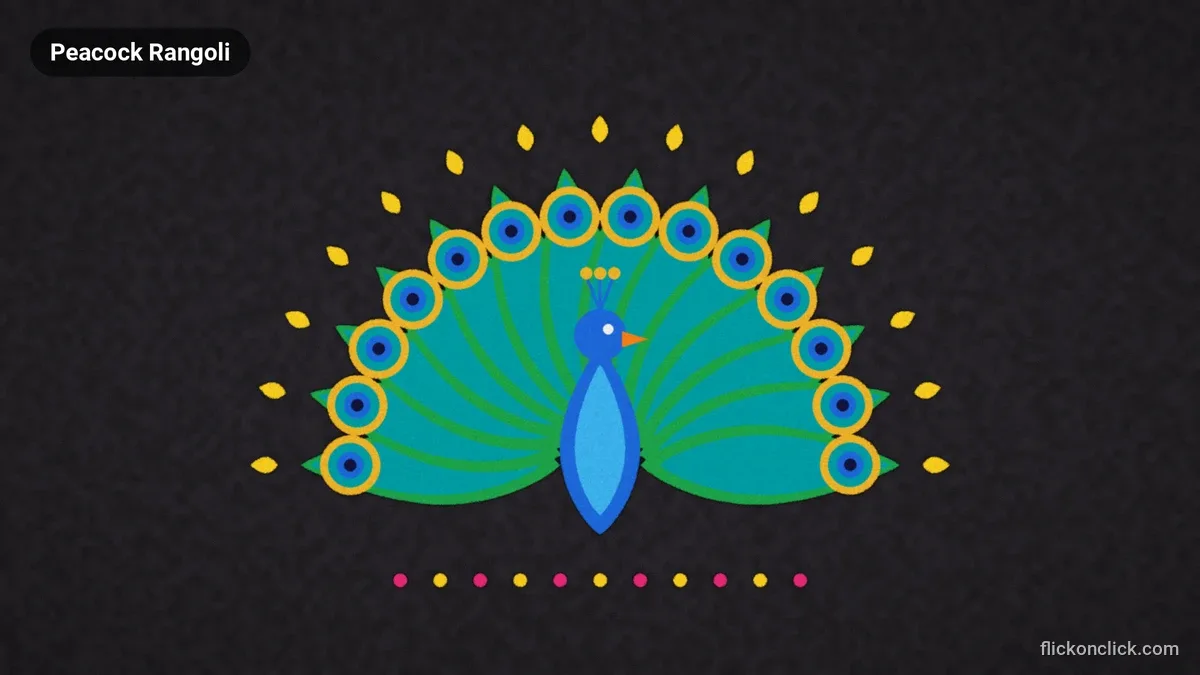
The peacock rangoli is a showstopper. India’s national bird, with its open feathers in shades of blue and green, instantly draws attention. It takes more time and patience, so it is best for those who have made rangoli before.
Colours needed: Blue, sky blue, green, teal, golden yellow, orange and white
How to make it:
- Draw the peacock’s body in the centre lower part of the space.
- Draw a half-circle of long feathers behind the body.
- Fill the feathers with green and teal, and add an “eye” at the tip of each feather using gold, teal and blue.
- Add the crown, beak and eye details.
- Finish with small yellow petals around the feathers.
4. Dot (Kolam) Rangoli
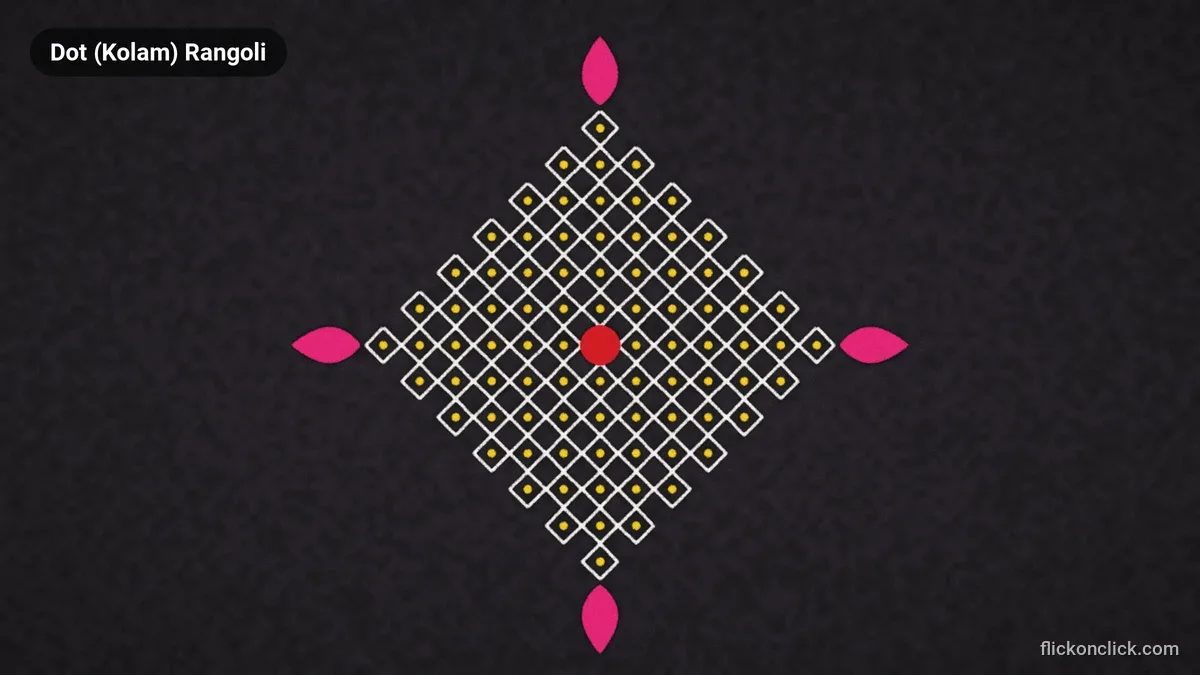
Dot rangoli is the easiest way to make a neat and even design, which is why it is perfect for beginners. You first make a grid of dots and then join them with lines. This style is known as kolam in Tamil Nadu and muggu in Andhra Pradesh and Telangana.
Colours needed: White, yellow, pink and red
How to make it:
- Make a diamond-shaped grid of evenly spaced dots.
- Draw a small diamond shape around each dot using white powder or rice flour.
- Fill the dots with yellow.
- Add pink petal shapes at the four tips of the design.
- Place a red dot or a small diya in the centre.
5. Mandala Rangoli
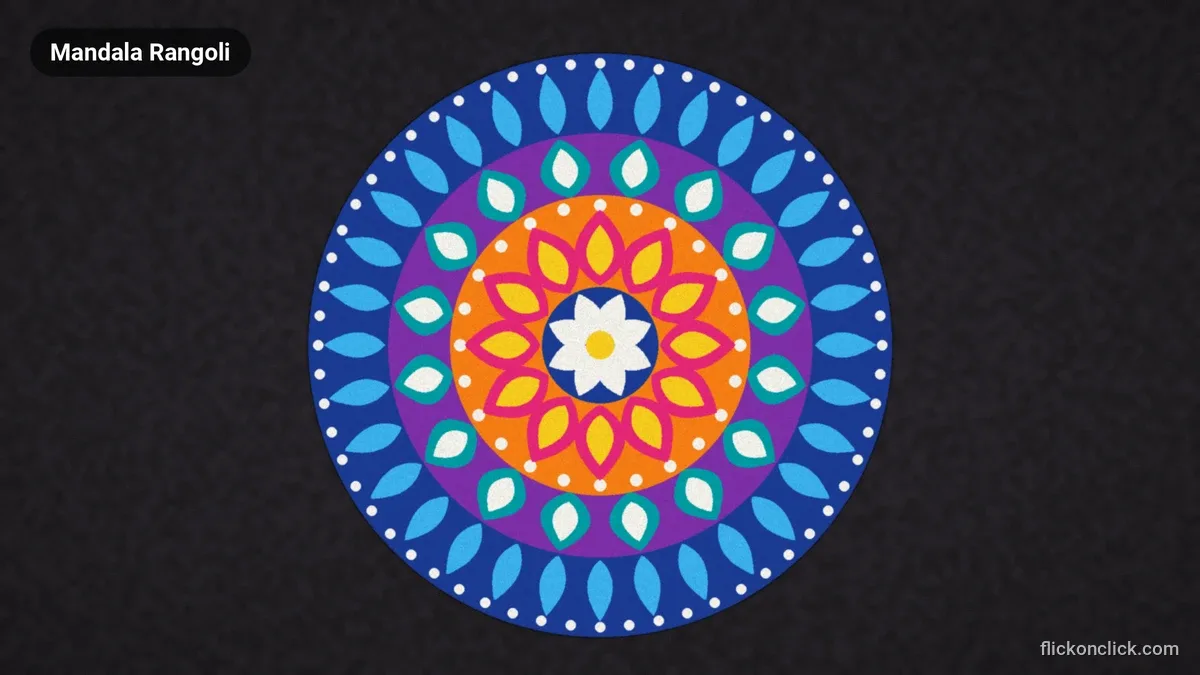
Mandala rangoli is made of circles inside circles, with repeating petals and dots in each layer. It looks detailed and rich, and works best in large spaces like a courtyard, lobby or living room.
Colours needed: Dark blue, purple, teal, orange, pink, yellow, sky blue and white
How to make it:
- Draw four or five circles of different sizes from the same centre, using a bowl or a string tied to chalk.
- Fill each ring with a different colour.
- Add petals in each ring, keeping the number of petals the same all around.
- Decorate the rings with white dots.
- Finish with a small white flower in the centre.
6. Marigold Flower Rangoli
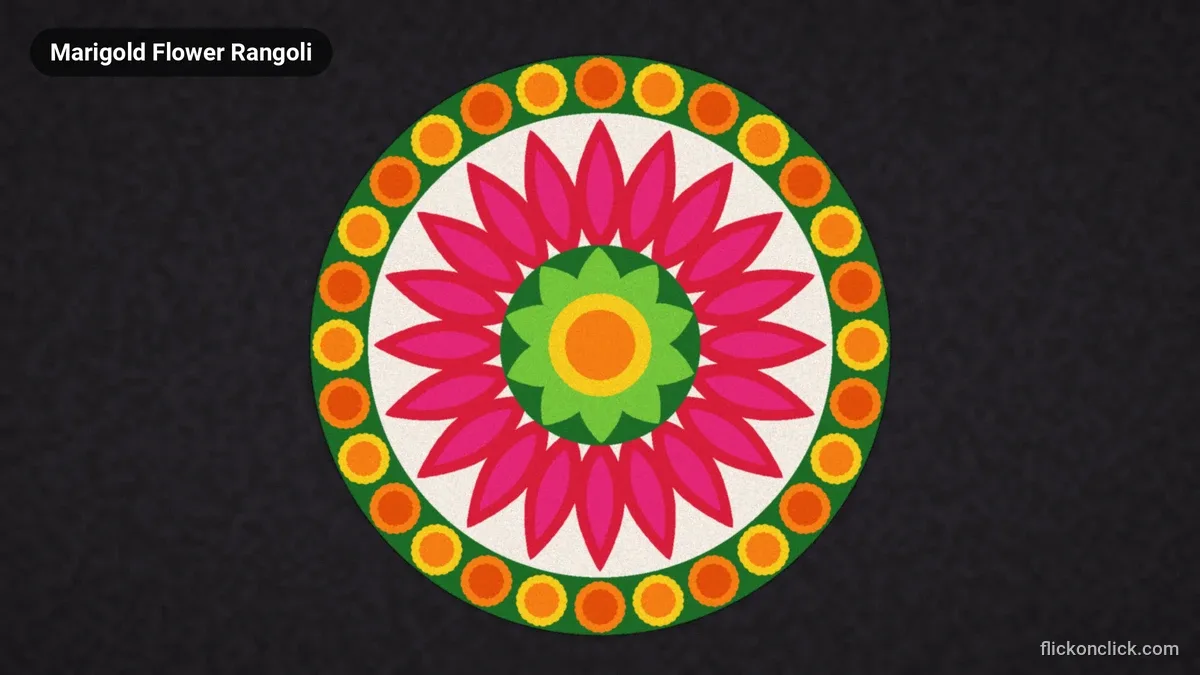
A flower rangoli, or phoolon ki rangoli, is made with real flowers and petals instead of powder. Marigold (genda) and rose petals are the most common choices. It is eco-friendly, smells lovely and is easy to clean up the next day.
Things needed: Orange and yellow marigolds, red and pink rose petals, green leaves and white chrysanthemums or rice
How to make it:
- Draw the outline of a large circle with chalk.
- Place whole marigolds along the outer edge, alternating orange and yellow.
- Fill the next ring with white flowers or rice.
- Arrange rose petals in a flower shape inside.
- Use green leaves and a big marigold in the centre.
Tip: Sprinkle a little water on the flowers to keep them fresh for longer.
7. Lakshmi Charan Rangoli
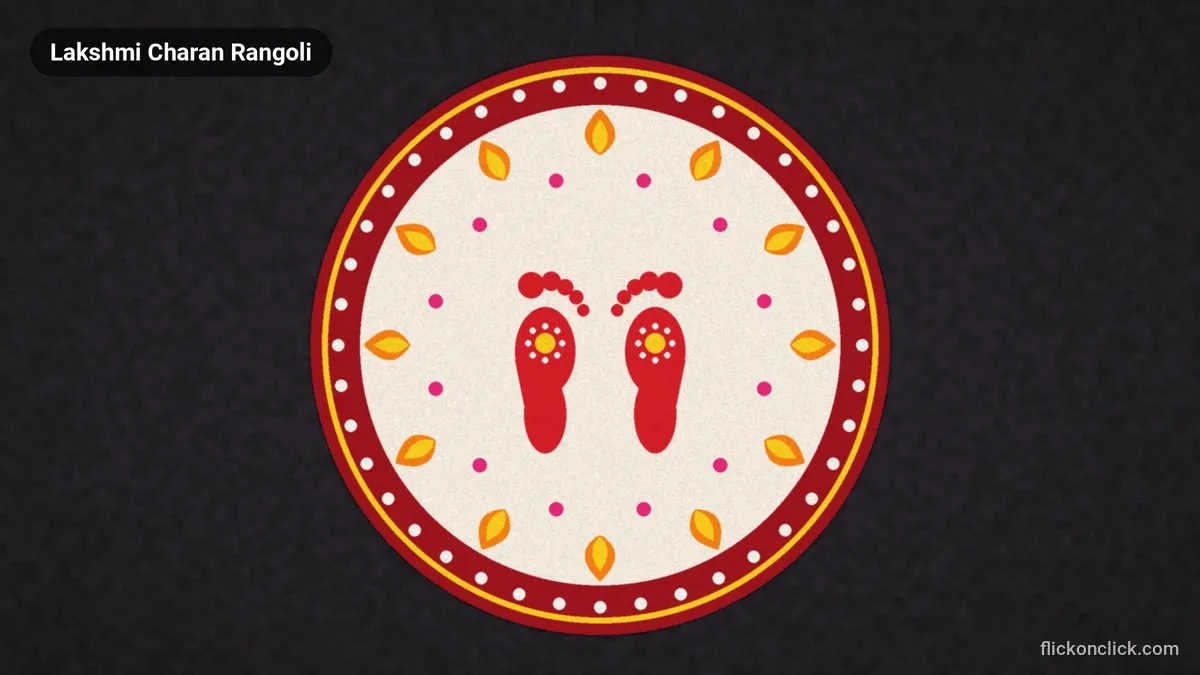
Lakshmi charan, or the footprints of Goddess Lakshmi, are drawn on Diwali to symbolise the goddess entering the home. They are usually made at the main door, facing inside, and lead towards the puja room.
Colours needed: Red or kumkum, white, yellow, orange and pink
How to make it:
- Draw a pair of small footprints with chalk, with the toes pointing towards the inside of the house.
- Fill them with red rangoli colour or kumkum.
- Add a small yellow and white flower design on each foot.
- Draw a circle around the footprints and add an orange petal border.
- You can also draw a trail of small footprints from the door to the puja room.
8. Geometric Rangoli
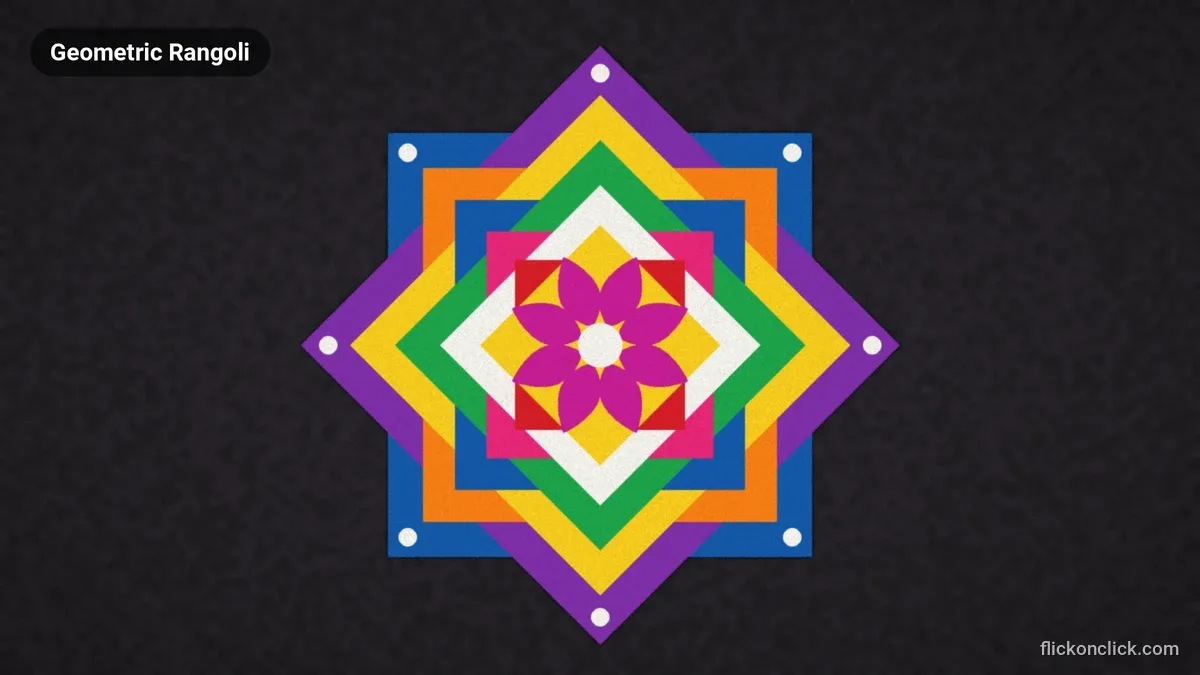
Geometric rangoli uses squares, diamonds and straight lines instead of curves. It is easy to draw with a ruler or a straight stick and gives a clean, modern look that suits apartments and offices.
Colours needed: Blue, purple, orange, yellow, green, pink, red and white
How to make it:
- Draw a large square, and then draw another square of the same size turned at an angle, to make an eight-pointed star.
- Draw smaller star shapes inside, one after another.
- Fill each layer with a different colour.
- Add a flower in the centre.
- Place white dots at the tips of the star.
9. Corner Rangoli
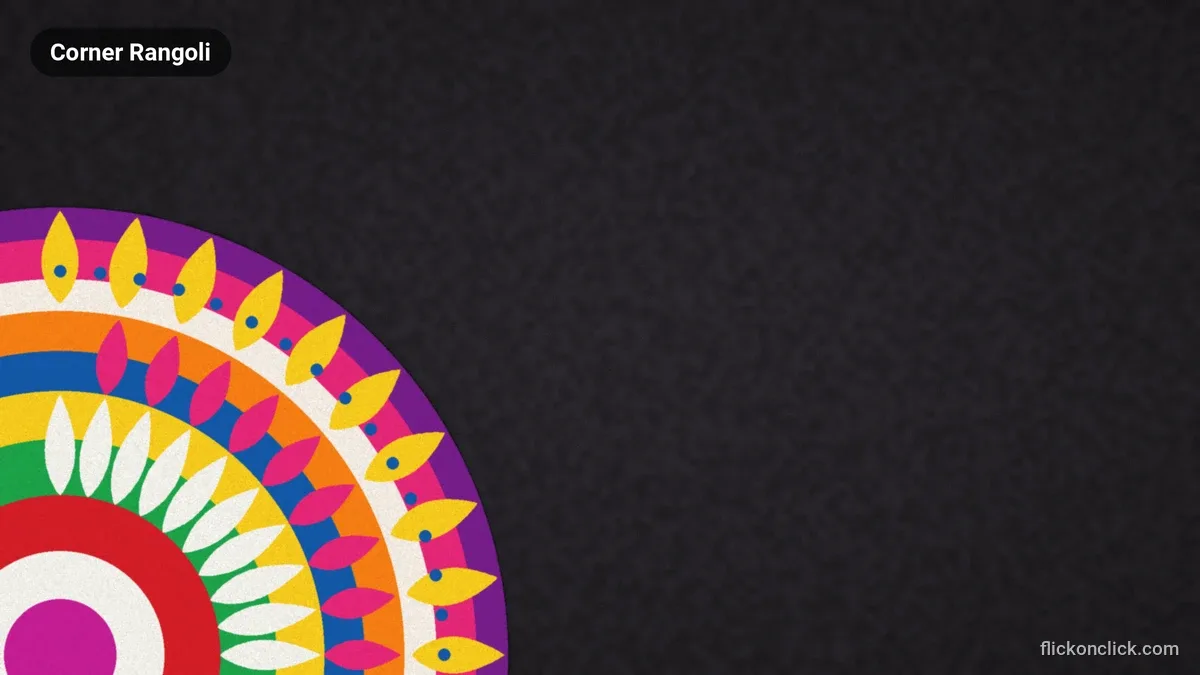
Not every home has space for a big circle. A corner rangoli fills just one corner of the doorway, staircase or room, and still looks festive. It is also less likely to be stepped on.
Colours needed: Any five or six bright colours, along with white
How to make it:
- Pick a corner and draw curved bands outwards from it, like a quarter circle.
- Fill each band with a different colour.
- Add petals and leaves along the bands.
- Decorate the outer band with dots.
- Make a matching design in the opposite corner for a balanced look.
10. Kalash Rangoli
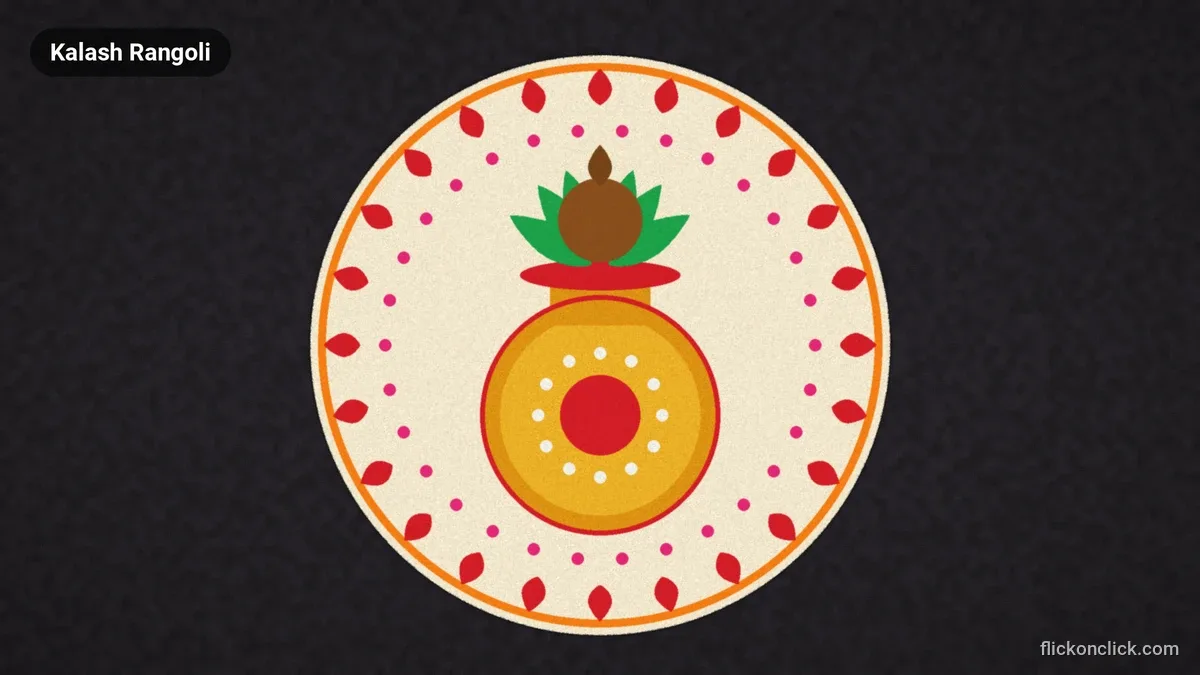
The kalash, a pot topped with mango leaves and a coconut, is a symbol of good fortune and is part of most Hindu pujas. A kalash rangoli near the puja area adds a traditional touch to Diwali celebrations.
Colours needed: Golden yellow, orange, red, green, brown and white
How to make it:
- Draw the round pot shape with a narrow neck.
- Fill the pot with golden yellow and draw a red design on it.
- Draw mango leaves coming out of the top in green.
- Add a brown coconut on top.
- Draw a circle around the kalash and decorate it with red and pink petals.
Rangoli Names Across India
Rangoli is made in almost every part of India, but it has different names and styles in different regions:
| Region | Name |
|---|---|
| Tamil Nadu | Kolam |
| Andhra Pradesh and Telangana | Muggu |
| Karnataka | Rangavalli |
| West Bengal | Alpana |
| Rajasthan | Mandana |
| Bihar | Aripan |
| Uttar Pradesh | Chowk Purana |
Tips to Make a Perfect Rangoli for Diwali
- Plan the design on paper first, and then draw the outline with chalk.
- Always start from the centre and work outwards.
- Use a bangle or bowl to draw neat circles.
- Fill large areas first and do the fine outlines last.
- Hold the powder between your thumb and finger and let it fall slowly for thin lines.
- Use a tea strainer to spread colour evenly in big areas.
- Keep a dry brush handy to clean up mistakes.
- Make your rangoli in the morning or afternoon, so it is ready before the evening puja.
How to Make Rangoli Last Longer
- Choose a spot away from fans, doors that open often and heavy foot traffic.
- Mix a little white craft glue with water and spray it lightly over the outline on a hard floor to help the colours stay in place.
- Make a border with flowers or diyas so people do not step on it by mistake.
- For outdoor rangoli, avoid windy corners and cover it at night if dew is expected.
Eco-Friendly Rangoli Ideas
Many market rangoli colours contain chemical dyes that can irritate skin and harm plants and pets when they are washed away. Natural options are safer and just as pretty:
- Rice flour for white
- Haldi (turmeric) for yellow
- Kumkum or beetroot powder for red
- Coffee or tea powder for brown
- Dried and ground leaves for green
- Flower petals for every colour
A rice flour rangoli also feeds ants and birds, which is part of the old tradition behind kolam in South India.
Why Rangoli Is Made on Diwali
The word rangoli is believed to come from the Sanskrit word “rangavalli”, which means a row of colours. On Diwali, rangoli is made at the entrance to welcome guests and Goddess Lakshmi, the goddess of wealth and prosperity. It is also seen as a sign of good luck and positive energy. Many families make a fresh rangoli on each day of the festival, from Dhanteras to Bhai Dooj.
Final Word
The best rangoli design for Diwali is the one that suits your space, time and skill. If you are a beginner, start with a dot rangoli, a corner rangoli or a simple Lakshmi charan design. If you have more time, try the lotus, mandala or peacock rangoli for a truly eye-catching entrance. Add a few diyas and fresh flowers, and your home will be ready to welcome Diwali in style.