


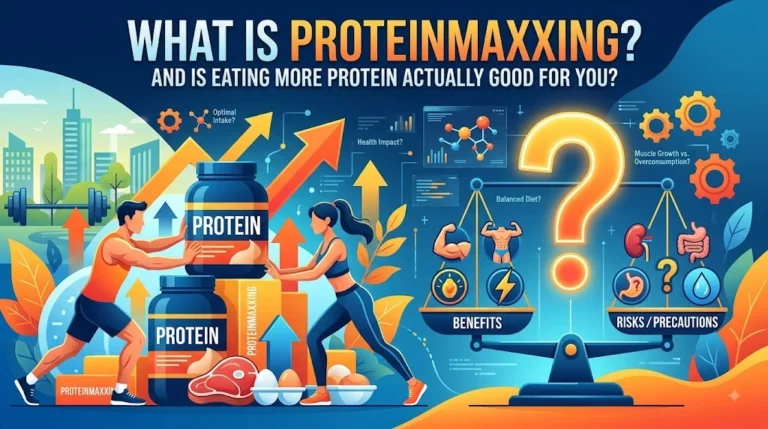
Open any fitness-related social media account right now, and you’ll likely be hit with content about protein. High-protein breakfasts. High-protein lunches. Protein shakes before workouts, protein bars after, Greek yogurt as a snack, and cottage cheese before bed.
The message is simple and consistent — eat more protein, and everything gets better. This is Proteinmaxxing, and it’s become one of the dominant trends in fitness and nutrition culture in 2026.
But is it actually as beneficial as it sounds? And more importantly — is it right for everyone?
What Exactly Is Proteinmaxxing?
Proteinmaxxing is exactly what it sounds like — a dietary approach that prioritises protein above everything else in every meal. The goal is to hit or exceed the body’s daily protein requirements, often going significantly above what traditional nutrition guidelines recommend.
People doing this are loading their plates with chicken, eggs, fish, Greek yogurt, cottage cheese, lentils, tofu, and a rotating cast of protein supplements. Every meal is planned with protein content as the primary consideration, with carbohydrates and fats treated as secondary concerns.
The appeal is easy to understand. Protein is genuinely important for the human body — it helps build and repair muscle, it keeps you feeling full for longer than carbohydrates or fat, and it requires more energy for the body to digest, which means you burn slightly more calories just by processing it.
For people trying to lose weight or build muscle, those properties are very attractive. The social media framing has simplified all of this into a straightforward message — protein is good, so more protein is better. And that’s where it starts to get more complicated.
Who Actually Benefits from More Protein?
Here’s the honest answer — protein needs vary enormously depending on who you are, what you do, and what your health looks like.
For most average adults, the recommended intake sits between 0.8 and 1.2 grams of protein per kilogram of body weight per day. That’s enough to support normal body function, maintain muscle mass, and meet the demands of moderate daily activity. A person weighing 70 kilograms, for example, would need somewhere between 56 and 84 grams of protein per day to meet that range — an amount that’s achievable through a reasonably balanced diet without going anywhere near supplement territory.
Athletes and people doing heavy resistance training genuinely do need more protein because their muscles are being broken down and rebuilt at a higher rate. The elderly also benefit from higher protein intake because muscle mass naturally decreases with age and protein helps slow that process.
But the casual gym-goer, the person trying to lose a few kilograms, or the office worker who has started going for walks — the evidence that dramatically increasing protein intake offers meaningful benefits for these groups is considerably less clear. Yet these are exactly the people that Proteinmaxxing content is often targeting.
Related Article: Why Leave-In Treatments Are Replacing Heavy Oils in Daily Hair Care
The Kidney Problem Nobody Talks About Enough
One concern that health experts consistently raise about very high protein diets is the strain they place on the kidneys.
When your body breaks down protein, it produces nitrogen as a byproduct. Your kidneys are responsible for filtering that nitrogen out of your blood and excreting it as urine. When you eat significantly more protein than your body needs, you’re giving your kidneys substantially more work to do.
For people with healthy kidneys, this isn’t necessarily dangerous in the short term. But for people who already have kidney disease or are predisposed to kidney problems — and many people don’t know they have early-stage kidney issues until they’re tested — high protein intake can genuinely make things worse.
The research on whether very high protein intake causes kidney problems in healthy people is still mixed, but most experts agree that staying significantly above recommended levels for extended periods carries risks that the Proteinmaxxing trend rarely discusses.
Related Article: How Doctors Decide the Right Hair Regrowth Treatment Strength
What New Research Is Actually Saying
A study published in the journal Cell Press Blue has introduced a genuinely thought-provoking counterpoint to the more-protein-is-always-better narrative.
Researchers Bailey A. Knopf and Dudley W. Lamming argue that in certain circumstances, reducing protein intake — rather than increasing it — may actually benefit metabolic health, longevity, and healthy aging.
The mechanism they focus on is something called the mTORC1 system, which is involved in cell growth and repair. High protein intake keeps this system continuously active. While that sounds positive on the surface, the problem is that when mTORC1 never gets a break, it can interfere with the body’s natural cell cleaning and repair processes — functions that are essential for long-term health and aging well.
The researchers particularly highlight the potential benefits of limiting methionine — an amino acid found in high concentrations in meat and eggs. Restricting methionine has shown promising effects in some studies related to longevity and metabolic function.
This doesn’t mean the study is telling you to eat no protein. It’s saying that blindly maximising protein intake without considering the type of protein and the overall dietary context may not be as straightforwardly beneficial as the trend suggests.
Related Read: 14 Lifestyle Changes to Make in Your 30s for a Healthier, Happier Life
So What Should You Actually Do?
The sensible middle ground, based on what experts and research currently show, looks something like this.
Make sure you’re eating enough protein for your body weight, activity level, and age — but don’t assume that eating double or triple the recommended amount will give you double or triple the benefits. It won’t, and it may create problems that the Proteinmaxxing trend doesn’t warn you about.
Prioritise whole food sources of protein — eggs, fish, legumes, dairy, lean meat, tofu — over heavily processed protein supplements whenever possible. The supplements have their place, especially for athletes with very high needs, but they shouldn’t be the primary strategy.
If you have any existing kidney concerns, talk to a doctor before significantly changing your protein intake. And if you’re simply trying to lose weight or feel healthier, a moderate increase in protein combined with a balanced diet is far more sustainable — and safer — than treating every meal as a protein delivery vehicle.
Protein matters. Proteinmaxxing, done without context or personalisation, is a trend worth approaching with more scepticism than its social media cheerleaders tend to encourage.