


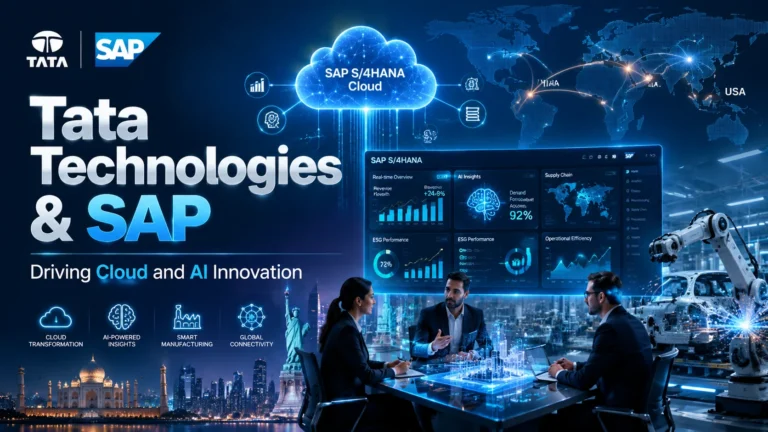
If you work in enterprise technology or follow what is happening in India’s manufacturing and engineering space, you may have noticed that Tata Technologies has been quietly expanding its footprint beyond traditional engineering services. The latest move makes that direction even clearer.
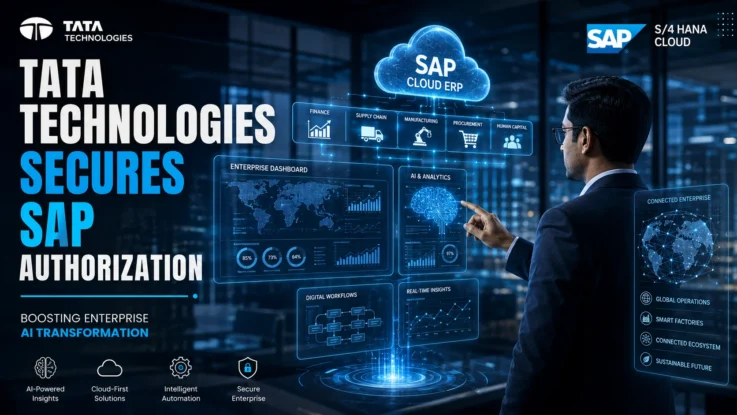
The company has secured SAP PartnerEdge Sell Authorization in both India and the United States. On the surface, that sounds like a partnership update. But when you look at what this actually enables, it is a fairly meaningful change in what Tata Technologies can do for its customers.
What SAP PartnerEdge Sell Authorization Actually Is
Not every company that works with SAP has the same level of authorization. Some partners implement. Some consult. Some support.
The Sell Authorization is a specific certification that allows a partner to sell SAP solutions directly, not just implement them after someone else has closed the deal. This matters because it lets a company like Tata Technologies sit at the table from the very beginning of a customer conversation, from helping define what solutions make sense, through the sale, through implementation, and all the way to managing long-term outcomes.
In simple terms, Tata Technologies can now be the one-stop shop for an enterprise that wants to modernize using SAP. They do not need to bring in another partner to handle the commercial side of the SAP relationship.
Why Tata Technologies Wanted This
For years, Tata Technologies built its reputation on engineering and manufacturing services. The company has strong roots in the automotive, aerospace, and industrial machinery sectors. It knows the factory floor as well as the boardroom.
But the business is changing. Enterprises do not just want someone to implement software anymore. They want a partner who understands their industry, helps them figure out what to do, and then sees the whole thing through.
Securing this authorization is Tata Technologies saying out loud that it wants to be that partner. Instead of coming in after a decision has already been made, the company can now engage much earlier in the process, help shape the transformation roadmap, and stay involved through execution and beyond.
That shift, from being a services company to being a solutions company, is what makes this announcement worth paying attention to.
What Tata Technologies Can Now Offer
With this authorization in place, the company can support customers across the full SAP transformation journey.
Cloud ERP Modernization
Many large manufacturers and industrial companies are still running older ERP systems that were built for a different era. Migrating to SAP Cloud ERP is not just a technology upgrade. It changes how data flows, how decisions get made, and how different parts of the business connect with each other.
Tata Technologies brings specific knowledge of how manufacturing operations work, which makes it better placed than a generic IT firm to help clients through that kind of transition.
AI Built Into the Business, Not Bolted On
There is a lot of noise around artificial intelligence right now, and a lot of it is vague. What Tata Technologies is pointing to with this partnership is something more specific.
SAP Business AI, including a tool called Joule that works as an AI-powered business assistant, can be embedded directly into enterprise workflows. Instead of running AI as a separate initiative, it becomes part of how people actually work day to day. Tata Technologies plans to help customers integrate this kind of AI in a way that makes practical sense for their operations, not just as a demonstration.
SAP Business Technology Platform
This is the underlying platform that connects different SAP systems and allows companies to build additional capabilities on top. Tata Technologies can help organizations use this platform to create smarter, more connected business environments that generate useful insights rather than just storing data.
Clean Core and the Autonomous Enterprise
SAP has been promoting the idea of a Clean Core, which essentially means keeping the ERP system standardized and upgrade-ready rather than customizing it so heavily that updates become painful and risky.
Tata Technologies is aligned with this approach. The goal is to help customers adopt new technology without breaking what already works, and to set up systems that can keep improving over time with less disruption.
The broader concept SAP talks about is the Autonomous Enterprise, where cloud technology, automation, and AI work together to create business processes that essentially optimize themselves. Tata Technologies is positioning itself as a guide for companies trying to move in that direction.
The Manufacturing Angle Is Important Here
It is worth emphasizing that Tata Technologies is not a generalist IT firm trying to do everything for everyone. Its roots are in engineering and manufacturing, and that specificity matters.
OEMs, automotive suppliers, aerospace companies, and industrial manufacturers face challenges that are different from retail or banking. Supply chains are complex. Engineering processes involve massive amounts of data. Production environments have constraints that software alone cannot solve.
When Tata Technologies talks about helping manufacturers adopt SAP Cloud ERP, it is doing so with genuine industry knowledge. That is not something every SAP partner can claim.
What Warren Harris Said, and What It Signals
Tata Technologies Managing Director and CEO Warren Harris made the point that the companies winning in today’s economy are the ones that can innovate quickly, run efficiently, and scale without breaking. The expanded SAP authorization is meant to help customers do exactly that.
That kind of language could sound generic, but in context it reflects something real. The authorization is not just a badge. It changes what conversations Tata Technologies can lead, what deals it can structure, and what long-term relationships it can build with customers.
What This Means If You Are a Manufacturer or Enterprise Leader
If your organization is thinking about moving to SAP Cloud ERP, modernizing legacy systems, or figuring out how to practically bring AI into your operations, Tata Technologies now has more to offer than it did before.
You can work with one company that understands your industry, can advise on the right approach, handle the commercial side of the SAP relationship, implement the solution, and stay involved to make sure the outcomes actually materialize.
For manufacturers in particular, that level of end-to-end engagement from someone who genuinely understands the industry is harder to find than it sounds.
Also Read: Amazon Music Unlimited Arrives in India With Premium Audio and a New Three-Tier Music Strategy
The authorization is effective across India and the United States, which means Tata Technologies is building this capability in two of the most important enterprise technology markets in the world at the same time. That suggests the company is thinking about this move as a long-term foundation, not a short-term announcement.
It will be worth watching how customers respond and what kinds of transformations Tata Technologies leads in the next few years as a result of this expanded role.