


Cricket’s technology problem just got a new chapter — and this time, it involves sunglasses.
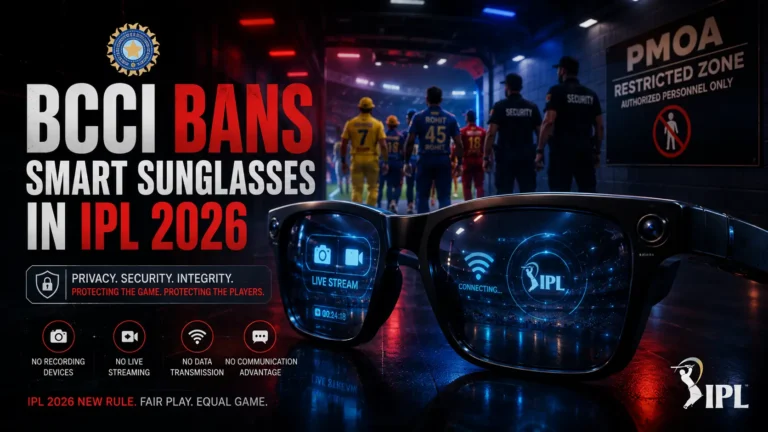
The BCCI’s Anti-Corruption and Security Unit (ACSU) has officially banned smart sunglasses inside the Players and Match Officials Area (PMOA) during IPL 2026 matches. In a fresh advisory sent to all IPL franchises, the board made it clear that these aren’t just stylish accessories — they’re sophisticated electronic devices capable of doing a lot more than blocking sunlight.
What Exactly Are Smart Sunglasses?
If you haven’t come across them yet, smart sunglasses look pretty much like regular sunglasses. But built into the frames is technology that allows the wearer to livestream video, make audio and video calls, send and receive text messages, and connect to the internet through mobile data or Wi-Fi.
Some of the biggest tech and lifestyle brands have been actively marketing these products to sportspeople, and the BCCI noticed. The ACSU advisory specifically mentioned that certain companies had been marketing and selling smart sunglasses directly to players and support staff. That’s what triggered the board to step in.
Why Did BCCI Ban Them?
The answer comes down to one word — integrity.
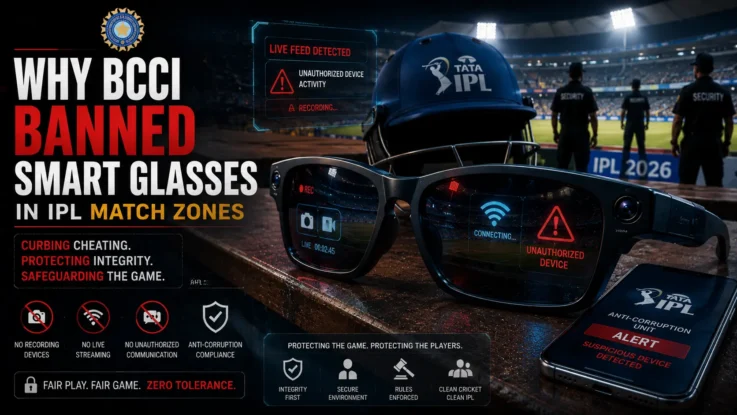
The BCCI clarified that smart glasses fall under the category of restricted electronic devices because of their advanced features, classifying them as both an “Audio/Video Recording Device” and a “Communication Device” under PMOA Minimum Standards.
In a cricket environment, that combination is a serious concern. The PMOA is a highly sensitive area — it’s where players, coaches, analysts, and team officials gather on match days. If someone inside that zone could quietly livestream conversations, record strategy discussions, or communicate with someone outside using nothing more than a pair of sunglasses, the integrity of the game could be compromised.
The BCCI has been firm about keeping communication devices out of restricted areas for years. Smartwatches and mobile phones are already on the banned list inside the PMOA. Smart sunglasses are now in the same category.
What Are Players Required to Do?
All players and support staff have been directed to deposit smart sunglasses with the Security Liaison Officer (SLO), along with their mobile phones and smartwatches, upon entering the PMOA on match days. There’s no exception to this — everyone goes through the same process.
And the board hasn’t left any room for ambiguity about what happens if someone doesn’t comply. Violations of the directive could attract disciplinary action and financial penalties under the PMOA Minimum Standards for IPL 2026.
This season has already seen at least one such penalty enforced. Rajasthan Royals manager Romi Bhinder was fined Rs 1 lakh and handed a warning after being caught on camera using a phone in the team dugout during a match. The message is clear — the BCCI is watching, and it’s not issuing warnings without consequences.
The Virat Kohli Connection
There’s an interesting subplot to this story. RCB opener Virat Kohli is a brand ambassador for Oakley, one of the companies selling smart sunglasses. The advisory doesn’t name any player or brand specifically, but the timing — right as IPL 2026 heads into its final stages — means even the biggest names in the game will need to leave their high-tech eyewear at the door.
Also Read: Virat Kohli Watch Collection: Full List and Prices
Why This Matters Beyond IPL
This ban is part of a broader, ongoing effort to keep cricket clean as consumer technology gets smarter and smaller. A few years ago, the concern was about smartwatches. Before that, it was phones. Now it’s sunglasses. As wearable tech becomes harder to detect and easier to misuse, cricket’s governing bodies have to keep moving the goalposts.
The BCCI’s quick response here — issuing a formal advisory mid-season rather than waiting — shows that the board is paying close attention to what’s being marketed to players in real time.
For now, if you’re a player or official in IPL 2026, your stylish smart shades stay with the SLO. You can pick them up on the way out.