


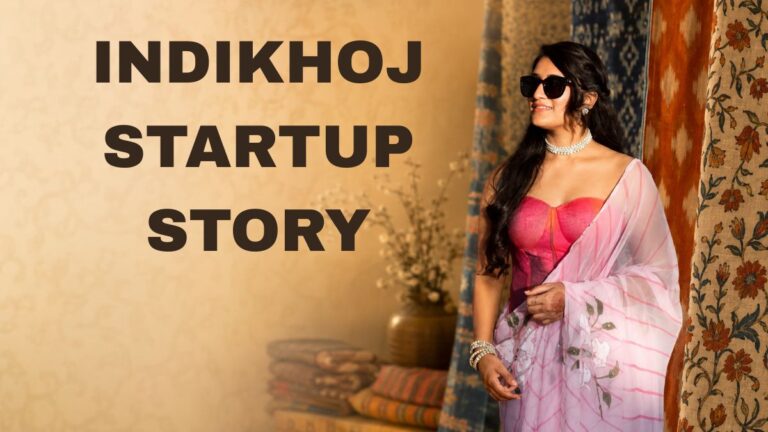
Some startups begin with a business plan. IndiKhoj began with a holiday.
On a trip to McLeodganj, Anoushka Upadhyaya kept noticing the same thing everywhere she looked. Foreign tourists were walking around in colourful handblock printed shirts. The prints were Indian, the fabric was Indian, but the people wearing them proudly were mostly not. She picked up a few shirts for her family before heading home. They loved them and asked for more.
That small moment left behind a question that refused to go away. If people from across the world value Indian textiles this much, why do Indians themselves wear them so rarely?
Today, that question has grown into IndiKhoj — a Delhi-based handcrafted fashion brand that launched in January 2025 and has already completed thousands of orders, built a network of more than 200 artisans and suppliers, and found its hero product in an unlikely place: corsets made from traditional Indian weaves.
From Performing Arts to a Startup
Anoushka’s path to fashion was anything but straight. She completed her B.Com (Hons) from Delhi University and then a Masters in Performing Arts from Ambedkar University, Delhi. Her course ended during Covid, a time when career plans across the country were falling apart. Unsure of the next step, she took up a job as a social media manager at a D2C clothing brand.
That job turned out to be an accidental training ground. Nearly three years of running social media for a clothing label taught her how online fashion brands actually work — content, community, and what makes people click “buy”. When the idea for her own brand became too loud to ignore, she quit and started IndiKhoj.
The Craft That Sparked It All
After the McLeodganj trip, Anoushka went deep into researching Indian textiles. She had always explored local crafts during her travels, but this time the reading turned serious. One discovery changed everything — Tangaliya, a handwoven textile from Gujarat.
In Tangaliya, artisans twist beads by hand onto individual threads to create patterns of tiny raised dots. No machine has ever managed to replicate it. And yet the craft is close to dying because the next generation of weaver families is walking away from it. That fact hit hard. Centuries of skill, disappearing quietly because nobody was buying.
Then came a detail that felt almost scripted. Anoushka realised her birthday falls on 7th August — National Handloom Day. For someone already halfway convinced, it felt like destiny giving a final push. IndiKhoj was born soon after.
Also Read: Best Stocks to Buy This Month
The name says it all. “Khoj” means search, and the brand is exactly that — an ongoing search for textile crafts from every corner of India. Ikat from Telangana, Kalamkari from Andhra Pradesh, Ajrakh and Bandhani from Gujarat, Bagru, Dabu and Sanganeri prints from Rajasthan, and Khadi. The website even lets shoppers browse by craft or by state.
A First Order to Remember
Every founder has a first-order story. IndiKhoj’s is funnier than most.
When the brand received its first organic order from a complete stranger, there was one problem — the checkout page did not have the customer’s phone number as a mandatory field. Delivery companies need a contact number to ship anything. So a friend of Anoushka’s ended up personally delivering the package by hand.
There have been plenty of small mistakes and lessons since then, most of them figured out solo or with help from friends and family. That is the reality of running a bootstrapped brand alone. IndiKhoj has taken no outside funding — every rupee earned goes straight back into new collections and discovering more textiles.
The solo route has its cost too. Long hours and burnout are part of the deal when one person handles sourcing, content, orders and everything in between. Anoushka is now focused on building a small team so more of her time goes into growing the brand rather than juggling daily tasks.
Similar Article: All You Need to Know About Pranjal Awasthi Startup
Corsets Became the Hero Product
The turning point came within the first year, and from an unexpected direction. Corsets and corset skirts made from Indian textiles — Ikat, Bhagalpuri silk, brocade — took off. The combination of a very current Western silhouette with unmistakably Indian fabric struck a chord, especially with younger buyers.
The content built around these corsets pushed the brand’s visibility sharply, growing its Instagram community past 11,000 people. Between the website and offline exhibitions, IndiKhoj has now completed thousands of orders.
One of Anoushka’s favourite parts of the job remains the sourcing trips — travelling to craft fairs and artisan clusters in small villages, meeting weavers, understanding their work, and buying directly from them. That travel has built her network of 200+ artisan and supplier contacts across different states.
“There’s so much that our country has to offer in terms of textiles, and it’s time we start valuing our art — not only when the West validates it,” she says.
What Comes Next
The long-term plan is ambitious but simple to state: collections featuring textiles from every single state of India, introducing buyers to just how diverse the country’s crafts really are.
An offline store is not on the cards yet, but the brand regularly shows up at exhibitions and pop-ups, which double as feedback sessions with customers. And with growing queries from the USA, the UK and Malaysia — mostly for the corsets — international shipping is coming soon.
“My dream is that Indian textiles become a part of everyday choice, not something people save only for festivals or weddings,” Anoushka says.
For a brand that started with a few shirts bought on a holiday, that dream no longer sounds far-fetched.
IndiKhoj is available at indikhoj.in and on Instagram; you just need to search for IndiKhoj.
Related Article: How to start a bakery business in India
Editor’s note: This is not a paid or sponsored article. The founder is personally known to the author, but the decision to feature IndiKhoj was independent — and yes, the author has ordered a corset from the brand and can confirm the quality lives up to the story.