


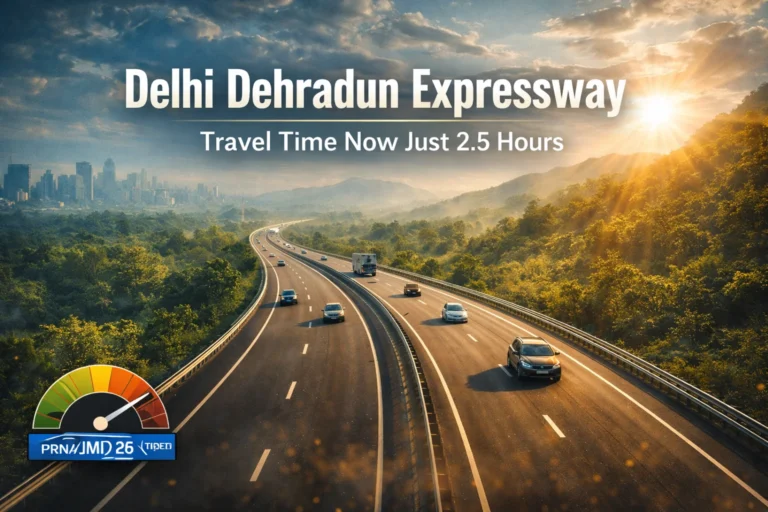
Anyone who has driven from Delhi to Dehradun knows the pain of that journey. Six hours on a good day. Traffic near Roorkee or trucks on the old highway can extend the journey to seven hours. An entire day was effectively spent just getting there and back. Well, that’s about to become a distant memory.
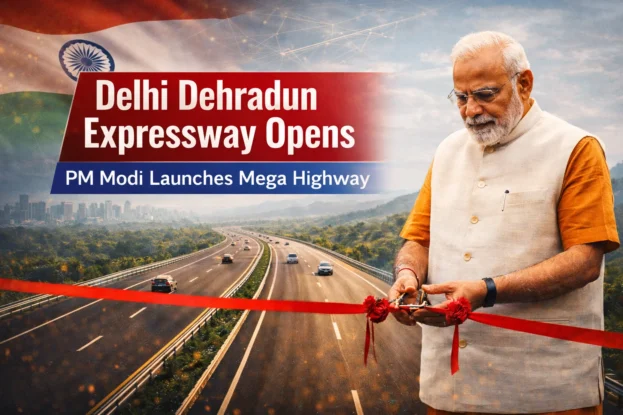
Prime Minister Narendra Modi has officially inaugurated the Delhi Dehradun Expressway, and the headline number is hard to believe until you see it — the same journey that used to eat up most of your day now takes around two and a half hours.
That’s a significant improvement. That’s an entirely different travel experience.
What the Route Actually Looks Like
The expressway starts in Delhi and cuts through parts of Uttar Pradesh before entering Uttarakhand and reaching Dehradun. Three states, one continuous high-speed corridor, and significantly fewer reasons to dread the drive.
The route has been designed with proper entry and exit points, service roads, and multiple lanes — the kind of infrastructure that doesn’t just move traffic faster but actually keeps it moving rather than funnelling everything through bottlenecks. Towns and industrial areas along the way also benefit from better connectivity, which is relevant for businesses and residents who previously had to deal with the overflow from the older, more congested route.
The Feature Everyone’s Talking About
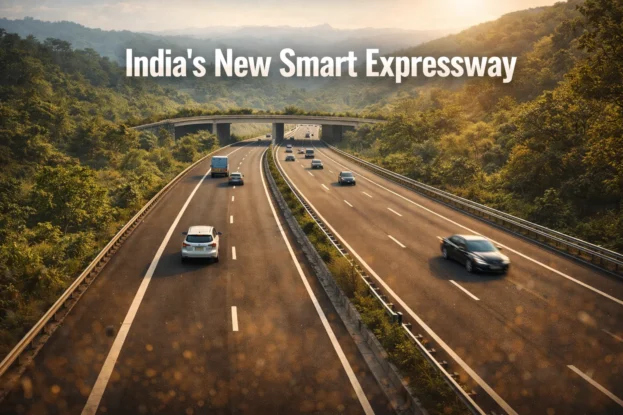
Among everything this expressway offers, one element has genuinely captured people’s attention — the elevated wildlife corridor.
Parts of the route pass through ecologically sensitive forest zones, and rather than simply cutting through those areas and disrupting the wildlife that lives there, the planners built elevated sections that allow animals to move freely underneath. It’s the kind of thinking that doesn’t always make it into large infrastructure projects, so it’s worth acknowledging when it does.
The wildlife corridor isn’t just a feel-good addition. It’s a practical solution to a real problem — how do you build a modern highway through a forested region without severing the natural movement patterns of animals that have been using those paths long before the road existed? This is one answer to that question, and it’s a thoughtful one.
Safety and Technology Built In
The expressway comes equipped with surveillance systems, smart traffic management, and emergency response infrastructure spread along the route. These aren’t just boxes ticked on a checklist — they’re the kind of systems that actually make a difference when something goes wrong on the road.
Toll collection runs on FASTag, which means no cash queues, no stopping and fumbling for change, and no long lines at booths. If you’ve experienced the old toll plaza experience on busy highways, you’ll appreciate how much smoother this makes things.
What It Means for Tourism
Uttarakhand has always had incredible things to offer — the mountains, the hill stations, the religious sites, the outdoor experiences — but getting there from Delhi was always the friction point. When a journey takes six or seven hours each way, a weekend trip becomes a serious commitment that a lot of people simply don’t bother making.
At two and a half hours, Dehradun suddenly feels like somewhere you could leave for on a Saturday morning and be back by Sunday evening without feeling completely wrecked. That changes the calculus for a lot of people.
Hotels, local businesses, tour operators, and restaurants in Dehradun and the surrounding areas are going to feel this shift. More accessible destinations attract more visitors, and more visitors mean more economic activity for communities that have a lot to offer but haven’t always been easy to reach.
What Daily Commuters Gain
Beyond tourism, some real people travel between these regions regularly for work, family, and other reasons. For them, this expressway isn’t just a convenience — it genuinely gives them time back.
The reduction in journey time also eases the pressure on older routes. When a significant portion of traffic shifts to the new expressway, the roads that were previously handling all of it get some relief, too, which improves conditions even for those who aren’t using the new highway.
Also Read: Microsoft Shuts Down Outlook Lite: What It Means for Android Users Worldwide
Key Facts About Delhi Dehradun Expressway
| Inaugurated By | Narendra Modi |
| Travel Time | Approx. 2.5 hours |
| Previous Travel Time | 6–7 hours |
| States Connected | Delhi, Uttar Pradesh, Uttarakhand |
| Key Feature | Wildlife corridor |
| Toll System | FASTag-enabled |
For anyone who wants the key details at a glance, the expressway connects Delhi, Uttar Pradesh, and Uttarakhand. Travel time drops from six to seven hours to approximately two and a half hours. It has a special path for animals to cross through forests, a system for easy electronic toll payments, modern safety and monitoring systems, and multiple lanes with proper service roads all along the way.
Why This Matters Beyond the Numbers
India has been pushing hard on infrastructure development over the past several years, and projects like this are a visible example of what that investment looks like in practice. A road that cuts travel time by more than half, incorporates environmental protections, and connects three states with better, faster access isn’t just a transport project — it’s a genuine quality-of-life improvement for millions of people.
The Delhi Dehradun Expressway is the kind of project that will take a little while to fully appreciate. But give it a year or two, and it’ll be hard to remember what travelling that route used to feel like — or why anyone put up with it for so long.