



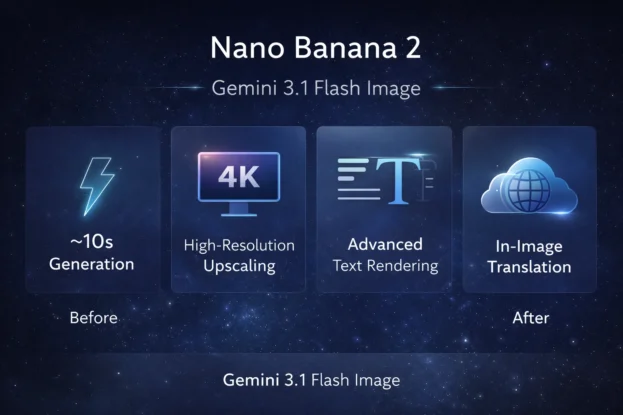
Nano Banana 2 is Google’s latest AI image generation model, officially known as Gemini 3.1 Flash Image. It was launched in late February 2026 as a major upgrade to the original Nano Banana model that went viral for its creative output.
The new version focuses on speed, higher image quality, accurate text rendering, and professional-grade editing tools. Google has positioned it as a production-ready model for creators, marketers, educators, and businesses.
Nano Banana 2: Quick Overview
| Category | Details |
|---|---|
| Official Name | Gemini 3.1 Flash Image |
| Brand | |
| Launch Period | February 26 – March 1, 2026 |
| Previous Version | Nano Banana 1 |
| Main Upgrade Focus | Faster speed, better text rendering, high-resolution output |
| Image Generation Speed | Around 10 seconds per high-resolution image |
| Maximum Upscaling | Up to 400,000 pixels (supports 4K output) |
| Text Rendering | Improved clarity and accurate in-image typography |
| Translation Feature | Real-time in-image multilingual translation |
| Aspect Ratio Control | Full control (square, vertical, landscape, custom) |
| Multi-Image Consistency | Maintains subject consistency across scenes |
| Ecosystem Integration | Gemini, Google Search, Google Ads, Google Cloud |
| Primary Use Cases | Marketing, education, design, advertising, enterprise workflows |
| Professional Features | Lighting realism, physics accuracy, high detail output |
| AI Backbone | Gemini 3.1 reasoning engine |
Official Launch and Rollout
Google began rolling out Nano Banana 2 between February 26 and March 1, 2026. The model is now the default AI image generator across Gemini, Google Search, Ads, and Google Cloud services.
Industry observers described the launch as one of Google’s biggest AI imaging updates this year. Early hands-on reviews highlighted its faster performance and improved realism.
Faster Image Generation
One of the biggest upgrades in Nano Banana 2 is speed. The model can generate high-resolution images in around 10 seconds, depending on complexity.
This flash-speed generation makes it suitable for real-time workflows in marketing campaigns, classroom projects, and design tasks. Users can create multiple variations quickly without long waiting times.
High-Quality Visual Output
Nano Banana 2 produces sharp, detailed visuals with improved lighting and realistic textures. It shows a better understanding of physics, reflections, shadows, and object consistency compared to the earlier version.
The model also allows full aspect ratio control. This means users can create square, vertical, or widescreen images suited for social media, websites, or print materials.
Advanced Text Rendering
Text rendering has been one of the most difficult areas for AI image models. Nano Banana 2 significantly improves how text appears inside images.
It can generate posters, infographics, banners, and ads with clear, readable text that aligns closely with user prompts. This makes it useful for branding, presentations, and educational content.
Real-Time In-Image Translation
A standout feature is seamless in-image translation. Users can generate an image in one language and instantly translate the text into another language without breaking the layout or design.
This feature is especially helpful for global businesses and educators creating multilingual content. It saves time compared to manual editing in graphic design tools.
Upscaling and 4K Support
Nano Banana 2 can upscale low-resolution images up to 400,000 pixels. It supports 4K-quality output while maintaining clarity and detail.
This upscaling feature is useful for restoring older images or enhancing visuals for large displays. The reasoning backbone of Gemini 3.1 also ensures better prompt adherence during the upscaling process.
Multi-Image Consistency
Another key improvement is consistency across multiple images. If users create a character or product design, Nano Banana 2 can maintain similar facial features, colors, and style across different scenes.
This makes it valuable for storytelling, brand campaigns, and educational materials where visual continuity is important.
Professional and Production-Ready
Google has positioned Nano Banana 2 as a professional tool rather than just a creative experiment. It is built to support real-world workflows in design, advertising, and digital media production.
Experts note that the improved lighting, accurate proportions, and controlled outputs make it closer to commercial-grade imaging standards.
Use Cases in Education and Design
In the education sector, Nano Banana 2 can generate diagrams, visual explanations, and interactive learning material. Teachers can create infographics or translated content for diverse classrooms.
In design and marketing, agencies can produce campaign visuals, mockups, and branded creatives quickly. The speed and text accuracy reduce the need for extensive post-editing.
How to Use Nano Banana 2 in Gemini
Users can access Nano Banana 2 through the Gemini interface. By selecting image generation mode, they can enter detailed prompts describing style, lighting, subject, and aspect ratio.
Clear and structured prompts tend to produce better results. Users can also refine outputs by adjusting instructions, regenerating images, or requesting edits.
Comparison With Nano Banana 1
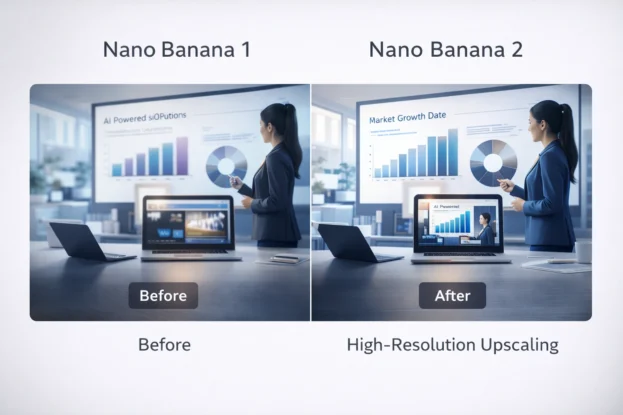
Compared to Nano Banana 1, the second version offers faster processing, better text clarity, improved lighting realism, and stronger prompt understanding. The earlier model was praised for creativity but sometimes struggled with accurate text and fine details.
Nano Banana 2 addresses these gaps and adds professional features such as high-resolution upscaling and translation tools. This marks a clear step forward in Google’s AI imaging technology.
| Feature Category | Nano Banana 1 | Nano Banana 2 |
|---|---|---|
| Model Name | Original Nano Banana | Gemini 3.1 Flash Image |
| Launch Year | Earlier generation | February–March 2026 |
| Speed | Standard image generation speeds | ~10 seconds per high-resolution image |
| Image Quality | Good visuals with creative output | Sharper details, improved lighting, and realism |
| Text Rendering | Basic text support | Significantly improved, readable text in images |
| Translation | Not native | Real-time in-image translation |
| Upscaling | Limited or basic | Upscales low-res to up to 400k pixels (4K support) |
| Aspect Ratio Control | Limited | Full control (custom orientations) |
| Multi-Image Consistency | Less consistent | Stronger consistency across images |
| Physics & Lighting Logic | Basic | Improved physics reasoning and lighting realism |
| Professional Use | Mostly creative use cases | Production-ready for marketing and enterprise |
| Integration | Early Gemini tools | Default across Gemini, Google Search, Ads, Cloud |
| Prompt Understanding | Good | Better reasoning backbone for complex prompts |
| Ideal Use Cases | Casual image generation | Design, educational, advertising, and high-quality workflows |
Integration Across Google Ecosystem
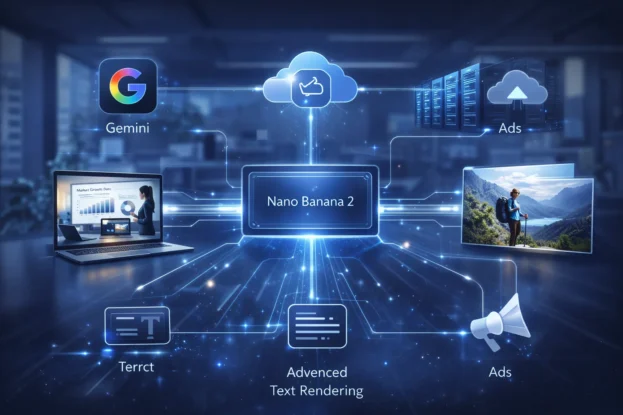
Nano Banana 2 is now integrated across Google’s ecosystem. It powers image generation inside Gemini, supports ad creatives in Google Ads, and works within enterprise solutions on Google Cloud.
This integration makes it accessible not only to individual creators but also to businesses and developers building AI-powered applications.
Responsible AI and Quality Controls
Google has stated that Nano Banana 2 includes safeguards to ensure responsible AI use. The system follows content policies and includes mechanisms to reduce harmful or misleading outputs.
Quality control measures also help improve consistency and reduce visual errors. This focus on reliability aligns with Google’s broader AI safety framework.
Industry Reaction
Technology analysts and early reviewers have described Nano Banana 2 as a strong competitor in the AI image generation space. Its mix of speed, realism, and text control sets it apart from many earlier tools.
The model’s ability to balance creative flexibility with professional precision has drawn attention from digital creators and enterprise users alike.