


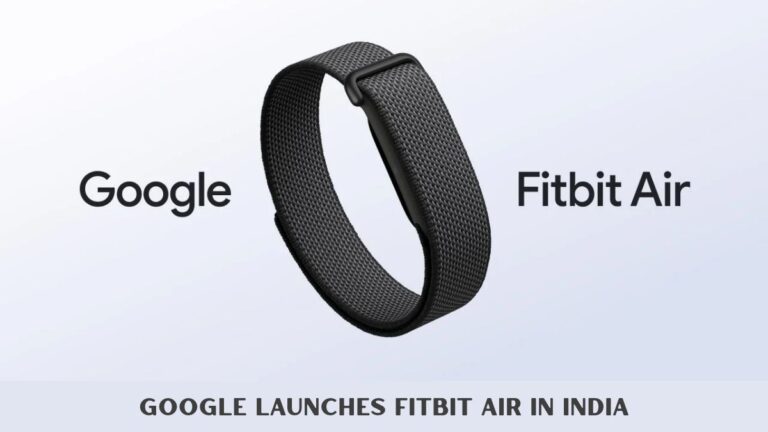
Screens are starting to feel a bit unnecessary on fitness trackers, and Google clearly agrees. The company has launched the Fitbit Air in India, joining the small but growing club of screen-free wearables led by names like Whoop. The device goes on sale from October 2 at Rs 13,999, and it’s aimed at people who want solid health tracking without another screen demanding their attention all day.
If this sounds familiar, that’s because the device had already made the rounds online before its official unveiling. We’d covered the early leaks in detail here: Fitbit Air leaked ahead of Google’s event, and much of what showed up then lines up with what Google has now confirmed.
What Makes the Fitbit Air Different
At first glance, the Fitbit Air does what most fitness trackers do. It keeps tabs on your steps, your workouts, and your sleep. But the real story here isn’t the hardware; it’s how Google is using AI to actually make sense of all that data.
The band works closely with Google’s revamped Health Coach, and this time, Gemini is doing the heavy lifting. Instead of just throwing numbers at you, the AI looks at your Fitbit data alongside other details you share, like injuries, diet, lifestyle changes, and even the weather, to build coaching advice that’s meant to feel personal rather than generic. And according to Google, the more you talk to it in plain language, the smarter and more accurate it gets over time.
Sleep Tracking Gets a Serious Upgrade
Sleep tracking seems to be where Google is putting a lot of its effort. The Fitbit Air comes with improved heart rate monitoring, which Google says boosts sleep tracking accuracy by up to 15 percent. It can also pick up naps as short as 20 minutes, and uses smarter algorithms to help figure out the best time to wake you up. There’s also a redesigned sleep score that’s supposed to be easier to actually understand at a glance, rather than just another confusing number.
Design, Battery Life, and the Catch
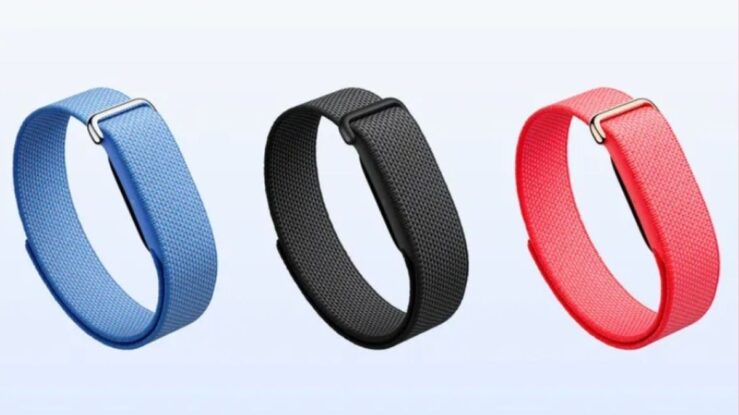
Without a display to power, the Fitbit Air manages to stretch its battery life up to seven days on a single charge. If you’re ever in a rush, a quick five minute charge gives you roughly a full day’s worth of use, while a complete charge takes about 90 minutes using the included magnetic charger. The band itself is lightweight and discreet, and comes in four colors: Obsidian, Berry, Lavender, and Fog, so it’s easy to wear all day without really noticing it’s there.
One thing worth knowing upfront: while the tracker itself doesn’t need a subscription to function, some of its more advanced features sit behind an optional Google Health Premium plan. Google is giving buyers three months of this for free, after which a monthly fee kicks in if you want to keep using the full AI coaching experience. It’s a slightly different approach than Whoop, which runs entirely on subscriptions, and that difference could end up being a deciding factor for a lot of buyers.
A Crowded, Maturing Market
Google isn’t the only big name chasing this trend. Garmin launched its own screen-free tracker, the Cirqa, back in July, and there’s chatter that Apple might be exploring something similar too. Closer to home, Indian brands like Noise have also jumped into the screenless tracker space.
It’s a good sign, honestly, that wearables are growing up a bit. Not every gadget needs a screen, notifications buzzing constantly, or features nobody actually uses. Sometimes people just want something simple that quietly does its job.
And if screens are more your thing, Apple’s latest lineup might be worth a look too. We’ve got the full details here: Apple just launched three new iPhones: iPhone Duo, 18 Pro, and Pro Max.