


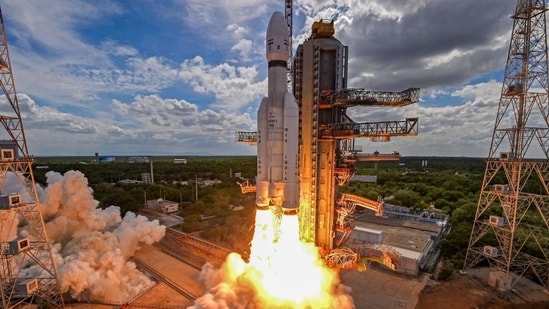
The Indian Space Research Organisation (ISRO) took another major step in space exploration on Monday, January 12. ISRO launched the country’s satellite EOS-N1 (Anvesha) into space under the PSLV-C62 mission. This satellite was expected to bring a revolution in border surveillance, detection of concealed targets, and environmental monitoring. According to reports, ISRO’s first satellite launch of 2026 took place at around 10:17 AM from the Sriharikota spaceport. However, the mission failed due to a technical fault in the final phase of the third stage.
14 Additional Payloads Were to Be Deployed
ISRO began its 2026 launch calendar with the PSLV-C62 mission on Monday. Under this mission, the Earth Observation Satellite EOS-N1 and 14 additional payloads were scheduled to be deployed into space. These 14 co-passenger satellites, belonging to both Indian and international customers, were part of the mission undertaken by ISRO’s commercial arm, NewSpace India Limited (NSIL). The launch took place at 10:17 AM from the First Launch Pad of the Satish Dhawan Space Centre in Sriharikota.
Also Read-: NavIC: India’s Own Navigation System by ISRO.
Key Features of EOS-N1
The primary payload, EOS-N1 (Anvesha), is a hyperspectral Earth observation satellite developed by DRDO. It was designed to significantly enhance border surveillance, identify hidden targets, and improve environmental monitoring capabilities. The mission was also considered an important comeback for the PSLV after a failure in 2025. Along with EOS-N1, ISRO was set to deploy 14 other payloads during the mission.
All Launch Parameters Were Normal
Before launch, the automatic launch sequence for PSLV-C62 / EOS-N1 was initiated, indicating that all parameters were within acceptable limits. A final check was conducted, following which the vehicle lifted off at 10:18:30 AM. Unfortunately, the mission could not be completed successfully due to a technical malfunction in the final phase of the third stage.