



From rapid blinking before bed to chewing gum during study sessions, these 7 unusual body tricks connect to real nervous system responses. Simple, weird, but worth trying.
Here’s something that’s easy to forget: your nervous system is paying attention to every small thing that happens to you. The temperature of the water on your face. Whether you’re breathing through your nose or mouth. How does your hand feel resting on your chest?
These aren’t just physical sensations — they’re signals. And your brain responds to them faster than you’d think.
That’s the idea behind what some people call “body hacks” — small, slightly odd things you can do that nudge your nervous system in a useful direction. Not miracle cures. Not medical treatments. Just tiny interventions that, for a lot of people, actually seem to do something.
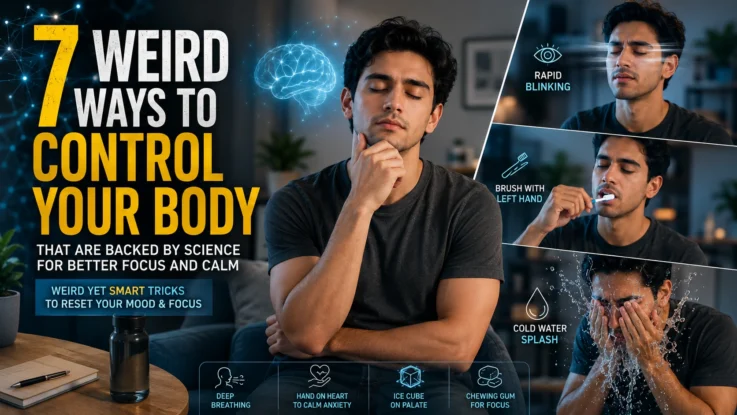
Here are 7 weird ways to control your body that are surprisingly interesting and partially backed by science, plus a simple explanation for why they’re not completely made up.
7 Weird Ways to Control Your Body Naturally and Quickly
1. Blink Rapidly for a Minute When You Can’t Fall Asleep
This one sounds like something a child would invent. Blink fast until you fall asleep? Really?
But here’s what’s actually going on. Rapid blinking fatigues the muscles around your eyes and taps into something called the orienting reflex — a kind of reset your brain does when it notices a change in your environment. After a minute of blinking quickly, your eyes are genuinely tired, and closing them feels like a relief rather than a chore.
Pair it with slow breathing — in for four seconds, out for six — and you’re also activating your parasympathetic nervous system, which is the part that tells your body it’s safe to relax. The combination won’t knock you out instantly, but it can take the edge off that wired-but-tired feeling that makes falling asleep so frustrating.
2. Put Your Hand on Your Heart When You’re Anxious
This sounds like something a therapist would say in a slightly cheesy way. But the physical mechanics behind it are real.
When you place your hand on your chest and breathe slowly, two things happen simultaneously. The touch itself acts as a grounding signal — your brain registers physical contact and it creates a mild sense of safety. And the slow breathing directly slows your heart rate by activating the parasympathetic nervous system.
The specific rhythm that tends to work well: breathe in through your nose for four seconds, breathe out for six. That longer exhale is the key part. It’s the exhale that activates the calming response, not the inhale.
Keep your hand there for a few minutes. It feels a bit strange at first. Most people are surprised by how much calmer they feel afterward.
3. Brush Your Teeth With the Wrong Hand
Not every body hack is about calming down. This one is about waking up.
Using your non-dominant hand to brush your teeth forces your brain into active problem-solving mode at a time when it’s running on autopilot. The movement feels wrong and unfamiliar, which means your brain actually has to pay attention and map out what’s happening in real time.
The result is mild cognitive activation — a small jolt of alertness that cuts through the morning fog. It’s not a replacement for a good night’s sleep, obviously. But as a way to snap yourself into engagement before a busy day, it works better than you’d expect.
Try it alongside a few stretches and some cold water on your face and you’ve got a surprisingly effective three-minute morning routine that costs nothing.
4. Ice Cube on the Roof of Your Mouth for a Blocked Nose
This one is genuinely weird and yet people swear by it.
The roof of your mouth sits very close to the structures involved in warming and filtering the air that passes through your nasal passages. A small ice cube held gently against that spot creates a cooling sensation that many people find temporarily relieves the pressure of a blocked nose — similar in principle to how a cold compress can reduce swelling.
The key word there is temporarily. This isn’t a treatment for anything. It’s a short-term trick for moments when your nose is blocked and you just need five minutes of easier breathing.
Don’t press the ice hard or hold it too long, and if you’re regularly congested, please talk to a doctor rather than just cycling through ice cubes.
Also Read: Unique Mother’s Day Gift Ideas
5. Gentle Pressure Beats Panic Every Time
You might have heard the advice about pinching yourself or creating a sharp physical sensation to interrupt anxiety. The problem is that if you’re already stressed, adding more sharp discomfort tends to make things worse, not better.
What actually works is the opposite: gentle, deliberate pressure. Light contact on your hands, arms, or chest gives your brain something physical to focus on, which interrupts the loop of anxious thoughts by shifting attention to immediate sensation.
It’s the same principle behind weighted blankets and the reason some people find pressure vests calming — the nervous system responds to gentle, consistent touch as a signal that everything is okay right now. Combined with slow breathing, it can genuinely shift your state within a few minutes.
6. Splash Cold Water on Your Face When Your Energy Drops
This is probably the most universally used one on this list, and there’s actually a decent amount of physiology behind why it works.
Cold water on the face activates the dive reflex — a built-in physiological response connected to the trigeminal nerve that your body inherited from ancestors who spent time in cold water. When your face registers sudden cold, your brain increases focus and alertness as part of that reflex.
The effect doesn’t last long — maybe 10 to 20 minutes of sharper attention — but when you’re staring at a screen at 3pm and everything is starting to blur, that’s often exactly how long you need to get back on track.
One note: if you have a heart condition or any cardiovascular concerns, check with a doctor before experimenting with very cold water exposure, even just on your face.
7. Chewing Gum Actually Helps You Concentrate
This one has real research behind it, which is maybe the least surprising surprising fact on this list.
Multiple studies have found that chewing increases blood flow to the brain and produces a mild boost in alertness and sustained attention. The repetitive jaw movement seems to keep the brain engaged in a way that prevents the kind of drifting that happens during long, low-stimulation tasks.
Students have been doing this for years instinctively. Turns out they were onto something.
The caveats: moderation matters. Chewing for too long can cause jaw discomfort, and some people find it gives them headaches. Sugar-free gum is the obvious choice if you’re doing this regularly during study or work sessions.
Also Read: 5 Most Famous Dialogues of Every Indian Mom
Why These Weird Body Hacks Feel So Powerful
The thread connecting all seven of these is the nervous system.
Your body doesn’t experience reality in a vacuum — it’s constantly reading signals from your environment, your breathing, your posture, your temperature, and your physical sensations. When you deliberately send it a calm signal, it tends to respond with calm. When you send it an alerting signal, it tends to respond with alertness.
That’s all these hacks really are: small, deliberate signals that nudge your nervous system in the direction you actually want to go.
They work best as tools in a bigger toolkit — good sleep, enough water, movement, regular breaks. On their own, they’re just tricks. As part of a life where you’re generally paying attention to your body, they’re surprisingly useful ones.
And honestly, there’s something kind of wonderful about the fact that blinking fast for a minute or holding your hand to your chest can actually change how you feel. Your body is more responsive than most of us realize. Sometimes you just need to give it the right signal.