


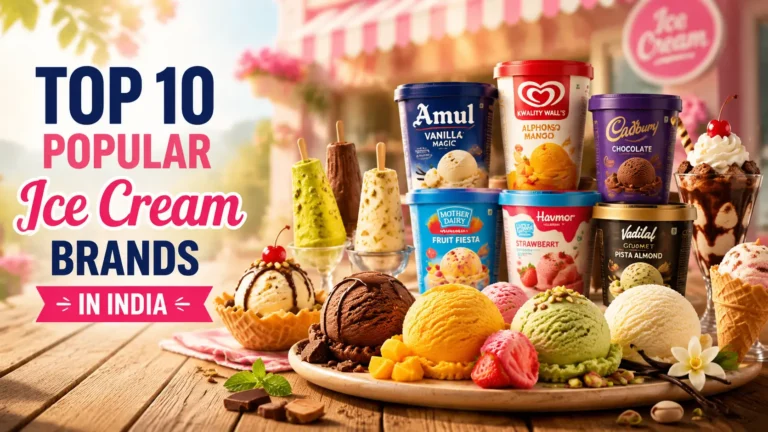
There’s something specific about the way Indians relate to ice cream that goes beyond just liking cold desserts. It’s the Chocobar from the corner shop on a May afternoon when the heat is genuinely cruel. It’s the Naturals Sitaphal scoop that tastes more like the actual fruit than most fruit does. It’s a Giani’s Kulfi in Delhi at 11 pm because that’s just what one does.
Ice cream in India carries memory and geography and season in a way that makes brand loyalty here more personal than it probably is anywhere else. The brands below have earned that loyalty — some over decades, some gradually, all of them through actually being good at what they do. Here are ten that deserve to be on your radar, wherever you are in the country.
Table of Contents
Top 10 Popular Ice Cream Brands in India — The Ones Worth Knowing and Trying
1. Amul — The One That’s Always Been There
Amul is probably the most trusted name in Indian dairy full stop, and its ice cream range sits comfortably within that broader reputation. The products are milk-based — real dairy, not the cheaper frozen dessert formulations that a lot of competitors use — and the prices have stayed genuinely accessible even as everything else has gotten more expensive.
The Chocobar is the one most people think of first, and for good reason — it’s been near-perfect for years and shows no signs of declining. The Rajbhog and Butterscotch flavors have devoted followings. The Tricone cone is one of the better value-for-money ice cream experiences you can have in India.
The honest truth about Amul ice cream is that it doesn’t try to be premium and it doesn’t need to. It just consistently delivers what it promises, which in a market full of overselling is actually quite refreshing.
2. Kwality Wall’s — The Brand That Understood Branding
Kwality Wall’s figured out something early that some Indian brands took longer to learn: that packaging and positioning matter as much as the product itself, especially when you’re trying to reach younger urban consumers.
The Cornetto range built its entire reputation around a specific kind of experience — the cone with the chocolate tip at the bottom, the slightly ceremonial unwrapping — and it worked. Magnum took that premium instinct further. The kulfi range gives the brand credibility with more traditional ice cream preferences.
Kwality Wall’s is the brand you find in almost every convenience store in urban India, which is both its strength and something that occasionally works against the premium perception it’s built. But the core products remain genuinely good, and the distribution alone has made it part of everyday Indian dessert life in a way very few brands can claim.
3. Vadilal — The Old Guard That’s Still Standing Strong
Vadilal has been around long enough that a lot of Indian families have three generations of memories associated with it. The company started in Gujarat and carries that heritage in its flavor sensibility — traditional Indian dessert profiles executed well, with a range broad enough that there’s something for everyone.
The Cassata is the thing Vadilal does that nobody else quite replicates — that layered, slightly theatrical ice cream cake that turns up at birthday parties and feels instantly celebratory. The Rajbhog variant has a devoted following. The kulfis are reliable and authentic.
What makes Vadilal endure isn’t reinvention — it’s consistency. In a market that chases trends, there’s real value in a brand that just keeps being exactly what it always was.
4. Havmor — The Premium Underdog
If you’ve had Havmor’s Belgian Chocolate, you understand why people who know it talk about it with a slightly evangelical enthusiasm. The texture is genuinely rich in a way that a lot of “premium” ice creams in India approximate without quite achieving.
Havmor started in Gujarat and expanded from there, and it carries a regional specificity in some of its flavors — the Malai Kulfi, the Mango Slice — that feels authentic rather than manufactured. People who’ve grown up with Havmor tend to be fiercely loyal to it.
The brand doesn’t have the national footprint of Amul or Kwality Wall’s, which means it’s sometimes the thing people discover and then miss desperately when they move cities. If you have access to it, use that access.
5. Mother Dairy — North India’s Dairy Default
Mother Dairy’s ice cream is inseparable from its broader dairy identity in the northern Indian imagination. If you grew up in Delhi or UP buying Mother Dairy milk from the booth on the corner, the ice cream feels like a natural extension of the same trusted relationship.
The Mango and Kesar Pista flavors are the ones most people think of first. The Kulfi range is consistently good. The Fruit Bars are a summer staple for families. The pricing is honest — this isn’t a brand trying to extract premium money for average product, and it isn’t cutting corners either.
Mother Dairy’s strength lies in understanding its core customer — families seeking quality and reliability without paying luxury prices — and serving them without condescension.
6. Naturals Ice Cream — The One That Started the Real Fruit Movement
Naturals occupies a specific and somewhat singular position in India’s ice cream landscape. Founded in Mumbai, the brand built its reputation entirely on the idea that ice cream should taste like actual fruit — real ingredients, minimal artificial flavoring, flavors that change with the season.
The Tender Coconut is the one that gets mentioned most, and it genuinely tastes like someone dissolved a real tender coconut into a scoop. The Sitaphal — custard apple — has a cult following among people who’ve had it. Mango in summer is the obvious recommendation. Anjeer is for the more adventurous.
Naturals doesn’t have branches everywhere, which means for a lot of people in cities outside Maharashtra, it’s the thing you make a point of seeking out when you’re in the right city. That scarcity, combined with the quality, has given it a reputation that operates slightly above its size.
7. Cream Bell — More Than People Give It Credit For
Cream Bell tends to get overlooked in conversations about Indian ice cream brands, which is unfair given how consistently it performs across its range. It’s particularly strong in northern India and has built a following among younger consumers who appreciate the combination of variety and accessible pricing.
Death by Chocolate is the flavor that tends to come up first in conversations about Cream Bell, and it earns the name without being gimmicky about it. Kaju Draksh is the more traditional option that works well for people who want something that feels rooted in Indian dessert sensibility.
The brand isn’t trying to be the most premium option in the category — it’s trying to be the most reliable mid-market option, and it largely succeeds at that.
8. Baskin-Robbins — The One That Introduced India to Ice Cream as an Experience
Baskin-Robbins brought something specific to India that domestic brands weren’t offering at the time: the idea of ice cream as a destination experience rather than just a product. The store format, the “31 flavors” concept, the scoop-and-sample ritual — all of it made going to Baskin-Robbins feel like an occasion.
Jamoca Almond Fudge remains one of the more distinctive flavors in the Indian market — coffee-forward, complex, not immediately crowd-pleasing but extremely loyal to its fans. Mississippi Mud and Pralines ‘n Cream round out the classics.
Baskin-Robbins is primarily an urban, mall-based experience in India, which limits its reach but has helped it maintain a premium positioning. It’s the brand you go to when you want the ice cream outing to feel like something.
9. Giani’s — Old Delhi’s Finest Export
Giani’s started as a small dessert shop in Delhi’s Fatehpuri area and grew into something much larger through reputation alone. The quality of the kulfis and sundaes built a loyal following that eventually justified expansion beyond the original location.
The Paan Kulfi is the signature — sweet, fragrant, genuinely unlike anything else in the market. The Rabri Falooda is the kind of dessert that needs no accompaniment and no explanation. The Dry Fruit Sundae is for people who want something that feels both indulgent and substantial.
Giani’s is strongest in Delhi NCR and the northern states, and if you’re in that region and haven’t been, you’ve been missing something. The old-school dessert style — generous, unfussy, built on real flavor rather than presentation — is increasingly rare.
10. Arun Ice Cream — South India’s Beloved Institution
Arun Icecreams is the brand that South Indians, particularly those from Tamil Nadu, tend to feel genuinely proprietary about. It’s been part of the regional dessert landscape for long enough that it feels like infrastructure rather than just a product.
The flavor range reflects local taste preferences in ways that feel authentic — Filter Coffee ice cream is a natural extension of the beverage that defines South Indian mornings; Jackfruit and Mango connect to the fruits that define the region’s summers. These aren’t fusion experiments or novelty flavors — they’re honest translations of local food culture into a frozen format.
Arun’s pricing has stayed accessible and its quality consistent, which is a harder balance to maintain over time than it sounds.
Also Read: Top 10 Electric Toothbrushes in India: Find the Right One for Your Smile
Why This Market Is Getting More Interesting
India’s ice cream market has shifted noticeably in the past few years. The baseline expectation of consumers — especially younger urban ones — has moved upward. People want to know what’s in their ice cream. They’re interested in natural ingredients, reduced sugar, vegan options, and flavors that feel like they were developed with some actual thought.
Food delivery apps have changed the game for brands that previously only worked through retail distribution. Social media has made ice cream into content — the visual appeal of a scoop, the unboxing of a new flavor, the opinion-sharing that follows a good or bad experience.
The brands that are growing in this environment are the ones that managed to keep their existing loyalty base intact while also speaking to what the next generation of ice cream buyers actually wants. The ten on this list are all navigating that balance in different ways.
But honestly — on a sufficiently hot Indian summer day, the theory doesn’t matter much. Just find the nearest freezer and make a decision. You probably can’t go wrong.