


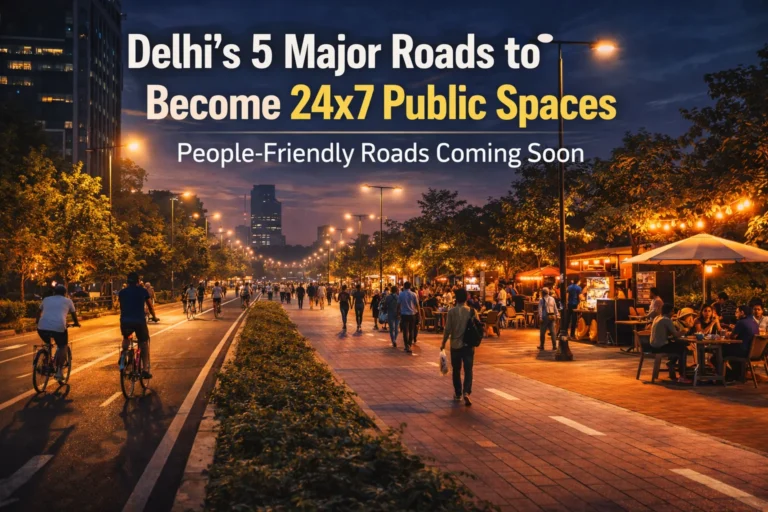
Most of us think of roads as places you pass through, not places you actually spend time in. Delhi wants to change that — at least on five of its major road stretches — and the plan is more ambitious than a simple repaving job.
The Delhi government, with LG Taranjit Singh Sandhu pushing the initiative forward, is looking to convert these corridors into what urban planners call “complete streets.” The idea is that a street shouldn’t just serve cars. It should work equally well for someone walking home, cycling to work, grabbing a bite from a street vendor at 11 pm, or just sitting on a bench without feeling like they’re in the way.
The transformation is being planned for 24-hour use — meaning these spaces are supposed to be functional, safe, and welcoming at any hour, not just during the morning rush.
Table of Contents
What Does a “Complete Street” Actually Mean?
It sounds like a planning buzzword, but the concept is fairly straightforward once you break it down.
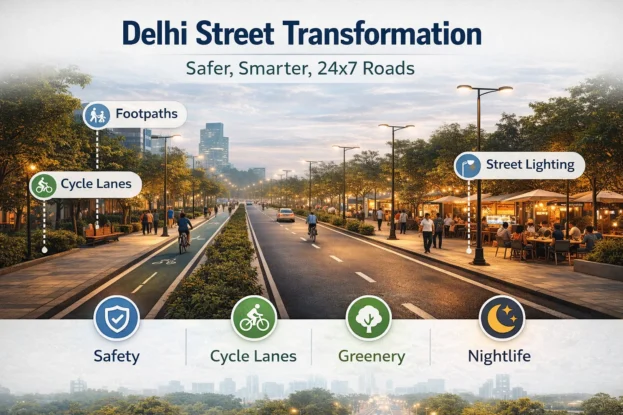
A complete street is one that’s been designed to share space properly between everyone who uses it — not just vehicles. That means wide, usable footpaths that aren’t constantly broken or blocked. Dedicated cycle tracks that are actually separated from traffic rather than just painted lines that nobody respects. Proper lighting so the street doesn’t turn into a no-go zone after dark. Seating areas for people who want to rest. Drainage that actually works when it rains.
These aren’t radical ideas. Cities like Barcelona and Amsterdam, closer to home, parts of Pune and Bengaluru have been doing versions of this for years. Delhi is looking to catch up in a meaningful way.
The Night Market Angle Is What Makes This Interesting
Here’s the part of the plan that has people genuinely excited — night markets and cultural spaces built into the street design.
The vision is to give street vendors, small business owners, and local artisans a proper, designated space to operate after hours. Right now, a lot of Delhi’s informal economy operates despite the city’s infrastructure rather than because of it. Vendors get pushed around, pavements are inconsistent, and there’s no real invitation for people to linger and spend time on the street.
A properly lit, well-designed street with dedicated vendor zones changes that dynamic completely. It brings economic activity to spaces that currently go quiet after sunset, creates employment, and gives Delhi’s evenings some of the energy that cities like Bangkok or Singapore are known for.
Done well, this could genuinely shift how Delhiites experience their own city after dark.

Safety Is Built Into the Design
One of the reasons people — especially women — don’t use public spaces in Delhi at night is simple: it doesn’t feel safe. Poor lighting, no surveillance, no people around. It becomes a self-reinforcing problem.
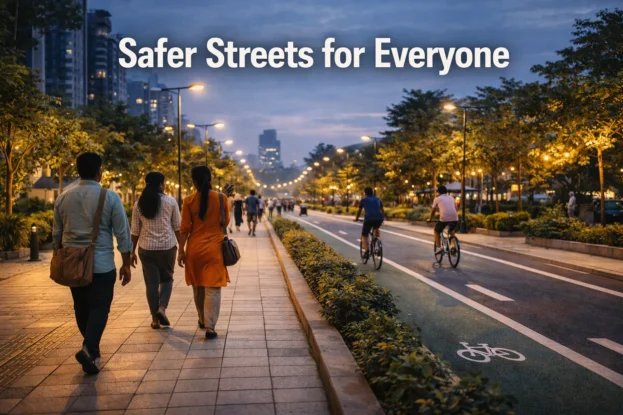
The plan addresses this directly. CCTV cameras are part of the redesign, and better street lighting is a core component rather than an afterthought. The presence of more people — drawn in by the night markets and better public spaces — also naturally improves safety. A busy street is almost always safer than a deserted one.
The plan also pays attention to people who often get forgotten in infrastructure projects — elderly residents, children, and differently-abled citizens. Smoother pathways, proper kerb cuts, and accessible design are being factored in from the start rather than bolted on later.
Five Roads, Bigger Connectivity
The project covers five road corridors, focusing on stretches with high commercial activity and heavy foot traffic. The specific roads are expected to connect key neighbourhoods and business hubs, which means improvements there will have a ripple effect on how people move around larger parts of the city.
Better pedestrian and cycling infrastructure along busy corridors also takes pressure off road traffic. When more people feel comfortable walking or cycling for shorter distances, fewer vehicles end up on the road — which helps everyone, including the people still driving.
The Environmental Side of Things
This isn’t just a cosmetic project. The redesign includes practical environmental upgrades too — improved drainage systems that should help with the waterlogging that hits Delhi hard every monsoon, and more greenery along the stretches.
The push toward walking and cycling isn’t just about lifestyle — it’s about reducing emissions in a city that consistently struggles with air quality. Every trip that shifts from a car or auto to a bicycle or a walk is a small win for Delhi’s lungs.
What This Actually Means for Residents
For the people who live in and around these stretches, the changes could be fairly significant in everyday terms.
A cleaner, better-lit pavement means you’re not dodging broken tiles and parked motorbikes on your morning walk. A cycle track means your teenager can actually get somewhere without risking their life in traffic. A night market nearby means a reason to step out after dinner rather than staying inside by default.
None of this sounds revolutionary in isolation. But put it all together on five key stretches of a city like Delhi, and you’re talking about a real shift in how public space gets used and experienced.
Quick Summary of the Plan
| Feature | Details |
|---|---|
| Project type | 24-hour complete streets |
| Number of roads | 5 major stretches |
| Infrastructure additions | Wide footpaths, dedicated cycle tracks, improved lighting |
| Special features | Night markets, CCTV surveillance, public resting areas |
| Environmental focus | Better drainage, more greenery |
| Overall goal | Safer, more vibrant, accessible streets around the clock |
Also Read: Top 5 Railway Stations with Most Platforms in India You Should Know
The Bigger Picture
Delhi has tried urban improvement projects before, with varying degrees of success. What makes this one worth watching is the scope of the thinking behind it — not just fixing roads, but genuinely reconsidering what a road is for.
If the execution matches the ambition, these five stretches could become a template for how Delhi — and other Indian cities watching closely — approach public space in the years ahead. That’s a worthwhile thing to get right.