


Plant milk has become a regular part of many kitchens. Almond, oat, soy, coconut and rice milk are now easy to find in supermarkets and cafes, and many people choose them for health, lactose intolerance, vegan diets or simply taste. Plant milk can be a good choice for some people, but it is not a perfect swap for regular milk.
Many buyers assume that plant milk is automatically healthier. Research shows that this is not always true. Here are the main disadvantages of plant milk, explained in simple words, along with what to check before buying a carton.
Disadvantages of Plant Milk at a Glance
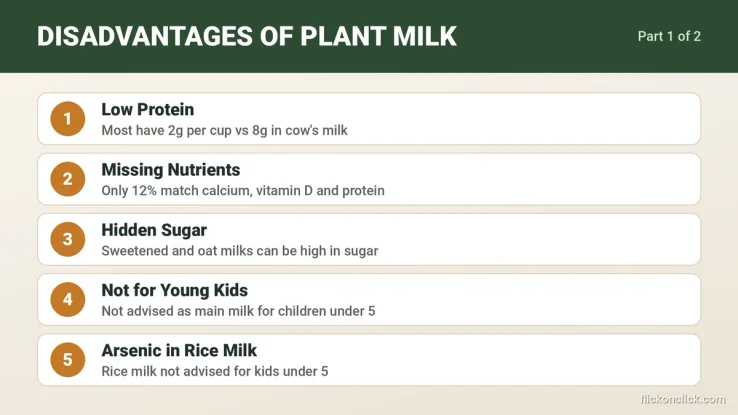
| Disadvantage | What it means |
|---|---|
| Low protein | Most plant milks have far less protein than cow’s milk |
| Missing nutrients | Calcium, vitamin D, iodine and B12 are often low unless added |
| Added sugar | Sweetened and flavoured versions can contain a lot of sugar |
| Not ideal for young children | Most types are not recommended as a main milk for kids under 5 |
| Arsenic in rice milk | Rice milk is not advised for children under 5 |
| Additives | Many contain gums, oils, thickeners and flavours |
| Allergy risk | Soy and nut milks can trigger allergies |
| Higher cost | Often double the price of regular milk or more |
1. Much Less Protein Than Regular Milk
This is the biggest drawback of plant milk. A cup (240 ml) of cow’s milk has about 8 grams of protein. Most plant milks come nowhere close.
A large analysis of 233 plant milk products found that the median protein content was just 2 grams per cup. Only 16% of the products had 8 grams of protein or more, the same as cow’s milk. Soy and pea milk were the best options for protein, while almond, rice and coconut milk were among the lowest.
Almond milk is a good example. Most almond milks contain only around 2% almonds, and some brands have as little as 1%. Around 97% of the drink is water. This is why almond milk has about 0.4 grams of protein per 100 ml, compared with about 3.6 grams in cow’s milk.
Protein helps build muscle, keeps you full and supports growth in children. If plant milk is replacing regular milk in your diet, you may need to get that protein from other foods like dal, chana, tofu, soya chunks, nuts or eggs.
2. Many Key Nutrients Are Missing Unless Added
Cow’s milk naturally contains calcium, protein, vitamin B12, iodine, phosphorus and other nutrients. Plants used to make plant milk do not carry the same nutrients in the same amounts, so companies add vitamins and minerals to many products. This is called fortification.
The problem is that not every plant milk is fortified. In the same analysis of 233 products, only 12% had equal or higher amounts of protein, calcium and vitamin D combined, compared with cow’s milk. Around three-fourths of oat milks and about two-thirds of soy and almond milks were fortified with both calcium and vitamin D, which means many were not.
Organic plant milks are often not fortified at all, as some organic rules limit added nutrients. Homemade almond or oat milk also has no added calcium or vitamins.
Another small issue is that added calcium can settle at the bottom of the carton. Shaking the pack well before pouring helps you actually get the calcium listed on the label.
The Iodine Problem
Iodine is one of the less talked about nutrients, but it is very important for the thyroid and for a baby’s brain development during pregnancy. In many countries, milk is a major source of iodine. Most plant milks contain very little unless they are fortified.
A dietary modelling study looked at what happens when people replace cow’s milk with plant milk that has no added iodine. The results were worrying:
- Iodine intake in children aged 1.5 to 3 years dropped by 58%, from 127 to 53 micrograms a day.
- The share of teenage girls (11 to 18 years) getting too little iodine rose from 20% to 48%.
- The share of women of child-bearing age getting too little iodine rose from 13% to 33%.
The study found that only plant milks with a good amount of added iodine could make up for this gap. In India, iodised salt is the main source of iodine for most people, but those who cut down on salt and also switch to plant milk should keep this in mind.
3. Hidden Sugar in Sweetened and Flavoured Versions
Many plant milks, especially vanilla, chocolate and “original” versions, have added sugar to improve taste. A glass of sweetened plant milk can add more sugar to your day than you expect, which is not ideal for people watching their weight or blood sugar.
Oat milk needs special attention. During processing, the starch in oats is broken down into simpler sugars, which gives oat milk its naturally sweet taste. So even unsweetened oat milk can have more sugar and carbohydrates than almond or soy milk. People with diabetes should check the label carefully.
Always look for the words “unsweetened” and check the “added sugars” line on the nutrition label.
4. Not Suitable as Main Milk for Young Children
Health experts are clear that plant milks should not replace breast milk or infant formula for babies under one year. For young children, the advice is also cautious.
Joint recommendations from leading paediatric, dental, heart and nutrition experts say that children up to 5 years old should mainly drink water and plain milk, and that plant milks are not nutritionally equal to dairy milk. Among plant options, only fortified soy milk is considered an acceptable dairy substitute. Unsweetened, fortified plant milk may be used for children with a dairy allergy or lactose intolerance, but ideally under the guidance of a doctor or dietitian.
Young children need enough protein, fat, calcium and calories to grow properly. Low-protein and low-calorie drinks like almond or rice milk cannot meet these needs on their own.
5. Arsenic Concern in Rice Milk
Rice naturally absorbs more inorganic arsenic from soil and water than most other crops. Because of this, food safety experts advise that children under five should not be given rice milk as a replacement for breast milk, formula or cow’s milk.
The reason is simple. Young children drink a lot of milk compared with their small body weight, so they could take in more arsenic than adults. Rice milk is considered fine for older children and adults as part of a balanced diet.
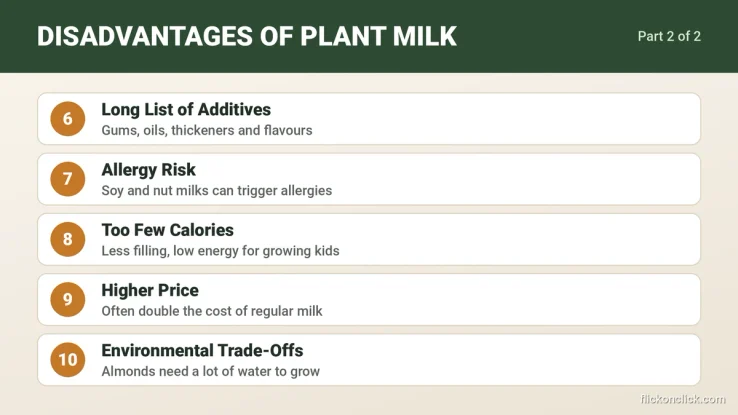
6. Long List of Additives
Plant milk is usually not just “plant and water”. To make it creamy, stop it from separating and give it a longer shelf life, many brands add ingredients such as:
- Gums like gellan gum, guar gum or locust bean gum
- Thickeners such as carrageenan
- Vegetable oils, such as sunflower or rapeseed oil
- Emulsifiers like lecithin
- Added salt, flavours and sweeteners
These additives are approved for use and are generally considered safe in normal amounts. However, some people with sensitive stomachs say certain gums or thickeners cause bloating or discomfort. If you prefer a cleaner product, look for brands with a short ingredient list.
7. Allergy Risk
Soy and tree nuts, including almonds and cashews, are among the most common food allergens. People with these allergies need to avoid the matching plant milks completely. Some plant milks are also made in factories that handle nuts, gluten or soy, so cross-contamination is possible.
Oat milk is often chosen as a nut-free option, but regular oats can be mixed with wheat during farming and processing. People with coeliac disease should pick oat milk that is clearly labelled gluten-free.
8. Fewer Calories Is Not Always a Good Thing
Almond milk has about 22 calories per 100 ml, compared with around 47 calories in semi-skimmed cow’s milk. This may sound like a benefit for weight loss, but it also means the drink is less filling and gives less energy. For growing children, older people with low appetite or anyone trying to gain healthy weight, low-calorie plant milk may not be the right choice.
Coconut milk drinks are the opposite in one way. They are often higher in saturated fat while still being low in protein.
9. Higher Price
Plant milk is usually much more expensive than regular milk. In some markets, almond milk costs at least double the price of cow’s milk per litre, and premium oat or nut milks can cost even more. For a family that drinks milk every day, this can add up quickly over a month.
10. Environmental Trade-Offs
Plant milks are often promoted as better for the planet, and many of them do have a smaller carbon footprint than dairy milk. However, they are not all equal. Almonds need a lot of water to grow, and much of the world’s almond supply comes from dry regions where water is already scarce. Many plant milks are also sold in cartons that are hard to recycle in some areas.
How to Choose a Better Plant Milk
If you still prefer plant milk, a few simple checks can help you avoid most of these disadvantages:
- Pick unsweetened versions with no added sugar.
- Check that it is fortified with calcium, vitamin D and vitamin B12, and ideally iodine.
- Choose soy or pea milk if protein is your main concern.
- Avoid rice milk for children under five.
- Read the ingredient list and choose products with fewer additives.
- Shake the carton well before every use.
- Do not use plant milk as a replacement for breast milk or formula for babies.
Final Word
Plant milk is not bad, but it is not a like-for-like replacement for regular milk either. Most types are low in protein, many lack key nutrients like iodine, and sweetened versions can quietly add sugar to your diet. Soy milk comes closest to cow’s milk in nutrition, while almond, rice and coconut milk fall short in protein.
The best approach is to read labels carefully, choose unsweetened and fortified options, and make up for missing nutrients through other foods. For young children, pregnant women and people with health conditions, it is best to speak to a doctor or registered dietitian before making plant milk the main milk at home.
Disclaimer: This article is for general information only and is not medical advice. Please consult a doctor or registered dietitian for advice on your diet and health.