


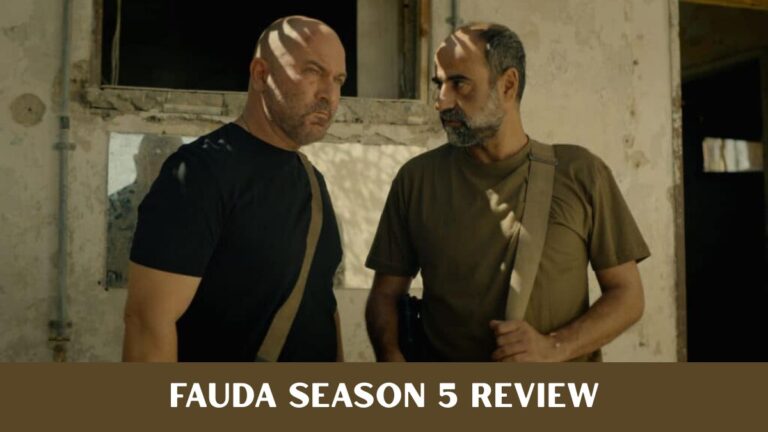
Fauda Season 5 Review: ★★★☆☆ (3/5)
Fauda Season 5 delivers the dramatic flair and technical polish fans expect, but five seasons in, the show struggles to shake off a sense of familiarity, leaving it competent rather than truly gripping.
Rating: ★★★☆☆ (3/5)
Platform: Netflix
Genre: Espionage Thriller
Language: Hebrew
Director: Omri Givon
Cast: Lior Raz, Doron Ben David, Yaakov Zada Daniel
Whatever your views on the Arab-Israeli conflict, Fauda has always promised a specific kind of experience, dramatic tension, technical polish, and strong performances built around Shin Bet agents going up against Hamas operatives. Season 5 delivers plenty of all three.
The problem is that no matter what new elements it throws into the mix, the show struggles to shake off a familiar, been-there-done-that feeling five seasons in.
The season picks up two years after the events of October 7, using the aftermath of that attack as both backdrop and narrative spine. Much of the story follows a group of rogue agents who embark on an unsanctioned personal revenge mission that threatens to derail an ongoing operation in Marseille, France, where a female operative is closing in on busting a terror network.
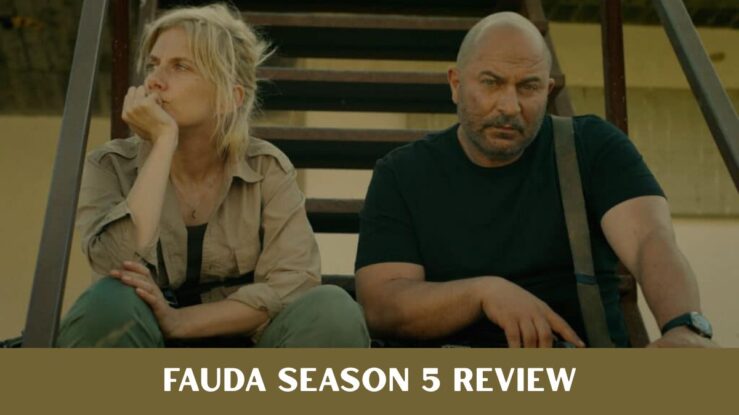
Among them is Eli Aharon, a Shin Bet officer who travels unofficially to Marseille alongside a Bedouin scout to track down and eliminate the Hamas operative responsible for killing his wife.
What starts as a straightforward revenge mission quickly grows more complicated once they discover their target’s actual identity and current life, now married to a Frenchwoman played by Melanie Laurent, one of this season’s most notable new additions.
Lior Raz returns as the central Doron Kabilio, and while the actor’s real background as a former IDF soldier continues to lend the character real authenticity, both Doron and Raz seem to be struggling to break free from a mold shaped by nearly fifty previous episodes.
Doron is shown undergoing therapy at his wife’s urging, clearly carrying real psychological damage, but that fragility mostly disappears the moment he gets pulled back into undercover work, which makes his arc feel somewhat repetitive rather than genuinely evolving.
The show fares better with its other troubled characters, who feel more convincingly shaped by stress and trauma. Doron and his colleague Steve get pulled into an off-the-grid operation to infiltrate a terror network planning an attack inside Israel, eventually crossing paths with a community center operator whose philanthropic front conceals a far more dangerous agenda.
To its credit, Season 5 makes a genuine, self-conscious effort to avoid being entirely one-sided in how it portrays the conflict’s escalation since October 7. That attempt at balance, however, does not fully land, and the show’s perspective ultimately remains firmly Israeli throughout.
The October 7 attacks themselves are addressed directly across two episodes, complete with graphic content warnings, before the series returns to its usual rhythm of tense operations and dangerous extractions.
Technically, the season delivers exactly what longtime fans expect, competent writing, strong action sequences, and a carefully calibrated approach to a genuinely difficult subject.
What has shifted is the show’s emphasis, turning inward to examine the psychological toll of endless conflict on the very people the series has spent years portraying as heroes. It is a thoughtful angle, even if it does not fully offset the sense of fatigue that has crept into the storytelling by this point.
Fauda Season 5 is binge-watchable in the sense that it moves quickly and rarely lets up, but it might actually work better paced out an episode or two at a time rather than consumed all at once. The show still has things to say, and it says them with conviction, but the shock and surprise that once defined its best seasons has clearly dimmed.
If you’re looking for a genuinely gripping thriller this week instead, our review of Last Seen covers an Apple TV series we consider one of the best shows of the year.