


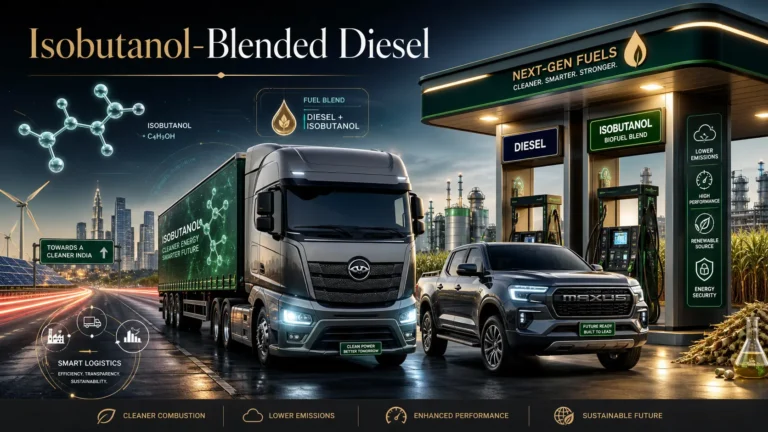
India has been on a steady march away from pure fossil fuels for the better part of a decade. The ethanol blending programme has picked up real momentum, flex-fuel motorcycles from Hero MotoCorp are already on the road, and Maruti Suzuki just unveiled the country’s first flex-fuel passenger car in the Wagon R. The direction of travel is clear.
But petrol engines are only half the picture. Diesel powers the vast majority of India’s trucks, buses, tractors, and commercial vehicles — and that segment has largely been left out of the biofuel conversation until now. That may be about to change.
Union Minister for Road Transport and Highways Nitin Gadkari recently revealed that the government is actively evaluating a proposal to allow up to 15 percent isobutanol blending in diesel. Speaking at the unveiling of Maruti Suzuki’s Wagon R Flex Fuel, Gadkari positioned the move as the next phase of India’s broader alternative fuel strategy — one that is no longer just about passenger cars and two-wheelers.
What Is Isobutanol and Why Does It Matter?
Most people have heard of ethanol. Isobutanol is less familiar but closely related — it is a biofuel that can actually be produced using ethanol as a feedstock. The reason it is being considered specifically for diesel, rather than more ethanol, comes down to chemistry.
Ethanol at higher concentrations can be corrosive. It attacks rubber seals, metal components, and fuel lines in ways that make retrofitting existing diesel infrastructure complicated and expensive. Isobutanol is considerably gentler on engine components and fuel systems. It has a higher energy content than ethanol, which means less compromise on performance, and it is more compatible with the pipelines and storage systems that already exist.
In plain terms: isobutanol could be blended into diesel without requiring the extensive modifications that higher ethanol concentrations would demand. That compatibility with existing infrastructure is a significant practical advantage.
What Changes If This Goes Ahead
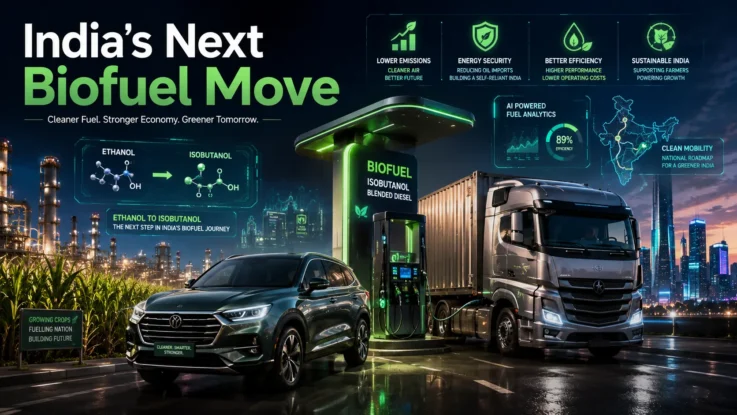
A 15 percent isobutanol blend in diesel would not replace anything overnight. The proposal is still at the evaluation stage, and comprehensive testing along with regulatory approvals will be needed before any commercial rollout happens. Engine manufacturers, fuel suppliers, and transport operators would all need to be brought into the process.
But the direction the government is pointing matters. India imports enormous quantities of crude oil, and diesel demand from the commercial transport sector is a major driver of that import bill. Replacing 15 percent of diesel with a domestically producible biofuel — even across a portion of the fleet — would meaningfully reduce that dependence over time.
It would also create new demand for Indian farmers producing the agricultural feedstocks that go into biofuel production, which sits squarely within the government’s energy security and rural economy goals simultaneously.
Similar Read: Flex-Fuel Vehicles in India
This isobutanol proposal sits alongside several other clean fuel developments that Gadkari also referenced. Hydrogen-powered bus pilots are already running in different parts of India, with the government studying their potential for wider commercial deployment. The Wagon R Flex Fuel, which runs on ethanol-petrol blends between E20 and E85, is being supplied initially to fleet operators and ride-hailing companies to test high-ethanol viability at real-world scale. Hero MotoCorp’s flex-fuel Splendor Plus and HF Deluxe are already with customers.
The pattern is consistent. India is not betting on a single alternative fuel technology. It is building multiple pathways simultaneously — ethanol for petrol engines, isobutanol potentially for diesel, hydrogen for heavy commercial transport — with the aim of reducing import dependence across every segment of the vehicle parc, not just the cars that urban consumers drive.
Also Read: 10 Pros and 10 Cons of Electric Vehicles
Isobutanol-blended diesel is the piece of that puzzle that diesel engine owners have been waiting for. Whether it moves from evaluation to implementation will depend on what the testing phase reveals — but the fact that it is being seriously considered at the ministerial level signals that the government’s biofuel ambitions have not run out of road yet.