


Every time you fill up in India, you are leaving money on the table — unless your credit card is working as hard as your engine. With petrol prices stubbornly elevated and diesel costs showing no signs of retreat, the right fuel credit card can save a regular commuter anywhere from ₹200 to ₹600 every single month. That is ₹2,400 to ₹7,200 a year, simply by swiping the right card at the right pump. The mechanism is straightforward: fuel credit cards combine accelerated reward points or cashback on fuel purchases with a 1% surcharge waiver — a charge levied on every credit card fuel transaction by default. The best cards in 2026 deliver up to 8.5% total value-back when both benefits are stacked together.
But here is the crucial detail: there is no single best fuel credit card for everyone. The ideal choice depends entirely on which oil company’s pumps you use most, how much you spend each month on fuel, and whether you want a co-branded card tied to one brand or a multi-brand card with broader flexibility. This guide breaks down all ten of the best options, from the highest-saving co-branded cards to the most accessible budget picks, so you can make the choice that actually fits your driving life.
Table of Contents
How Best Fuel Credit Cards in India Save You Money
Fuel cards work through a three-part savings model. First, accelerated rewards: most fuel cards offer 3x to 30x reward points per ₹100 spent at partner petrol pumps, far above the 1x rate on regular transactions. Second, the 1% fuel surcharge waiver: paying for fuel with any credit card normally attracts a 1% surcharge plus GST (approximately 1.18% total). Fuel cards waive this — but only on transactions typically between ₹400 and ₹5,000. Fill up for ₹300 on a scooter, and the waiver does not apply. Third, co-branded loyalty stacking: several cards integrate with pump loyalty programmes like IndianOil XTRA or HPCL Happy Coins, letting you earn on two tracks simultaneously. Understanding all three levers helps you calculate your real-world savings before choosing a card.
Quick Overview: Best Fuel Credit Cards in India
| Credit Card | Annual Fee | Fuel Savings | Best Pump | Best For |
| IndianOil RBL Bank XTRA | ₹1,500 + GST | Up to 8.5% | IndianOil | Heavy IndianOil users |
| BPCL SBI Card Octane | ₹1,499 + GST | Up to 7.25% | BPCL | Premium BPCL regulars |
| IDFC FIRST HPCL Power+ | ₹499 + GST | Up to 5% | HPCL | Moderate spenders |
| IndianOil Axis Bank | ₹500 + GST | Up to 5% | IndianOil | Entertainment + fuel |
| IndianOil Kotak | ₹449 + GST | Up to 5% | IndianOil | UPI users |
| IndianOil HDFC | ₹500 + GST | 5% + grocery | IndianOil | Mixed daily spenders |
| ICICI HPCL Coral | ₹199 + GST | Up to 3.5% | HPCL | Budget HPCL users |
| HPCL Energie BoB | ₹499 + GST | Up to 6.5% | HPCL | HPCL loyalists |
| SBI Fuel Variant | ₹499 + GST | Standard + waiver | All brands | Brand-agnostic drivers |
| ICICI Fuel Edition | ₹500 + GST | Multi-brand | All brands | ICICI customers |
Top 10 Best Fuel Credit Cards in India (2026)
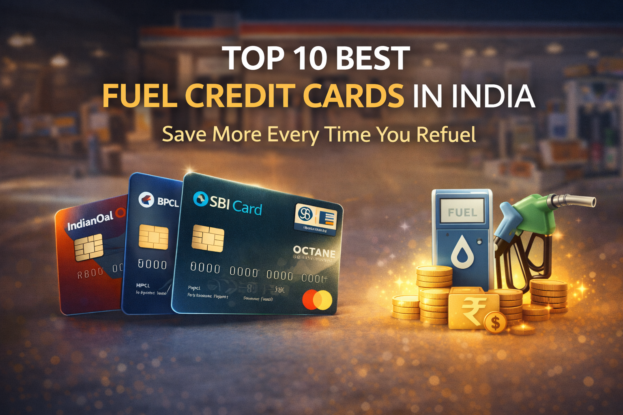
01. IndianOil RBL Bank XTRA Credit Card
Best overall — highest fuel savings rate in India at 8.5% value-back
| Annual Fee ₹1,500 + GST | Fuel Savings Up to 8.5% | Best For Heavy IndianOil users |
The IndianOil RBL Bank XTRA is the highest-saving fuel card available in India in 2026, and it earns that title clearly. Every ₹100 spent at an IndianOil pump returns 15 fuel points — and when those points are redeemed for more fuel, they deliver a 7.5% effective return. Add the 1% surcharge waiver, and total savings reach 8.5%. The monthly cap of 2,000 fuel points means you hit maximum value at around ₹13,300 in monthly fuel spending.
The annual fee of ₹1,500 is waived on ₹2.75 lakh in annual spend, and a welcome bonus of 3,000 fuel points activates after your first purchase. The only meaningful limitation is exclusivity — this card works at IndianOil pumps only, and non-fuel purchases earn a modest 2 points per ₹100.
Best for: Heavy fuel spenders (₹5,000–₹13,000/month) who primarily use IndianOil stations.
02. BPCL SBI Card Octane
Premium pick for BPCL loyalists — highest BPCL savings rate available
| Annual Fee ₹1,499 + GST | Fuel Savings Up to 7.25% | Best For Premium BPCL users |
The BPCL SBI Card Octane is the premium option for drivers who fill up at Bharat Petroleum. It earns 25 reward points per ₹100 on BPCL fuel and lubricants — a 6.25% value-back — and enhances the standard 1% surcharge waiver to 1.25%, pushing total fuel savings to 7.25% for eligible transactions up to ₹4,000. This ranks as one of the best Fuel Credit Cards in India.
Also Read: Best Stocks to Buy This Month
What makes the Octane stand out is its breadth beyond petrol: 5 reward points per ₹100 on dining and grocery purchases give it genuine everyday utility. Golf course access, airport lounge benefits on qualifying spend, and SBI’s national acceptance network round out a package that behaves more like a premium lifestyle card with an exceptional fuel component.
Best for: Premium users who spend ₹5,000+/month on BPCL fuel and want lifestyle perks alongside fuel savings.
03. IDFC FIRST HPCL Power+ Credit Card
Best for moderate spenders — exceptional value at ₹2,000–₹6,000 monthly
| Annual Fee ₹499 + GST | Fuel Savings Up to 5% | Best For HPCL moderate users |
IDFC FIRST’s HPCL Power+ is the standout card for drivers whose monthly fuel spend sits between ₹2,000 and ₹6,000 — a bracket where most premium cards’ caps kick in before they deliver meaningful value. The card offers up to 3.5% savings through its standard reward structure, and an additional 1.5% when fuel is paid through the HP Pay app, bringing total potential savings to 5%.
The ₹499 annual fee is among the lowest in this segment, and the card’s digital-first design means the HP Pay integration works smoothly rather than as an afterthought. IDFC FIRST’s mobile platform is widely regarded as one of the best among Indian banks for clarity and usability.
Best for: Moderate HPCL users who pay through digital wallets and want a low-cost, clean card experience.
04. IndianOil Axis Bank Credit Card
Best IndianOil card for entertainment lovers and dining regulars
| Annual Fee ₹500 + GST | Fuel Savings Up to 5% | Best For Lifestyle + fuel combo |
Axis Bank’s IndianOil card earns 20 reward points per ₹100 at IOCL stations — a 4% value-back — plus the 1% surcharge waiver for 5% total fuel savings. The monthly fuel reward cap of ₹200 covers around ₹5,000 in fuel spending, making it suitable for average commuters rather than heavy users. It is amongst the best Fuel Credit Cards in India.
Where this card differentiates is the lifestyle layer: 15% off movie tickets via BookMyShow and up to 20% dining discounts through Axis Dining Delights add genuine everyday value. A ₹250 cashback welcome bonus on first-month fuel spend and a fee waiver on ₹3.5 lakh annual spend make this one of the most accessible entry points in the co-branded IndianOil segment.
Best for: Regular commuters who also spend on dining and entertainment and want a single card for both.
05. IndianOil Kotak Credit Card
Best for UPI fuel payments and moderate IndianOil users
| Annual Fee ₹449 + GST | Fuel Savings Up to 5% | Best For UPI + fuel combo |
Kotak’s IndianOil card earns 24 reward points per ₹150 on IOCL fuel (4% back) plus the 1% surcharge waiver for 5% total savings, with a monthly cap of 1,200 points — roughly ₹7,500 in fuel spending. Its distinction is the RuPay variant, which earns points on UPI transactions, a meaningful benefit given how many Indian petrol pumps now default to QR code payments.
Dining and groceries earn 12 points per ₹150, and the card includes personal accident coverage. At ₹449 — the lowest annual fee among the co-branded IndianOil options — with a waiver on ₹50,000 annual spend, this is an accessible, rounded option for anyone who combines fuel, dining, and digital payments in their daily life.
Best for: Users who frequently pay via UPI at petrol pumps and want everyday grocery and dining rewards alongside fuel savings.
06. IndianOil HDFC Credit Card
Up to 50 litres of free fuel annually — strong multi-category rewards
| Annual Fee ₹500 + GST | Fuel Savings 5% (fuel points) | Best For Mixed daily spenders |
HDFC’s IndianOil co-branded card earns 5% back as fuel points on IOCL purchases — capped at 250 monthly fuel points in the first six months, reducing to 150 after that — and crucially extends the same 5% rate to grocery purchases and utility bill payments. This is one of the best Fuel Credit Cards in India.
This multi-category earning makes it one of the most versatile fuel cards available: many cardholders find they recover more value through grocery and bill rewards than from fuel alone. The headline benefit is the equivalent of up to 50 litres of free fuel annually. Fee waiver on ₹50,000 annual spend and UPI compatibility round out a card that works well for regular households.
Best for: Households that want fuel rewards and strong returns on grocery and utility spending with one low-fee card.
07. ICICI Bank HPCL Coral Credit Card
Best budget HPCL option — airport lounge access at just ₹199/year
| Annual Fee ₹199 + GST | Fuel Savings Up to 3.5% | Best For Budget HPCL users |
At ₹199 per year — the lowest annual fee on this list — the ICICI HPCL Coral punches well above its price. It earns 10 reward points per ₹100 at HPCL stations (2.5% value-back) plus the 1% surcharge waiver for 3.5% total savings, with a monthly cap of ₹200 covering about ₹8,000 in fuel spend.
What makes this card genuinely surprising is the inclusion of 8 complimentary airport lounge visits per year — a benefit rarely seen at this price point. The straightforward benefit structure, easy waiver conditions, and ICICI’s extensive acceptance network make this the default recommendation for light-to-moderate HPCL users.
Best for: Light-to-moderate HPCL users who want the lowest-cost entry point with a lounge access bonus.
08. HPCL Energie BoB Credit Card
Simple, solid HPCL savings with Happy Coins integration
| Annual Fee ₹499 + GST | Fuel Savings Up to 6.5% | Best For HPCL loyalists |
Bank of Baroda’s HPCL Energie card delivers 6.5% total value-back on HPCL fuel through a combination of accelerated reward points, the standard 1% surcharge waiver, and integration with HPCL’s Happy Coins loyalty programme — allowing cardholders to stack credit card rewards on top of existing pump loyalty earnings. It is undoubtedly listed amongst the best Fuel Credit Cards in India.
The benefit structure is intentionally simple: no complex tier systems, no confusing bonus category rotations, and no difficult redemption rules. For HPCL regulars who want the highest savings rate in the HPCL segment without the complexity of a premium card, this delivers strong numbers. BoB’s established national network ensures customer service is accessible when needed.
Best for: HPCL loyalists who want to stack Happy Coins on top of credit card rewards for the highest combined HPCL savings.
09. SBI Card — Fuel Variant
Brand-agnostic fuel savings — works at every pump in India
| Annual Fee ₹499 + GST | Fuel Savings Standard + 1% waiver | Best For Brand-agnostic drivers |
The SBI fuel card variant is the straightforward choice for drivers who genuinely do not stick to one petroleum brand. While co-branded cards deliver higher reward rates at their partner stations, they penalise you with minimal rewards everywhere else. SBI’s universal approach earns consistent — if not spectacular — rewards across IndianOil, BPCL, and HPCL.
This makes it the right pick for highway travellers, people in areas with mixed pump availability, or anyone who dislikes being locked into a brand. SBI’s unmatched national acceptance network means this card works everywhere without exception, and its customer infrastructure — the largest of any bank in India — provides reliable support when issues arise.
Best for: Brand-agnostic drivers who fill up wherever is convenient and want consistent benefits without station restrictions.
10. ICICI Fuel Edition Credit Card
Best for ICICI banking customers — seamless digital integration
| Annual Fee ₹500 + GST | Fuel Savings Multi-brand rewards | Best For Existing ICICI customers |
ICICI’s fuel edition card is not built to win on maximum reward rates — it is built for customers already embedded in the ICICI ecosystem who want fuel benefits that integrate cleanly with their existing banking. Fuel rewards work across multiple brands, and the iMobile Pay app handles tracking, redemption, EMI conversion, and account management in a single clean interface.
For ICICI salary account holders or existing credit card customers, the pre-approved upgrade path makes acquisition frictionless. This is a convenience play: it will not save you as much as the RBL XTRA at an IndianOil pump, but it adds fuel savings to your existing banking relationship without adding complexity.
Best for: Existing ICICI Bank customers who want to add fuel savings to their current banking setup without managing a separate card relationship.
How to Choose the Right Fuel Credit Card
Three questions determine which card belongs in your wallet. First: Which fuel brand do you actually use? Track a month of receipts honestly — if 80% of your fill-ups happen at one brand, a co-branded card almost always delivers better savings than a multi-brand alternative. Second: How much do you spend per month? Cards with ₹200 monthly reward caps max out at around ₹5,000 in fuel spending — heavy users hitting ₹8,000–₹15,000 need higher-cap premium cards like the RBL XTRA or SBI Octane. Third: Do you want pure fuel savings or multi-category value? Cards like the IndianOil HDFC that earn 5% on groceries and utility bills often deliver more total monthly value than a pure fuel card, especially for households where multiple categories are charged to the same card.
One final check: always calculate the annual fee break-even. Divide the annual fee by 12 — that is the minimum monthly saving you need to justify the card. A ₹1,500 fee card needs to save you ₹125 every month before it starts making money for you. Run the numbers against your actual spending before applying, not against an idealised scenario.
Understanding the Fuel Surcharge Waiver
The 1% surcharge waiver is the most consistently misunderstood benefit on fuel credit cards. Here is how it actually works. When you swipe any credit card at a petrol pump, the merchant adds a 1% surcharge plus GST — approximately 1.18% total. On a ₹2,000 fill-up, that is ₹23.60 added to your bill. Fuel cards waive this charge, but not instantly at the counter: you pay the surcharge upfront, and the bank credits it back in your next billing statement. Most cards only waive surcharges on transactions between ₹400 and ₹5,000, which means two-wheeler riders refuelling for ₹250 and truck operators refuelling for ₹8,000 both miss out. Monthly caps on total waivers — typically ₹100 to ₹250 — further limit the benefit for heavy users. Always check your billing statement each month to confirm the credit is appearing, and contact your bank immediately if it is not.
Do Read:
1) 5 Best Credit Cards for Lounge Access
2) Best Health Insurance Companies in India
3) 7 Best Education Loans for MBA Students in India
Are Fuel Credit Cards Worth It?
For heavy commuters who consistently use one fuel brand and spend ₹6,000 or more monthly on fuel, the answer is unambiguously yes. A driver spending ₹8,000 monthly at IndianOil with the RBL XTRA card would save approximately ₹600 per month — ₹7,200 annually — against an annual fee of ₹1,500. That is a 380% return on the card’s cost. For moderate users spending ₹3,000 per month, the math still works with the right card: the ICICI HPCL Coral at ₹199 per year can generate ₹100 to ₹120 in monthly savings, a positive return from month one.
Light users and drivers who fill up across multiple brands need to do the arithmetic honestly. Multi-brand cards deliver lower reward rates, and if your monthly savings do not exceed the annual fee divided by twelve, the card is costing you money rather than saving it. For those who drive rarely or unpredictably, a good general cashback card may ultimately deliver more overall value than a dedicated fuel card.
Also Read: Why a Fuel Credit Card Is Essential for Frequent Commuters in 2026
Disclaimer: This article is for informational purposes only and does not constitute financial advice. Card fees, reward rates, and benefit terms are subject to change. Always verify current terms directly with the respective banks before applying. All figures are based on publicly available data as of April 2026.