


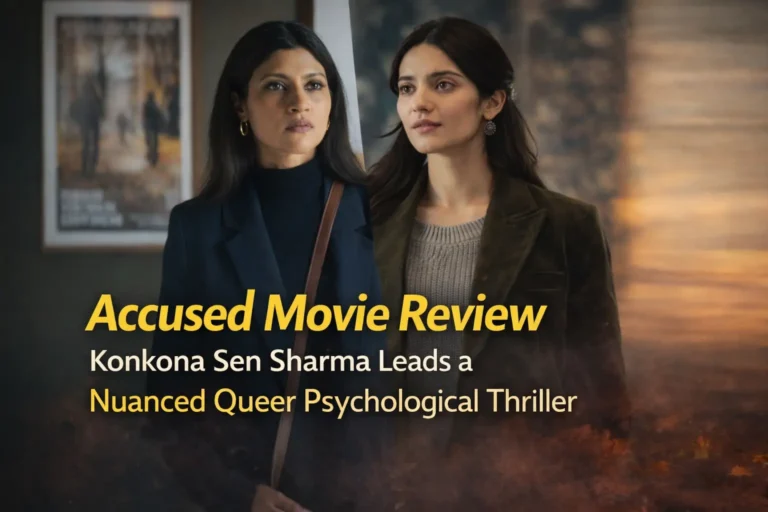
Accused Movie Review: ⭐⭐⭐⭐☆ (4/5)
Accused earns 4 out of 5 stars for its powerful performances, especially by Konkona Sen Sharma, and its nuanced exploration of power, consent, and moral ambiguity. While the slow pacing may test some viewers, the film stands out as a mature and thought-provoking psychological thriller.
Netflix’s Accused is not an easy watch. Directed by Anubhuti Kashyap, the film dives into uncomfortable questions about power, truth, and morality.
Set in London, this psychological thriller focuses on two women whose professional and personal lives collide in disturbing ways. The result is a layered, slow-burning drama that stays with you long after it ends.
The Premise
Accused follows Dr. Geetika, a respected senior gynecologist, who faces serious allegations of misconduct. The accusation comes from within her own professional circle, shaking both her career and personal life.
At the center of the storm is Dr. Meera, her colleague and partner. As the investigation unfolds, the film questions whether truth is ever simple or absolute.
Konkona Sen Sharma’s Career-Defining Performance
Konkona Sen Sharma delivers one of her most controlled and mature performances as Dr. Geetika. She plays the character with restraint, never pushing for sympathy or victimhood.
Her portrayal of a woman caught between arrogance, vulnerability, and possible guilt feels painfully real. She makes Geetika neither a hero nor a villain, but a complex human being.
Pratibha Ranta Brings Emotional Depth
Pratibha Ranta as Dr. Meera offers a strong counterbalance to Konkona’s character. She brings emotional fragility and quiet strength to the role.
Her performance reflects confusion, anger, and internal conflict. Together, the two actors create a tense dynamic that drives the entire film.
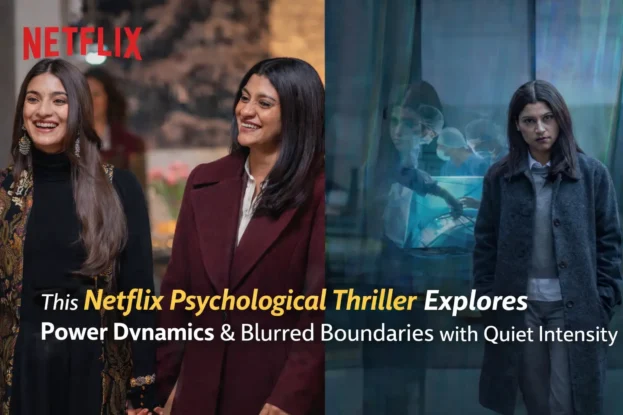
Direction and Storytelling
Director Anubhuti Kashyap chooses a restrained approach. She avoids dramatic outbursts and sensational twists, allowing tension to build slowly.
The storytelling is subtle, often relying on silences and glances rather than loud confrontations. This style may test the patience of some viewers, but it adds realism to the narrative.
Exploring Power and Consent
One of the film’s strongest aspects is its exploration of power dynamics. The boss-employee relationship between Geetika and Meera becomes the emotional battlefield of the story.
The film carefully examines how authority can blur boundaries. It does not provide easy answers, which makes the experience more unsettling.
Queer Representation with Complexity
Accused stands out for its queer narrative handled with seriousness. The relationship between the two women is portrayed without stereotypes or unnecessary glamour.
Instead, the film focuses on emotional truth. It treats the queer angle as a natural part of the story, not as a gimmick.
Psychological Tension
The psychological tension builds gradually. The film avoids loud thriller tropes and instead creates discomfort through uncertainty.
As viewers, we constantly question what really happened. This moral ambiguity becomes the film’s biggest strength.
Pacing Issues
While the slow pacing adds depth, it also becomes a drawback in parts. Some scenes feel stretched longer than necessary.
The gradual reveal of information may frustrate viewers expecting fast-moving drama. A tighter edit could have made the film more engaging.
Supporting Cast and Atmosphere
The supporting cast adds credibility to the courtroom and hospital sequences. The London setting enhances the film’s isolated and cold tone.
Cinematography captures sterile hospital corridors and muted cityscapes effectively. The visual style matches the film’s psychological intensity.
Writing and Moral Ambiguity
The screenplay refuses to take sides. It does not clearly label anyone as right or wrong.
This grey area is refreshing in today’s storytelling landscape. It invites viewers to think rather than simply react.
Climax and Impact
The climax is restrained rather than explosive. Instead of a dramatic closure, the film leaves viewers with lingering questions.
Some may find this underwhelming, but it fits the film’s overall tone. The ending emphasizes reflection over resolution.
Also Read: The Bluff Review: Priyanka Chopra Jonas Anchors a Brutal Pirate Saga on Prime Video
Audience and Critical Response
Early reviews have largely praised the performances. Critics highlight Konkona’s nuanced portrayal and the film’s complex narrative.
However, some viewers note the slow pacing and emotionally heavy atmosphere. It is a film that demands patience and attention.
Technical Aspects
The background score remains subtle throughout. It enhances tension without overpowering scenes.
Production design and costume choices feel realistic. Nothing appears overly stylized or exaggerated.
What Works
The biggest strength of Accused lies in its performances. Konkona Sen Sharma commands the screen with quiet intensity.
The exploration of power, consent, and moral complexity also elevates the film beyond a standard thriller.
What Could Have Been Better
The pacing occasionally slows the narrative momentum. A few scenes could have been sharper and shorter.
Some viewers may also feel the climax lacks emotional punch.
Final Verdict
Accused is a thoughtful and mature psychological thriller. It challenges viewers with uncomfortable questions and avoids easy answers.
While it may not appeal to those looking for fast-paced drama, it rewards patient viewers with layered storytelling and powerful performances.
Anubhuti Kashyap crafts a film that feels relevant, intelligent, and emotionally complex. Konkona Sen Sharma delivers one of her finest performances to date.
Overall Rating: ⭐⭐⭐⭐☆ (4/5)