


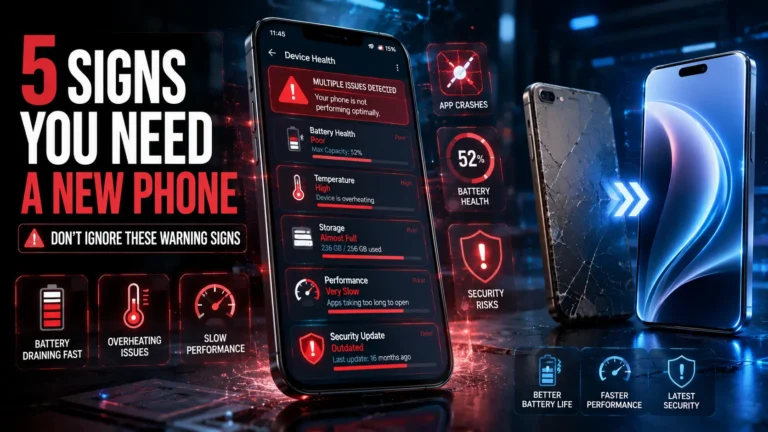
Smartphones have quietly become the most important device most of us own. Banking, work emails, photos, communication, shopping — it all lives in our pocket now. Which is exactly why it’s so easy to keep using one for far longer than we probably should, patching up problems instead of admitting the phone has simply reached the end of its road.
The tricky part is that decline rarely happens overnight. It creeps in slowly — a slightly slower app launch here, a bit more battery drain there — until one day you realize your phone is genuinely struggling to keep up with your life. Here are five signs that tell you it’s time to stop ignoring the problem and start looking at a replacement.
Smartphone Running Slow? These 5 Warning Signs Mean Replace It
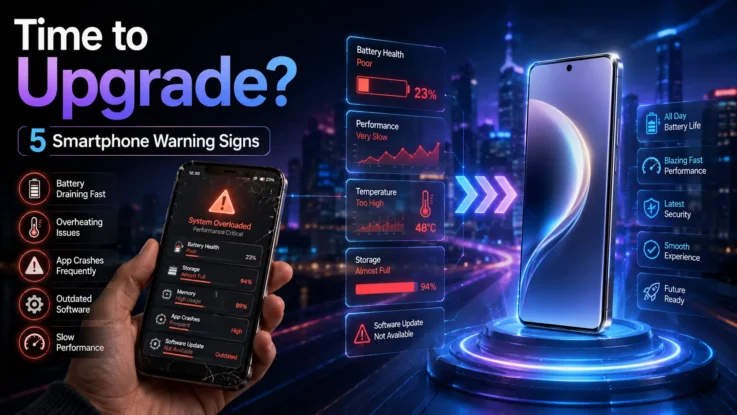
1. Your Battery Is Draining Way Too Fast
This is usually the first sign people notice, and for good reason — it’s impossible to ignore.
If your phone is losing charge rapidly even right after a full recharge, that’s your battery telling you it’s wearing out. Batteries degrade naturally over time through repeated charging cycles, and once that degradation sets in, you’ll start noticing a pattern — needing to charge multiple times a day, the phone heating up while plugged in, sudden random shutdowns, or general instability when you’re running more than one app.
If you’ve found yourself carrying a power bank everywhere just to make it through a normal day, that’s not a coincidence — that’s your phone quietly asking for retirement.
A few specific things to watch for: the battery percentage dropping suddenly rather than gradually, excessive heat during charging, unexpected shutdowns even when there’s charge remaining, noticeably slower charging speeds, and battery life that barely lasts a few hours of regular use. Some phones can have their batteries replaced affordably, but if you’re seeing several of these issues together on an older device, a simple battery swap often isn’t enough to fix the bigger picture.
2. Apps Keep Crashing or Refusing to Open
Modern apps are demanding. They expect a certain level of processing power and memory, and when your phone can’t keep up, you’ll feel it in the form of constant frustration.
This shows up as apps freezing mid-use, crashing without warning, taking forever to load, or sometimes not opening at all. Switching between apps becomes sluggish, and you might notice things restarting in the background more than they should.
It’s worth noting that some categories of apps are simply harder on hardware than others — gaming, video editing, video calls, and anything involving AI features push your phone’s processor and memory much harder than basic browsing or messaging. If your phone struggles specifically with these heavier tasks, that’s a sign your hardware has fallen behind what current software expects.
Watch for regular crashes, games lagging or freezing often, slow app-switching, storage filling up faster than it used to, and constant buffering when streaming video. When using your phone starts feeling like work instead of convenience, that’s usually your answer.
3. Your Phone Has Stopped Getting Security Updates
This one is less visible than a draining battery, but arguably more important.
Software updates aren’t just about new features — they patch security holes that hackers actively look for. Once a phone stops receiving official updates from its manufacturer, every day it remains in use is another day of growing vulnerability to malware, data breaches, and digital fraud.
This matters enormously if you use your phone for online banking, digital payments, email, or storing anything personal or sensitive — which, let’s be honest, is almost everyone these days. Regular updates protect against hacking attempts, fix bugs, improve compatibility with newer apps, and generally keep your device’s defenses current.
If your phone has aged out of update support, especially while you’re still relying on it for financial transactions, that’s not a risk worth taking just to squeeze out a few more months of use.
Also Read: 20 Best 5G Smartphones Under 20000 in India
4. Your Camera or Screen Starts Acting Up
The camera and display are two of the most heavily used components on any smartphone, and when they start failing, it’s usually a sign of genuine hardware wear rather than something a quick fix will solve.
Look out for blurry photos, a camera that struggles to focus, flickering on the screen, dead pixels, touchscreen delays, or strange coloured lines appearing across the display. These problems often build up gradually from accidental drops, overheating, or simply years of daily wear and tear.
If you depend on your phone for photography, video calls, or content for social media, a failing camera isn’t a minor inconvenience — it directly affects how you use your device every day. And realistically, fixing major hardware problems like a cracked display or damaged camera module on an older phone can cost almost as much as buying a new one outright.
5. Everything Feels Slow, and the Phone Keeps Overheating
This is often the cumulative sign that ties everything else together. If your phone hangs constantly, takes a beat too long to respond to taps, or heats up even during basic tasks like browsing or texting, the internal hardware is struggling to keep pace with what you’re asking it to do.
This becomes especially frustrating if you depend on your phone heavily for work or study, where every delay adds up. Watch for extreme slowness, frequent freezing, delayed touch response, regular overheating, and unexpected restarts or crashes.
When several of these symptoms show up together rather than as isolated incidents, it’s usually a stronger signal than any single issue on its own — and at that point, repeated repairs often end up costing more, in both money and patience, than simply upgrading.
Also Read: How to Make an Android Battery Last Longer
None of these signs alone necessarily mean your phone is finished. But when you start noticing two or three of them together — slow performance, battery struggles, security gaps, hardware glitches — that’s usually a clear signal the device has reached the end of its practical lifespan. Newer phones today offer better battery life, security, and performance, and recognizing these warning signs early can save you from data loss, security risks, and a lot of everyday frustration.