


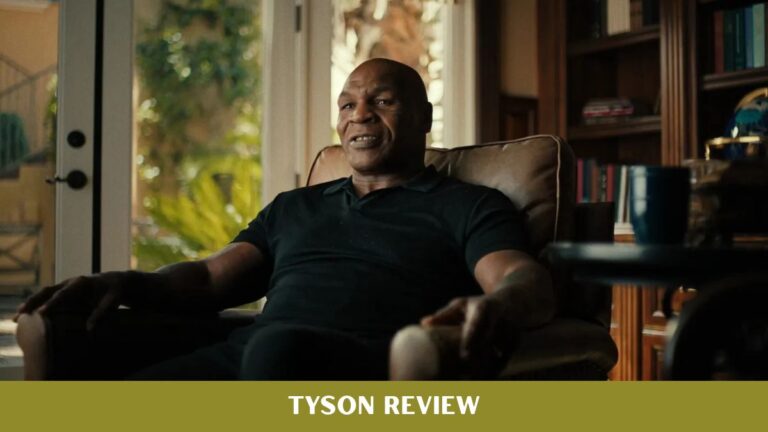
Tyson Review: ★★½☆☆ (2.5/5)
Tyson is gripping whenever the 60-year-old boxer talks openly about his life. But the series is one-sided in how it handles the most serious parts of his past, which leaves a sour taste.
Rating: ★★½☆☆ (2.5/5)
Platform: Netflix
Genre: Sports Documentary
Episodes: 4
Director: Floyd Russ
Mike Tyson has been in the public eye since he burst onto the boxing scene at 19. Now 60, he sits down for a long and very frank talk about his life in Tyson, a new four-part docuseries from Netflix. Reviews have been split, and it is easy to see why. The series is often fascinating, but it also raises real questions about how much trust we should place in a story told mostly by the person it is about.
The first episode is the strongest. It starts with Tyson lying on a rock with his eyes closed, saying that when the camera comes on, his demons will appear. We then see his hard childhood in Brownsville, Brooklyn, where he grew up around violence and poverty. He admits he robbed other kids as a teenager.
A chance to learn boxing led him to the legendary trainer Cus D’Amato, who told him he would be heavyweight champion one day. Tyson calls his time living at D’Amato’s academy the happiest of his life. Watching him get emotional about D’Amato’s death in 1985 is the kind of raw moment that makes the series worth watching. In 1986, he won the heavyweight title at 20, the youngest ever.
The best part of the show is the present-day Tyson. He has very little filter, gets angry, gets sad and even wonders aloud why winning the title felt so important when he was young. That honesty is why one critic called the series an engrossing look at his life.
The trouble starts when the show reaches the harder chapters. The Guardian called the series lopsided and “deeply icky,” and said it feels more like a tribute than a balanced story. In the episode on his short marriage to the actor Robin Givens, Tyson is shown denying that he hurt her, while old footage shows Givens describing the marriage as torture.
Givens did not take part in the series. Tyson also uses harsh language about her in the present day, and the episode ends with a note pointing viewers to resources for survivors of sexual violence.
The episode about his rape conviction is described as even more troubling. Tyson, who denies assaulting the then 18-year-old Desiree Washington, laughs about his reputation for being handsy. He served three years in prison. According to the review, a few voices in the show do not fully dismiss Washington, but many more doubt that he could have been guilty.
Donald Trump also makes a surprise appearance to defend Tyson, saying the truth hurt him in the case, which the reviewer called baffling. Some people interviewed even compare Tyson to Nelson Mandela, which feels like a very strange comparison given the subject.
To be fair, the series does not hide everything. It covers drugs, alcohol, the face tattoo, and the biting of Evander Holyfield’s ear, which Tyson calls the act of a spoiled brat. It also touches on the heartbreaking death of his young daughter Exodus and on his son Miguel calling him a deadbeat.
Still, critics argue that the show spends more time dodging blame than facing it. It ends with Tyson taking a hallucinogenic drug and crying on camera, which one reviewer found peculiar and irresponsible.
So who is it for? If you simply want to watch a famous, complicated man talk about his life, there is plenty to hold your attention. If you want a fair look at the people he hurt, you may come away disappointed.
If you want something else to watch this week, our review of The Trap covers a Netflix thriller that twists itself into knots, and for something warm and emotional, our review of VisionQuest looks at Paul Bettany and James Spader in Marvel’s trilogy finale.
Tyson is now streaming on Netflix.