


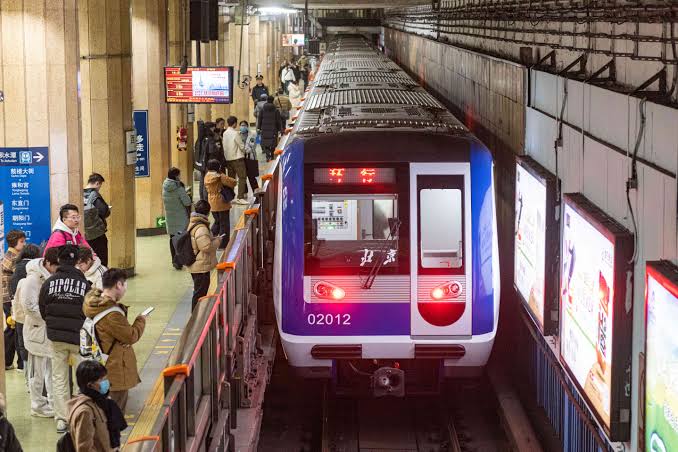
The world’s largest and longest metro networks have become the backbone of modern urban life. They provide fast, affordable, and environmentally friendly transportation to millions of people every single day. As cities continue to expand rapidly, metro rail systems play a crucial role in reducing traffic congestion, cutting pollution, and supporting sustainable urban growth.
As of 2025, the following metro systems are widely recognised as the top 10 longest metro networks in the world, based on operational route length.
Top 10 Longest Metro Networks (Overview)
- Shanghai Metro, China – ~831 km, 500+ stations
- Beijing Subway, China – ~669 km, 490+ stations
- Guangzhou Metro, China – ~607 km
- Wuhan Metro, China – ~486 km
- Moscow Metro, Russia – ~449–456 km
- London Underground, United Kingdom – ~402 km, 272 stations
- New York City Subway, USA – ~399 km, 470+ stations
- Delhi Metro, India – ~390–395 km, around 280 stations
- Seoul Metro, South Korea – ~340 km
- Madrid Metro, Spain – ~293 km
Note: Exact figures may vary slightly across sources, as many metro systems are continuously expanding.

1. Shanghai Metro – The World’s Largest Metro Network
The Shanghai Metro, which began operations in 1993, is currently the largest metro system in the world. With a total length of around 831 kilometres and more than 500 stations, it connects almost every part of this mega city.
The network operates over 20 lines and serves billions of passengers annually, making it one of the busiest metro systems globally.
Key Highlights
- High-capacity trains and seamless interchange stations
- Strong airport connectivity
- Continuous expansion projects that will further increase its size
Also Read: Vande Bharat: Good News! First Sleeper Vande Bharat to Run on This Route – Know the Details
2. Beijing Subway – Unmatched Passenger Volume
The Beijing Subway, launched in 1969, ranks second globally in terms of network length. It spans over 669 kilometres and includes nearly 500 stations.
It handles one of the highest passenger volumes in the world, with daily ridership often crossing 13 million commuters.
Key Highlights
- Extensive coverage of urban and suburban areas
- Advanced signalling systems and smart ticketing
- High-frequency services during peak hours
3. Guangzhou and Wuhan Metro – China’s Rapid Expansion Story
The Guangzhou Metro, operational since the late 1990s, has grown rapidly to around 607 kilometres, placing it among the world’s longest metro networks.
Similarly, the Wuhan Metro has expanded quickly in recent years and now stretches close to 486 kilometres, serving as a vital transit system for central China.
Key Highlights
- Significant reduction in road congestion
- Fast inter-line transfers
- Efficient travel across large urban distances
4. Moscow, London, and New York – Classic Yet Massive Networks
- The Moscow Metro, opened in 1935, spans approximately 450 kilometres and is the largest metro system in Europe.
- The London Underground, which started in 1863, is the world’s oldest metro network and covers about 402 kilometres.
- The New York City Subway, operational since 1904, runs nearly 399 kilometres and is famous for its 24×7 service.
Key Highlights
- Moscow Metro is renowned for its palace-like station architecture
- London and New York metros are economic lifelines of their cities
- High passenger density and historic importance
5. Delhi, Seoul, and Madrid – Modern Urban Transit Leaders
The Delhi Metro, launched in 2002, has grown into one of the world’s largest metro systems with an operational length of around 390–395 kilometres. It continues to expand and plays a vital role in reducing pollution and traffic in India’s capital region.
The Seoul Metro, known for its punctuality and advanced technology, spans around 340 kilometres and offers a highly comfortable commuter experience.
The Madrid Metro, with a length of nearly 293 kilometres, efficiently connects both the historic and modern parts of Spain’s capital.
Key Highlights
- Delhi Metro supports economic growth and urban development
- Seoul Metro excels in cleanliness and digital integration
- Madrid Metro offers strong connectivity across urban zones
Also Read: India’s Longest Vande Bharat to Run on This Route
Conclusion: The Backbone of Future Cities
These top 10 longest metro networks clearly show how essential large-scale public transport systems have become for modern cities. As urban populations continue to rise, metro networks like those in Shanghai, Beijing, Delhi, and London are shaping the future of sustainable mobility.
By reducing dependence on private vehicles and encouraging mass transit, these metro systems offer a clear blueprint for cleaner, smarter, and more liveable cities around the world.