


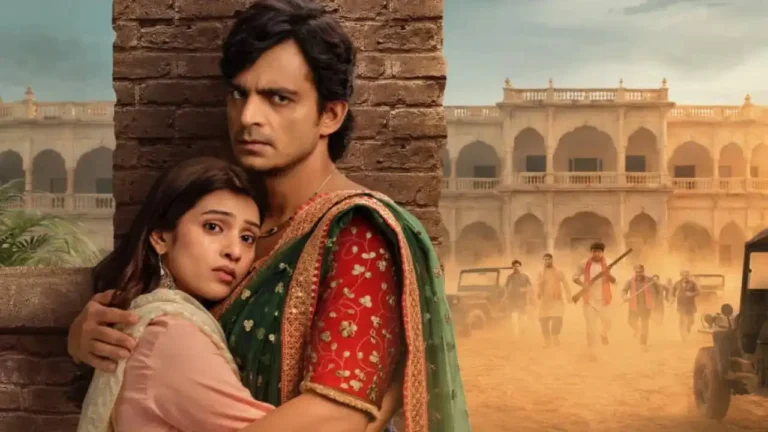
The Hindi OTT landscape has no shortage of revenge thrillers. What it lacks is revenge thrillers that feel genuinely rooted in a specific cultural reality — where the world the story inhabits is as compelling as the plot driving it and where the social forces being depicted aren’t just backdrop but the actual point.
Satrangi – Badle Ka Khel looks like it understands this distinction. The trailer has been circulating since early May, and the reaction has been noticeably different from the usual anticipation content generates — people aren’t just saying it looks interesting; they’re saying it looks like something they haven’t quite seen before. It premieres on ZEE5 on May 22, 2026. Here’s everything worth knowing.
What the Story Is Actually About
The setup is deceptively simple and emotionally loaded.
Bablu Mahto is a young man from rural Uttar Pradesh whose father is a Launda Naach performer — a traditional folk art form where men perform dressed as women, occupying a specific and complicated social position in village culture. When his father is murdered by a powerful local family — the Singh family, who run the village through a combination of caste authority and brute influence — Bablu is left with grief, humiliation, and a problem.
He can’t simply confront the people who killed his father. They’re too powerful. The system protects them. And in the meantime, he has to continue his father’s folk-dance tradition, carrying the cultural identity that makes him visible and vulnerable in exactly the community where the people who destroyed his family hold all the cards.
So the revenge has to be slow, quiet, and careful. And that waiting — that tension between what Bablu feels and what he can actually do — is where the series appears to live.
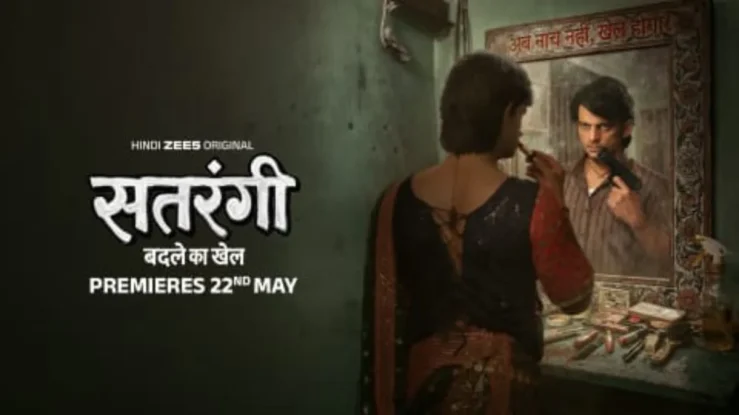
Why Launda Naach Is Central to the Story, Not Just Decorative
This is the element that makes Satrangi – Badle Ka Khel genuinely distinctive, and it’s worth understanding before you watch.
Launda Naach is a folk performance tradition from Bihar and eastern UP where male performers, often from marginalized communities, perform female roles for village entertainment. The form has a long history and a complicated social status — simultaneously celebrated for its entertainment value and looked down upon because of the gender-crossing involved and the lower-caste backgrounds of many performers.
For Bablu, his father’s identity as a Launda Naach performer is both his inheritance and his mark of vulnerability. The show appears to use this cultural specificity not as an exotic visual element but as the actual lens through which it examines questions of dignity, masculinity, social judgment, and what communities do to people who don’t fit their hierarchies neatly.
That’s a more sophisticated use of cultural context than most OTT series manage, and if the writing follows through on what the trailer suggests, it could make Satrangi – Badle Ka Khel genuinely meaningful rather than just entertaining.
The Cast and What They Bring
Anshuman Pushkar as Bablu Mahto is carrying the emotional weight of the entire story, and from the trailer footage, he appears to be doing it with the right kind of restraint. The character demands that Bablu’s anger stay mostly internal for long stretches — the circumstances require it — which means the performance has to work through suppressed emotion rather than release. Pushkar’s scenes in the trailer suggest he understands that requirement.
Kumud Mishra is the casting decision that immediately signals serious intent. Mishra is one of the most reliable actors in Hindi cinema and streaming — someone who makes everything he appears in more credible by his presence alone. His connection to the village’s power structure, suggested in the trailer, positions him as a character around whom the actual stakes will crystallize. Whether he’s playing a straightforward antagonist, a morally complicated figure, or something else entirely remains to be seen, but his involvement raises the show’s floor considerably.
Mahvash (RJ Mahvash) takes on one of her more serious dramatic roles here, playing what appears to be an important emotional presence in Bablu’s life. The specific nature of her character hasn’t been fully revealed, but the positioning in the promotional material suggests she’s more than a secondary figure. How she handles a role this tonally different from her public persona is one of the genuine curiosities of the show.
The supporting cast — Upen Chauhan, Kashish Duggal, Saddam Hussain, and others — appears to have been assembled with the same attention to grounded, real-feeling performance that the trailer projects overall. A revenge story set inside a village ecosystem works only if the ecosystem itself feels real, and that requires a full cast of people who inhabit rather than play their roles.
Also Read: Assi Now Streaming on ZEE5: 5 Reasons to Watch Taapsee Pannu’s Courtroom Drama
The Direction and Visual Approach
Director Jai Basantu Singh has made a specific and correct visual choice for this material: lean into the reality of the setting rather than making it cinematic in ways that create distance from the story.
The trailer is full of dusty landscapes, natural light, tense silences before confrontations, and the specific texture of UP village life rendered without romanticization. It doesn’t look like a show that was filmed on location to provide aesthetic contrast to urban stories — it looks like a show that needed this specific place to tell this specific story, and made sure the camera understood that.
The dialogue rhythms in the promotional clips also feel right — the specific register of language, the way power is spoken and heard differently across caste lines, the silences that carry as much meaning as the words. These are details that take genuine cultural knowledge and care to get right, and they’re present in the trailer in a way that builds confidence about the full series.
Why This Stands Out in the Current OTT Landscape
Most Hindi OTT thrillers right now are urban. The visual grammar is familiar — city streets, corporate corruption, police procedurals, political conspiracies — and while that genre has produced some excellent shows, it’s also produced a lot of interchangeable ones.
Satrangi – Badle Ka Khel is working in a completely different register. The threat environment is a village social hierarchy, not a criminal organization or corrupt institution. The protagonist’s resources are essentially nothing — he has grief, intelligence, and patience. The cultural specificity of Launda Naach gives the story an emotional and social dimension that most revenge thrillers don’t have access to.
For viewers who have been waiting for rural India to get the kind of serious, layered OTT treatment that urban India has been getting for years, this looks like it could be the show. Satrangi – Badle Ka Khel streams exclusively on ZEE5 from May 22, 2026, in Hindi with subtitle support for wider audiences.