


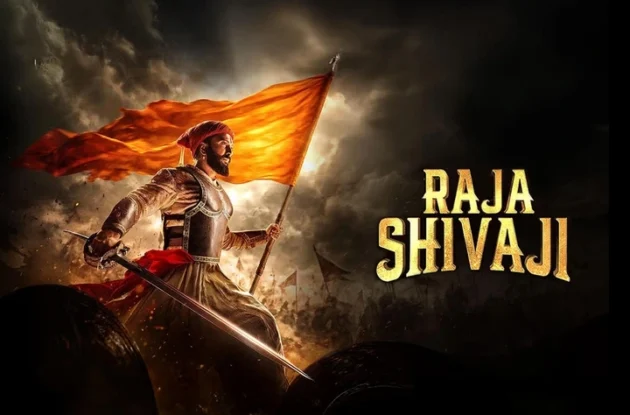
Raja Shivaji Movie Review: ⭐⭐⭐⭐☆ (4/5)
“Raja Shivaji” earns a strong 4 out of 5 for its grand scale, powerful performances, and emotionally charged storytelling. While the pacing feels uneven in parts and the narrative leans more toward dramatization than deep historical detail, the film’s visual spectacle and Riteish Deshmukh’s standout performance make it a compelling big-screen experience.
Some films arrive with the weight of expectation already on their shoulders, and Raja Shivaji is very much one of them. Released on Maharashtra Day, the film carries cultural significance before a single frame even plays.
Directed by and starring Riteish Deshmukh, it takes on the story of Chhatrapati Shivaji Maharaj with the ambition of reaching not just Marathi audiences but a pan-India crowd through its multi-language release. It’s a big swing. And for the most part, it connects.
Storyline: A Journey of Courage and Swarajya
The film doesn’t try to be a textbook. It follows Shivaji Maharaj’s rise — his battles, his vision of Swarajya, and the inner strength that made him the leader people rallied behind. The focus is less on historical precision and more on the man himself — what drove him, what he believed in, and what he was willing to fight for.
That’s a deliberate choice, and it shapes everything about the film. You’re watching a tribute as much as a historical drama. The patriotism runs deep, and the emotional beats are front and center. Viewers who go in expecting a documentary-style retelling may come away wanting more detail, but those looking for a cinematic experience built around valor and legacy will find plenty to connect with.
Riteish Deshmukh’s Transformational Performance
This is arguably the best work Riteish Deshmukh has done on screen. The physical transformation is evident, but what’s more impressive is how he inhabits the role — the stillness in quieter scenes, the force in the battle sequences, the way he makes even the dialogue feel earned rather than declamatory.
He clearly didn’t treat this as just another project. There’s a commitment here that shows in every scene, and the film genuinely rests on his shoulders. He holds it up well.
Supporting Cast and Star Power
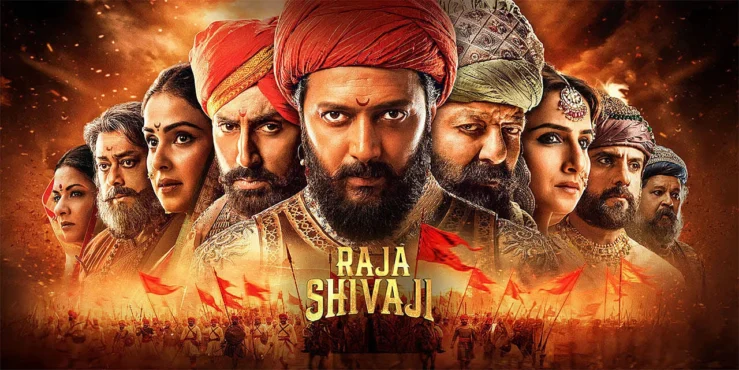
The supporting cast brings serious weight to the film. Sanjay Dutt plays Afzal Khan with the kind of menacing presence the role demands. At the same time, Abhishek Bachchan and Genelia D’Souza both deliver in their respective roles without overshadowing the central story.
There’s also a cameo that’s been generating real buzz among fans — the kind of appearance that gets people talking outside the theatre. It adds to the spectacle without feeling forced, which is harder to pull off than it sounds.
Grand Visual Scale and War Sequences
For Marathi cinema, the scale here is something genuinely new. The war sequences are ambitious — large-scale, detailed, and clearly the result of serious investment in both practical production and visual effects. The recreated battles feel cinematic in the truest sense, and there are moments where the screen feels genuinely alive with motion and stakes.
It’s the kind of filmmaking that reminds you why some stories deserve to be told in theatres rather than on a small screen.
Music and Background Score
The music fits the film well — rooted in patriotism, emotionally charged, and timed to land at the moments that matter. The background score does the heavier lifting, building tension during the action and pulling back during the more intimate emotional scenes.
It never overpowers the visuals but always adds to them, which is exactly what a film of this type needs.
Also Read: Raja Shivaji Release Date: Riteish Deshmukh’s Historical Film Arrives on Maharashtra Day
Direction and Narrative Approach
Directing yourself in a project this large is no small task, and Riteish Deshmukh handles it with more confidence than you might expect. The choices he makes are clearly those of someone who cares deeply about the subject — he’s not just telling the story, he’s paying homage to it.
Where the film is occasionally less effective is in its tendency toward dramatization over nuance. Big moments are given big treatment, sometimes at the expense of quieter complexity. For mass audiences, that works. For viewers who want layered historical storytelling, it can feel like the film skims the surface of what could have been explored more deeply.
Pacing and Story Flow
The first half is where the film feels most stretched. The emotional groundwork being laid is important, but some scenes linger longer than they need to. The momentum picks up considerably after the interval, with the action and dramatic sequences in the second half delivering the kind of energy the film’s premise promises.
The runtime is on the longer side, and a tighter edit in places would have sharpened the overall experience.
Also Read: Raja Shivaji Cast Salary and Movie Budget
Themes of Patriotism and Legacy
Raja Shivaji isn’t subtle about what it wants to say. Courage, sacrifice, leadership, the idea that one person’s vision can change the course of history — these themes run through every part of the film. It wears its intentions openly, and that sincerity is actually one of its more appealing qualities.
Whether you respond to it depends on what you’re looking for. As a tribute to a historical figure who continues to mean a great deal to millions of people, it works.
Audience Reactions and Buzz
Early audience response has been genuinely warm, particularly among those who came in wanting a grand historical drama and got exactly that. The performances, the scale, and the emotional moments have been the most praised aspects.
Some viewers have noted that a more grounded approach to the history might have given the film more staying power. But the word-of-mouth has been strong, and the enthusiasm — especially in Maharashtra — has been hard to miss.
Also Read: Kara Review: Dhanush Powers a Gritty Rural Heist Drama with Strong Emotions and Flaws
What Makes Raja Shivaji Stand Out
In a market full of historical dramas that play it safe, Raja Shivaji commits fully to its vision. It’s unabashedly grand, emotionally direct, and built around a genuine reverence for its subject. That combination is rarer than it should be, and it gives the film a distinct identity.
The Experience It Leaves Behind
Walking out of Raja Shivaji, you’re left with images — the battles, the standoffs, the moments of quiet resolve — that don’t fade immediately. The film works as an event, the kind you remember attending rather than just watching.
It may not be perfect, and it won’t satisfy every kind of viewer. But as a celebration of a legacy that continues to shape identity and pride for so many, it delivers something that feels genuinely meaningful.