


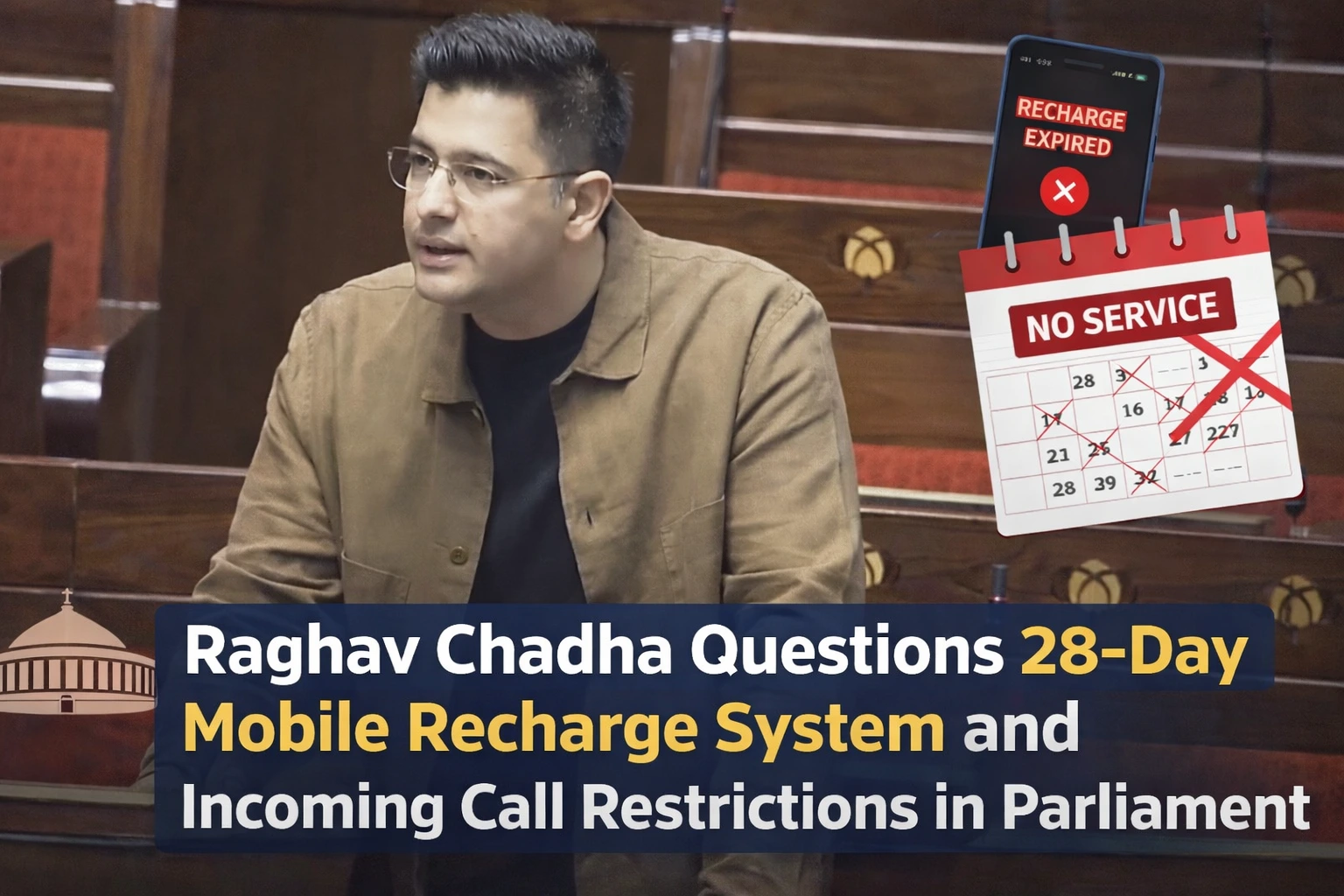
Aam Aadmi Party MP Raghav Chadha recently raised concerns about prepaid mobile recharge practices in India during a discussion in the Rajya Sabha. He questioned the fairness of the current telecom policies that affect millions of mobile users across the country.
Chadha highlighted that the issue directly impacts a massive portion of the population because most mobile users in India rely on prepaid connections. He urged the government to review existing telecom regulations to ensure consumer rights are protected.
Concern Over the 28-Day Recharge Cycle
One of the key points raised in Parliament was the telecom industry’s widely used 28-day recharge validity cycle. Chadha argued that marketing such plans as “monthly” is misleading because they do not align with calendar months.

He explained that since each plan lasts only 28 days, users end up recharging 13 times in a year instead of 12. According to him, this effectively forces consumers to pay for an additional recharge annually.
Impact on Millions of Prepaid Mobile Users
India has one of the largest mobile subscriber bases in the world, and a significant majority of users rely on prepaid plans. Chadha pointed out that nearly 90 percent of the country’s mobile subscribers use prepaid connections.
Because of this high dependency on prepaid services, the current recharge structure affects a large segment of the population. The MP emphasized that telecom policies should take into account the financial burden placed on ordinary citizens.
Blocking of Incoming Calls After Recharge Expiry
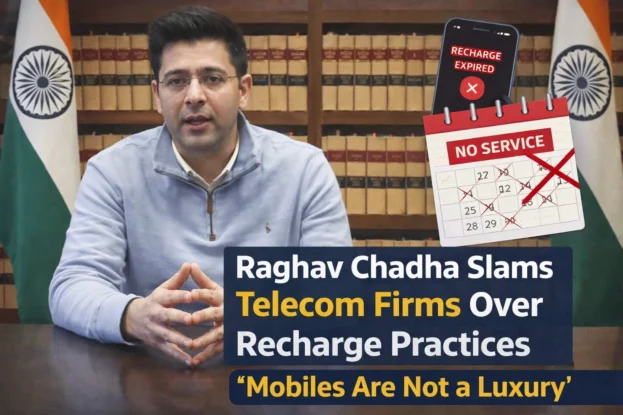
Another issue highlighted during the parliamentary discussion was the practice of blocking incoming calls and SMS once a prepaid plan expires. Chadha argued that while restricting outgoing calls without recharge may be understandable, blocking incoming calls is unfair.
He stated that a mobile phone today is not merely a luxury but an essential tool for communication and daily life. When incoming calls or messages are blocked, people can miss important calls, emergency communication, or OTP messages required for banking and government services.
Why Incoming Calls Are Important for Digital Services
Chadha also pointed out that mobile numbers have become a key part of digital identity in India. Many services, including financial transactions, verification processes, and government portals, rely on SMS-based authentication.
If incoming SMS services stop after recharge expiry, users may face difficulties accessing essential digital services. This, he said, can create unnecessary inconvenience for citizens who rely on mobile connectivity for everyday activities.
Read: India Repeated, Defeated & Created History in Ahmedabad with T20 World Cup 2026 Win
Demand for Fairer Telecom Policies
During the discussion, Chadha proposed several changes aimed at making telecom policies more consumer-friendly. One of his key suggestions was to allow incoming calls and SMS services to continue even if a prepaid recharge expires.
He also recommended that telecom companies offer plans that align with real calendar months instead of 28-day cycles. According to him, this would ensure greater transparency and fairness for mobile users.
Call for Protection of Consumer Rights
Chadha described mobile communication as a basic necessity for modern life. He argued that restricting communication services due to recharge expiry can affect people’s ability to stay connected in emergencies.
He urged policymakers to view telecom services from a consumer rights perspective. Ensuring continuous access to incoming calls and messages, he said, would help protect citizens from unnecessary inconvenience.
Do Read: Parineeti Chopra Reveals Adorable Personalised Wedding Gift for Raghav Chadha
Debate on Telecom Industry Practices
The issue has sparked wider debate about telecom billing practices and consumer protection. Critics argue that the current recharge system benefits telecom companies while placing additional financial pressure on users.
Supporters of reform believe that aligning recharge validity with calendar months and maintaining incoming services could create a more balanced system. The parliamentary discussion has brought attention to these concerns at a national level.
Why the Issue Matters for Indian Consumers
Mobile connectivity plays a central role in daily life across India. From banking to government schemes and personal communication, mobile phones are now deeply integrated into essential services.
By raising the issue in Parliament, Chadha has highlighted how telecom policies can affect everyday users. The discussion has opened a broader conversation about transparency, affordability, and consumer protection in India’s telecom sector.