


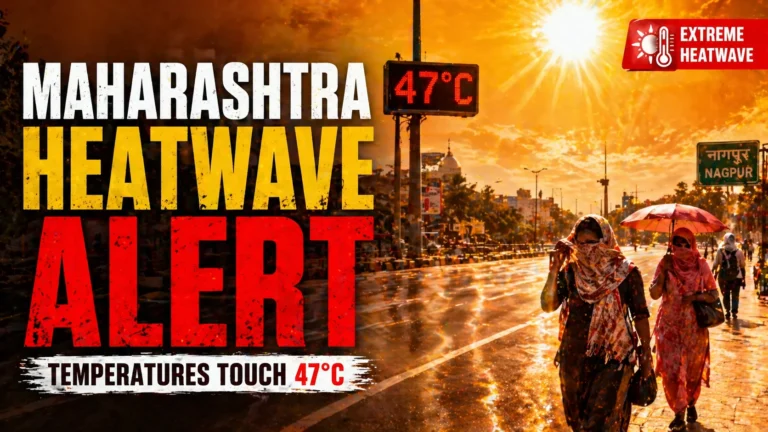
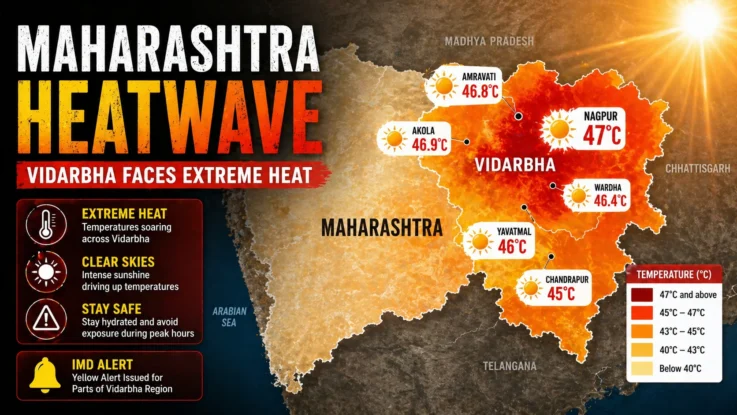
If you live in Vidarbha or know anyone who does, you already know how brutal the past few days have been. If you don’t, the numbers tell the story clearly enough: temperatures touching 47 degrees Celsius in Nagpur, Akola recording 46.9°C, Amravati at 46.8°C. These aren’t just warm days. This is the kind of heat that genuinely puts people at risk.
The India Meteorological Department has issued both yellow and orange alerts across several Vidarbha districts, and forecasters aren’t offering much comfort about when it ends. The heat is expected to stay in the 45 to 47 degree range across the region for the next several days.
The Temperature Breakdown Across the Region
Here’s where things currently stand:
| City | Temperature (°C) |
|---|---|
| Nagpur | Up to 47 |
| Akola | 46.9 |
| Amravati | 46.8 |
| Wardha | 46.4 |
| Yavatmal | 46 |
| Chandrapur | 45 |
Akola has the dubious distinction of being among the hottest cities in the entire country right now. These are not figures that allow for any normal outdoor activity without serious risk.
What the IMD Alerts Actually Mean
The IMD has issued alerts at two levels across different parts of Vidarbha.
An orange alert — covering the more severely affected districts — signals dangerous conditions and is typically accompanied by strong advisories about staying indoors, especially between noon and 4pm when the heat peaks. It also flags heightened health risks for outdoor workers, the elderly, children, and people with underlying health conditions.
A yellow alert in other areas still means conditions are significantly above normal and people need to be careful, even if the risk level is marginally lower than the orange zones.
Neither alert should be dismissed. At these temperatures, even brief unprotected exposure during peak hours can cause heat exhaustion or heatstroke.
Why Vidarbha Gets Hit This Hard
This isn’t entirely bad luck. Vidarbha’s geography and climate make it one of the most heat-vulnerable regions in India. It sits in the interior of the country, far from any coastal moderating influence, in an area with dry conditions and relatively sparse vegetation in many parts.
The broader pattern this year — dry weather, delayed pre-monsoon activity, lack of cloud cover — has pushed an already hot region to extremes. Urban areas like Nagpur face additional pressure from the heat island effect, where concrete infrastructure, reduced tree cover, and dense human activity trap heat and push local temperatures even higher than surrounding areas.
The climate context matters here too. These extreme heat events are becoming more frequent and more intense across India. What might have been an exceptional year a decade ago is looking increasingly like a pattern.
What It’s Actually Doing to Daily Life
When it’s 47 degrees outside, normal life largely stops. Markets empty out by mid-morning. Outdoor workers — construction labourers, farm workers, delivery riders — face impossible choices between income and safety. Public spaces that aren’t air-conditioned become genuinely dangerous to be in.
Hospitals and health centres in affected districts are seeing increased cases of dehydration, heat cramps, and heat exhaustion. The groups at highest risk are those who can’t easily regulate their exposure — young children, the elderly, people who work outdoors, and anyone without access to shade and cool water.
Practical Steps — What Health Authorities Are Saying
The advice from authorities is consistent and worth repeating because it genuinely helps:
Stay indoors between roughly 11am and 4pm if at all possible. This is when temperatures peak and the risk of heat-related illness is highest.
Drink water regularly, even if you don’t feel particularly thirsty. Thirst is a late signal of dehydration — by the time you feel it, you’re already behind. Avoid alcohol and excessive caffeine, both of which dehydrate.
Wear light-coloured, loose-fitting clothing if you do go out. Light colours reflect heat rather than absorbing it, and loose fabric allows air circulation.
Check on elderly neighbours, family members who live alone, and anyone you know who may struggle in these conditions. Heatwaves are public health events, not just weather events, and they disproportionately affect people who are already vulnerable.
If you or someone near you shows signs of heatstroke — confusion, stopping sweating despite the heat, rapid pulse, loss of consciousness — this is a medical emergency. Get them to a cool place immediately and call for help.
Also Read: India Eyes E100 Fuel: What Nitin Gadkari’s 100% Ethanol Blending Plan Means for You
When Does It End?
The honest answer is: not immediately. Forecasters are indicating that conditions will remain severe through the next few days, with meaningful relief unlikely until there’s a shift in weather patterns or the arrival of pre-monsoon activity.
Some localised cloud cover may develop, and isolated showers are possible in parts of the state, but these are unlikely to bring broad or sustained temperature drops in the short term. The region needs to get through the peak of this before conditions normalise.
The Bigger Picture: A Growing Climate Concern
Maharashtra’s heatwave season has been intensifying in recent years, and Vidarbha in particular has been consistently on the front line of India’s most extreme heat events. The infrastructure — both physical and public health — is under increasing pressure from weather patterns that previous generations didn’t have to plan for.
Better urban planning, more green cover, improved early warning systems, and stronger community support networks for vulnerable populations are all parts of the longer-term response that needs to develop alongside the immediate crisis management.
For now, though, the priority is simple: stay cool, stay hydrated, and check on the people around you. The heat is serious, and taking it seriously is the right response.