


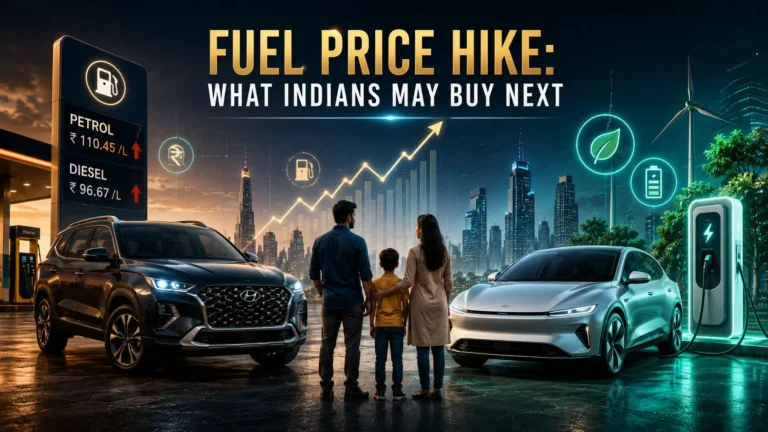
Petrol prices in India have never really gone down for long. Every time there’s a brief pause, the next hike is just around the corner. And in 2026, with fuel costs touching new highs in cities like Mumbai, Delhi, Bengaluru, and Chennai, a lot of Indian vehicle buyers are quietly rethinking their choices.
It’s not a dramatic overnight change. But it’s real, and it’s picking up pace.
Fuel Prices in India: A Rising Concern
For the average Indian family, fuel isn’t a small line item in the monthly budget. It’s one of the bigger ones. Petrol prices hovering well above ₹100 per litre in most major cities means that someone commuting daily is spending a meaningful chunk of their income just getting to work and back.
That kind of pressure changes how people think — not just about how they drive, but about what they buy. When filling up the tank feels like a small crisis every week, you start asking harder questions before your next vehicle purchase.
The Direct Link Between Fuel Costs and Vehicle Choices
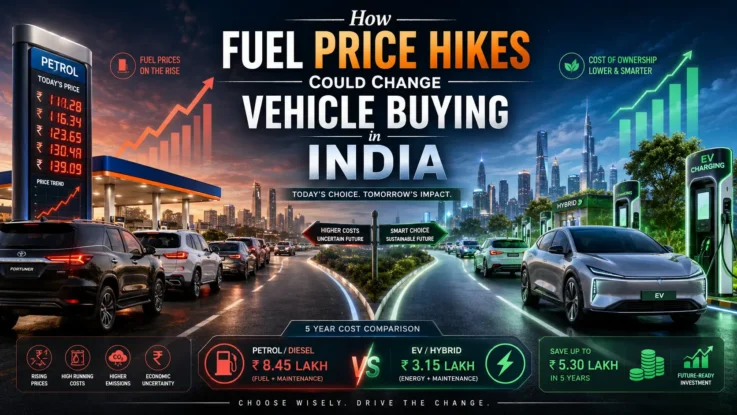
Here’s what’s shifting in the buyer mindset: it’s no longer just about the showroom price. People are now calculating the total cost of owning a vehicle — what it costs to run month after month, year after year.
A big SUV with a thirsty engine might look attractive in the showroom. But when you work out what you’ll spend on petrol over three years, it stops looking like such a great deal. Buyers who would have cheerfully gone for a diesel SUV a few years ago are now pausing, doing the math, and looking at their options differently.
The anxiety around unpredictable fuel prices is real. Nobody knows what petrol will cost six months from now, and that uncertainty makes fuel-hungry vehicles feel like a financial risk.
Electric Vehicles: The New Fuel-Saver Revolution
This is where a lot of that shifting attention is landing.
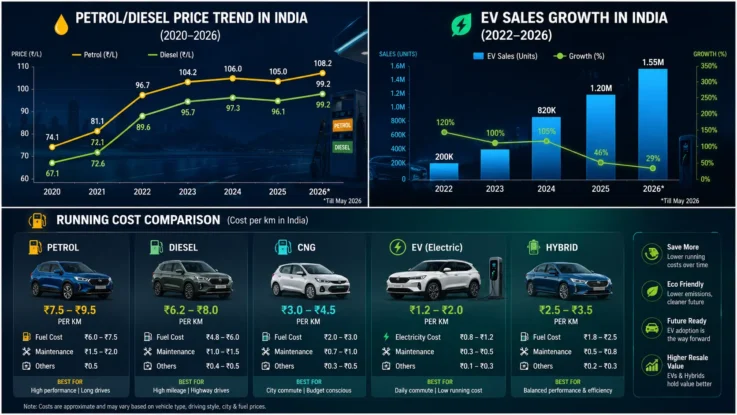
EVs have a straightforward appeal right now — you charge instead of refuel, and electricity costs a fraction of what petrol does. Add lower maintenance costs, fewer moving parts, and government incentives still available under various state and central policies, and the numbers start making sense for more buyers than ever before.
Models like the Tata Nexon EV, Tata Tiago EV, MG Comet EV, and Ola Electric S1 Air have made EVs accessible at different price points. First-time EV buyers are increasingly coming from metros and larger cities, and many families are considering an EV as either a second car or a replacement for their primary vehicle.
The honest challenge is charging infrastructure. In tier-2 and tier-3 cities, range anxiety is still a real concern. But that’s improving, and the EV market is expected to keep growing sharply as more charging points come up and battery costs continue to fall.
Hybrids: The Smart Compromise for Fuel-Conscious Buyers
Not everyone is ready to go fully electric. For those people, hybrids are becoming an increasingly sensible middle ground.
Cars like the Maruti Suzuki Grand Vitara Hybrid and Toyota Hyryder combine a petrol engine with an electric motor, delivering noticeably better mileage without requiring you to hunt for a charging station. You get fuel savings without the range anxiety, which is exactly what a lot of buyers in India need right now.
Hybrids are particularly popular with families who drive long distances regularly — highway trips, weekend outings, inter-city travel. The fuel savings add up quickly on those longer runs.
Do Check Out: Best Hybrid Scooters in India
Back to Basics: CNG and Fuel-Efficient Petrol Cars
For buyers who aren’t ready to move to EVs or hybrids just yet, the answer has been simpler — go smaller, go lighter, or go CNG.
Factory-fitted CNG variants from Maruti and Hyundai have seen strong demand. Running costs on CNG can be up to 50% lower than petrol, which is a number that’s very hard to ignore when fuel prices are biting. Small hatchbacks like the Maruti Alto, Hyundai Exter, and Tata Tiago remain strong sellers precisely because they sip fuel rather than gulp it.
The buyer logic here is straightforward — if an EV isn’t the right call yet, at least buy something that won’t drain your wallet at the pump every week.
How Automakers Are Adapting
Car companies aren’t blind to this. Tata, Maruti, Hyundai, and MG are all expanding their EV and hybrid lineups, investing in new factories and battery plants, and pushing marketing messages around low running costs rather than just features and style.
The product strategy across the industry has clearly shifted. The question is no longer just “how does this car look and feel?” It’s “how much will this car cost me to run every month?”
Also Read: How Do Hybrid Cars Work? Everything Explained in Simple Terms
The Road Ahead
The honest answer is that this isn’t a temporary blip. Fuel prices in India are unlikely to come down significantly or stay stable for long. The pressure that’s pushing buyers toward EVs, hybrids, and CNG vehicles today is the same pressure that will continue building over the next several years.
EVs are expected to go mainstream well before 2030. Petrol and diesel car sales will likely decline gradually, not suddenly. CNG and hybrids will carry a lot of buyers through the transition period.
If you’re planning to buy a vehicle in 2026, the single most important thing you can do before deciding is calculate the total cost of ownership — not just the sticker price. Think about what you’ll spend on fuel or charging over three to five years. That number might surprise you, and it might change your mind.
Fuel prices changed how Indians cook. They changed how industries operate. Now, quietly but steadily, they’re changing what Indians drive.