


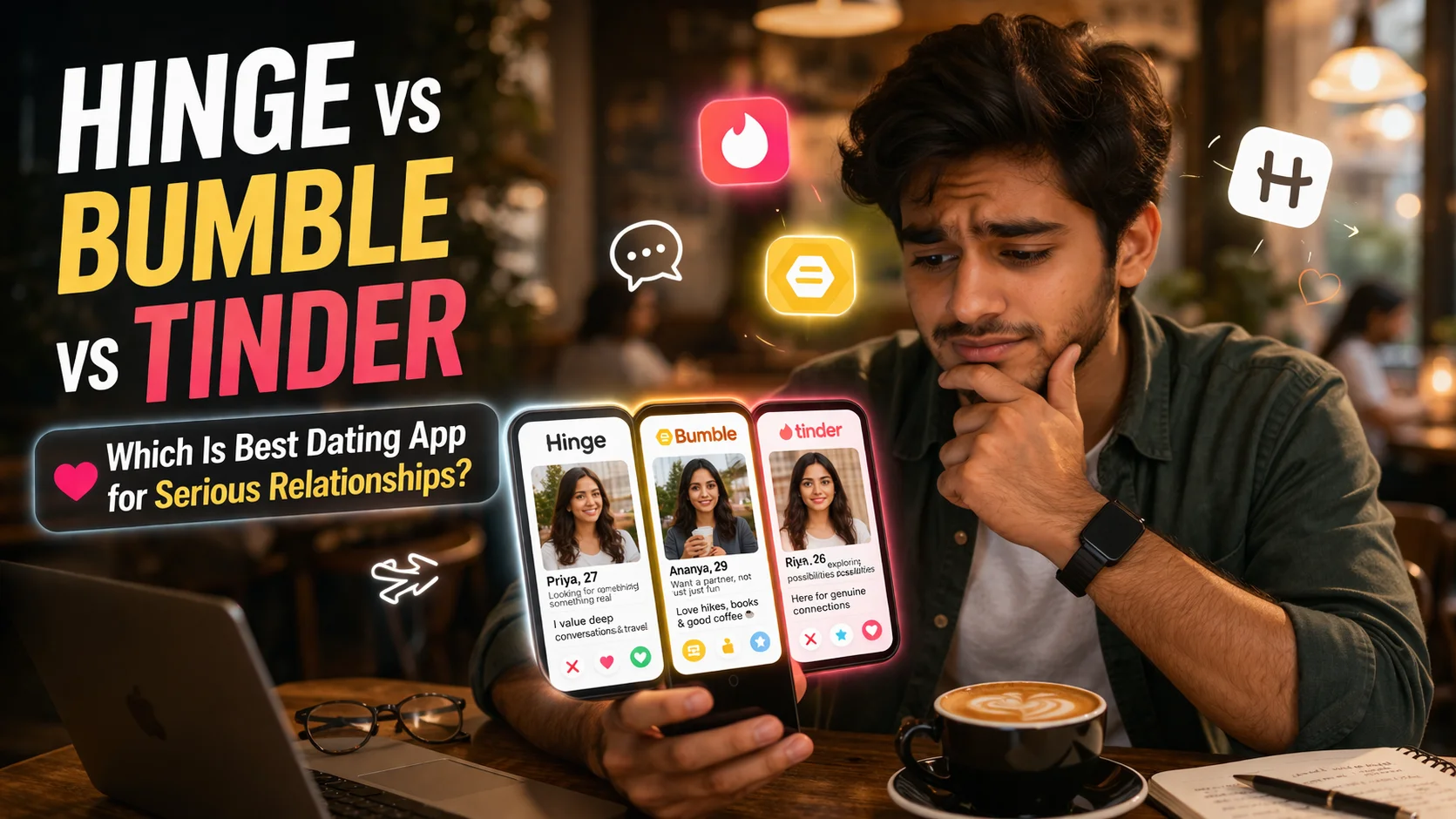
Dating apps have completely changed how people meet, connect, and fall in love. But with so many options available, one question still confuses most people—which app actually works best for a serious relationship?
You’ve probably heard mixed opinions. Some people swear by Hinge, others prefer Bumble, and many still use Tinder despite its reputation.
Let’s be honest. You didn’t download a dating app to collect matches you never speak to. You’re not here for the “hey” that leads nowhere, or the ghost that disappears mid-conversation like it never happened. You want something real. Something that could actually go somewhere.

The truth is, each app works differently, attracts different types of users, and suits different dating goals. Choosing the right one depends on what you want and how you use it.
In this post, we break down Hinge, Bumble, and Tinder simply and honestly so you can decide which one is right for you. So which of these three apps — Tinder, Bumble, or Hinge — is actually worth your time if a serious relationship is what you’re after?
Table of Contents
Meet the Contenders
Before we get into it, here’s the 30-second version of each app:
Tinder — The original. The biggest. Basically invented the swipe-to-match format and still dominates in sheer numbers across India.
Bumble — The one where women message first. That single rule changes the entire experience — for everyone on the app.
Hinge — The underdog with a bold claim: “Designed to be deleted.” Built around prompts and personality, not just profile photos.
Now let’s go deeper.
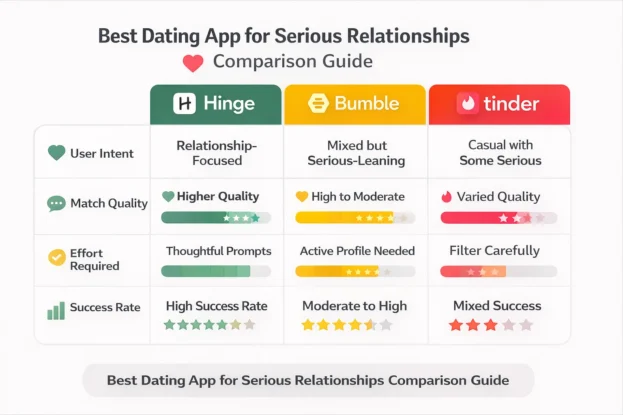
Quick Comparison of Hinge vs Bumble vs Tinder
Here’s a simple comparison to help you understand the key differences:
| Aspect | Hinge | Bumble | Tinder |
|---|---|---|---|
| Main Reputation | Relationship-focused | Balanced (serious + casual) | Casual + high volume |
| User Intent | Mostly serious relationships | Many want relationships | Mixed intentions |
| Matching Style | Prompt-based, curated matches | Swipe-based with women-first messaging | Fast swiping, large pool |
| Vibe | Thoughtful and intentional | Modern and respectful | Fast, casual, and crowded |
| Best For | Long-term dating | Balanced dating experience | More matches and options |
This table gives a quick overview, but the real difference lies in how people behave on each app.
Hinge: The Best Dating App for Serious Relationships
Hinge has built its entire identity around helping people find meaningful relationships. Its tagline, “designed to be deleted,” reflects its focus on long-term connections rather than endless swiping.
A large percentage of Hinge users join the app specifically looking for something serious. Many people even report deleting the app because they found a partner.
The app uses detailed prompts instead of just photos, which helps users show personality and start better conversations. This makes matches feel more genuine and less superficial.
Why Hinge Works So Well
Hinge encourages thoughtful interaction. Instead of mindless swiping, you engage with specific parts of someone’s profile, like a prompt or photo.
This naturally leads to better conversations and stronger connections. People are more likely to reply when your message feels personal.
Another advantage is quality over quantity. You may get fewer matches compared to Tinder, but they are often more compatible.
When Hinge Works Best
Hinge is ideal if you’re serious about dating and willing to put effort into your profile. Writing good prompts and engaging properly makes a big difference.
It works especially well in bigger cities where there are more active users. In smaller towns, the pool may feel limited.
If you prefer meaningful conversations over endless swiping, Hinge is usually the best choice.
Bumble: A Balanced Option with Serious Potential
Bumble offers a unique approach by giving women control over starting conversations in heterosexual matches. This simple feature changes the tone of interactions and often makes them more respectful.
A large portion of Bumble users say they are looking for relationships, not just casual dating. This puts Bumble closer to Hinge than Tinder in terms of seriousness.
At the same time, Bumble still has a swipe-based system, which keeps it flexible and accessible.
What Makes Bumble Different
The biggest difference is the “women-first” approach. Women must initiate the conversation, which filters out low-effort interactions.
New features like “Opening Moves” make it easier to start conversations without pressure. This improves engagement and reduces awkward starts.
The app also attracts career-focused and goal-oriented users, especially in urban areas.
When Bumble Works Best
Bumble works well if you want a mix of serious and casual dating without the chaos of Tinder.
For women, it offers more control and safety, which can lead to better-quality conversations.
For men, success depends heavily on having a strong profile. Since you can’t message first, your photos and bio need to stand out.
Overall, Bumble is a great second option if Hinge doesn’t fully meet your needs.
Tinder: Huge Reach but Mixed Intentions
Tinder is still the most popular dating app globally, especially among younger users. Its biggest advantage is volume—you’ll never run out of profiles to swipe on.
However, Tinder has a mixed reputation. Many people associate it with casual dating or hookups, and that perception still exists today.
That said, it’s not entirely true. A significant number of users are actually looking for long-term relationships.
The Reality of Tinder Dating
Tinder is a mix of everything. Some people are serious, some are just browsing, and others are not even looking to date at all.
This makes it harder to find meaningful connections because you have to filter through a lot of low-intent users.
At the same time, the large user base increases your chances of finding someone compatible if you’re patient.
When Tinder Can Work for Serious Relationships
Tinder can still work if you use it strategically. Being clear about your intentions in your bio helps attract like-minded people.
It’s also useful in cities or regions where Hinge and Bumble are less popular. In such cases, Tinder may be your only strong option.
If you’re comfortable putting in extra effort to filter matches, Tinder can still lead to real relationships.
Side-by-Side: The Honest Scorecard
| Factor | Tinder | Bumble | Hinge |
|---|---|---|---|
| Best for | Volume & reach | Safer conversations | Serious relationships |
| User base in India | Largest | Growing | Niche but quality |
| Profile depth | Minimal | Moderate | High — prompt-based |
| Conversation quality | Hit or miss | Generally better | Best |
| Women’s safety features | Basic | Women message first | Good |
| Relationship intent | Mixed | Moderate-high | Highest |
| Ghosting rate | High | Moderate | Lower |
| Free features | Generous | Good | Functional |
| Availability (tier-2 cities) | Strong | Limited | Thin |
Also Read: How to Keep a Tinder Conversation Going: 7 Proven Tricks That Actually Work
So, Which One Should You Actually Use?
Here’s the honest answer — no filler, no hedging.
Use Tinder if you’re in a smaller city where user density matters, or if you’re new to dating apps and want to get comfortable with the format. Be very clear in your bio about what you’re looking for. Good profiles still attract good matches, even in the chaos.
Use Bumble if you’re a woman who wants to control who can message you, or a man who appreciates the dynamic of a more curated, intentional pool. The smaller user base is the trade-off, but the conversations tend to be worth it.
Use Hinge if you are actively looking for a relationship and you’re tired of interactions that go nowhere. This is the app built for you. The prompt format, the conversation-first matching, the explicit “relationship” intent built into its design — all of it points in one direction.
And here’s a thing most people don’t say: there’s no rule against using all three simultaneously. Many successful daters do. Just make sure your profile on each reflects your honest intentions — because that alone will do more for your results than any algorithm.
Making It Actually Work in India
Regardless of which app you choose, these five things will move the needle more than any premium subscription:
Be specific in your bio. “I like music and food” is a profile killer. “Currently ranking every biryani in Hyderabad and absolutely open to debate” is a conversation starter. Specificity signals personality.
Show your city. India is enormous and culturally diverse. Mentioning your city naturally — in your prompts, your bio, your photos — helps people understand your context and filters for compatibility in ways that matter.
Move off the app quickly. Don’t live in the chat for three weeks. If there’s good energy, suggest a coffee, a walk, or a quick phone call. The goal is a real person in real life, not a pen pal.
Say what you actually want. If you’re looking for something serious, put it in your profile. You will not scare away the right people. You will only filter out the wrong ones, which is exactly the point.
Don’t judge the app — judge the conversation. Great matches exist on all three platforms. Bad ones too. The app is just the door. You’re the one who has to walk through it.
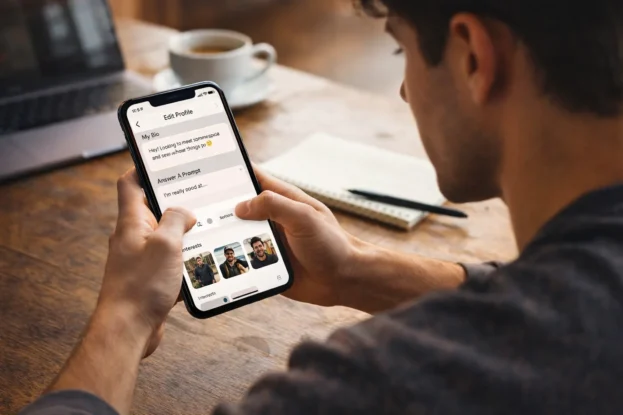
Choosing the Right App Based on Your Situation
Not everyone has the same dating experience. The best app for you depends on your lifestyle, location, and preferences.
If You Want a Serious Relationship in Your 20s or 30s
Hinge should be your primary app. It is built for people who want commitment and meaningful connections.
You can also use Bumble as a secondary option to increase your chances.
If You Prefer Control and Safer Conversations
Bumble is a great starting point, especially for women who want to avoid unwanted or low-effort messages.
Adding Hinge alongside Bumble gives you access to more serious matches.
If You Live in a Smaller City
In smaller towns, Tinder may have the largest user base. In this case, it becomes your main option.
You can still find serious matches by being selective and clear about your intentions.
Also Read: 10 Best Dating Apps for Over 30 That Actually Work
What Actually Matters More Than the App
While choosing the right app is important, it’s not the biggest factor in your dating success.
Your profile, photos, prompts, and messaging style play a much bigger role. Even on the best app, a weak profile won’t attract the right matches.
Good photos, a clear bio, and engaging conversations can completely change your experience.
Consistency also matters. Showing up regularly and putting effort into conversations increases your chances of finding someone compatible.
Frequently Asked Questions
Which dating app has the most users in India?
Tinder, by a wide margin. It was the first major dating app to gain real traction in India and still dominates in terms of user volume, especially in metros and tier-1 cities.
Is Hinge available in smaller Indian cities?
Hinge is mostly popular in Mumbai, Bengaluru, Delhi, and Hyderabad. In smaller cities, the pool is thin enough that you might cycle through everyone in a few days. If you’re in a smaller city, start with Tinder or Bumble — but keep Hinge for when you travel.
Is Bumble safer for women in India compared to Tinder?
For most women in India, yes — significantly. The women-message-first rule eliminates unsolicited contact in heterosexual matches. That’s not a small thing in the Indian dating landscape. It’s a genuine structural difference that changes the day-to-day experience of using the app.
Can you find a serious relationship on Tinder in India?
Yes, absolutely. But the platform isn’t optimized for it. You’ll need to be explicit about your intentions in your profile, and you’ll need to filter through more casual interests before you find someone aligned with you. It’s possible — it just takes more work.
Which app has the best quality profiles in India?
Hinge, by design. The prompt-based format encourages people to reveal their actual personality, interests, and humor. The result is profiles that feel like real humans wrote them — which, in the dating app world, is rarer than it should be.
Should I pay for a premium subscription on these apps?
If you’re genuinely serious about finding a relationship, a short-term paid plan on Hinge or Bumble is worth testing. You get better visibility, more filters, and unlimited likes. On Tinder, returns are more variable due to the platform’s intent-mismatch problem. Always try the free version for at least a month first before spending anything.
Also Read: 100 Tinder Bio Ideas That Actually Get Matches
The Bottom Line: Hinge vs Bumble vs Tinder
No dating app is perfect. Each platform has its strengths and weaknesses, and your results will depend on how you use it.
If you’re serious about finding a relationship, start with Hinge, use Bumble as support, and treat Tinder as an additional option if needed.
That said, if you’re reading this because you genuinely want a serious relationship, Hinge is built for you. Bumble is close behind, especially for women. Tinder can work, but it asks more of you in return.
At the end of the day, real connections don’t come from the app itself—they come from how genuinely you show up and interact with others.
Dating apps are tools. And like any tool, what you get out of them depends almost entirely on how intentionally you use them. Now close this article and go send that first message.