


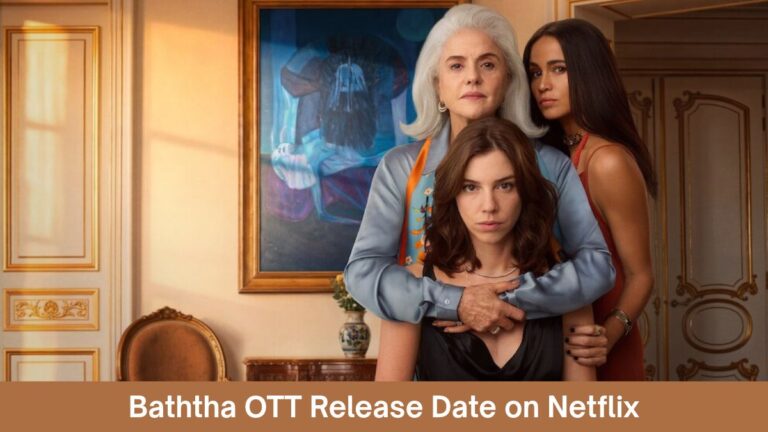
The Gift of Deceit Review: ★½☆☆☆ (1.5/5)
The Gift of Deceit has a strong core idea and two excellent lead actors. But too many twists, rushed choices, and loud drama keep it from becoming the sharp thriller it wants to be.
Rating: ★½☆☆☆ (1.5/5)
Platform: Netflix
Genre: Psychological Drama
Directors: Gabriela Amaral Almeida, Mauro Mendonça Filho, Daniela Carvalho
Cast: Marieta Severo, Alice Wegmann, Nanda Costta
Episodes: 10, about 40 to 50 minutes each
Language: Portuguese
A mother who thinks she is protecting her child while slowly taking away her freedom is a powerful starting point for any drama. The Gift of Deceit, known in Brazil as Dom de Iludir, begins with that idea and then tries to wrap it in crime, love, and mystery. Sadly, the extra layers end up burying what made it interesting in the first place.
The story centres on Maíra, played by Alice Wegmann, a young woman stuck in a suffocating relationship with her mother, Lúcia, played by Marieta Severo. Lúcia is wealthy and collects art, and she believes she is taking care of her daughter. In reality, her control leaves Maíra feeling trapped, not safe.
Then Lúcia falls ill with a mysterious condition, and a spiritual healer named Irina, played by Nanda Costta, enters their lives. She appears to be a helper, but she has her own hidden reasons. As Maíra grows closer to her, it becomes harder to tell where affection ends, and manipulation begins.
The best part of the series is the bond between Lúcia and Maíra. Lúcia is bossy and annoying, yet there is a deep fear under her need for control, which makes her feel real. The show asks if love can turn into a trap, and Lúcia is a living example of that question.
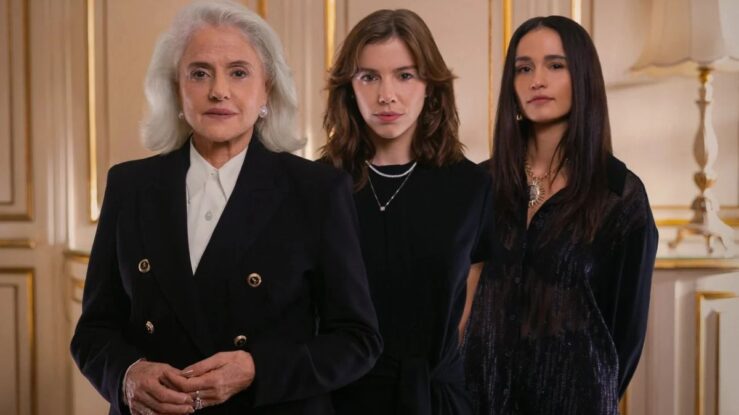
Marieta Severo plays this difficult woman well, showing her as a person who feels desperate under her hard surface. Alice Wegmann brings believable stress and frustration to Maíra, who is caught between her own life and guilt about hurting her mother. Their scenes together are some of the best in the series, and their connection feels stronger than the plot around them.
Irina changes the direction of the story. Nanda Costta plays her with a mix of charm and threat, so it is easy to see why Maíra is drawn to her. But the attraction rests on lies, and Irina comes from a family that has fooled people for money for years. Her father, Bóris, is an especially unsettling presence.
This is where the writing slips. A relationship that starts with a lie could lead to an interesting question about whether real love can grow from deceit. But the show never looks at the emotional impact of its big moves. Instead, it adds yet another shocking event, and Irina never gets enough room to grow.
The crime side of the story also struggles. The art world, the schemes to fool rich people, and the greedy family make for a good mystery at first. But the series seems more interested in raising the stakes than in finishing what it starts.
Characters make foolish choices, new secrets appear, and things keep getting bigger, yet the tension never keeps up. At times, the aftermath of the characters’ mistakes is more interesting than the twists themselves.
The writers also rarely let a moment rest. There is always another argument or another surprise, so the emotions never get space to settle.
To be fair, there is some entertainment here. The actors have good chemistry, and the constant conflict can be fun in a telenovela way. But a story does not become more gripping just because everyone keeps making things more complicated.
The Gift of Deceit is a letdown. It has a rich theme about control, protection, and love that can’t be trusted, plus strong acting from its leads. But too many predictable twists and thin characters stop it from becoming a gripping thriller. If you enjoy loud, dramatic stories with no apologies, you may have fun. Otherwise, it may feel exhausting.
If you want something lighter, our Drive: The Pretenders review looks at a fake engagement and a racing star in a love story that never quite leaves the starting line. And for something real and honest, read our The One About Matthew Perry review.