


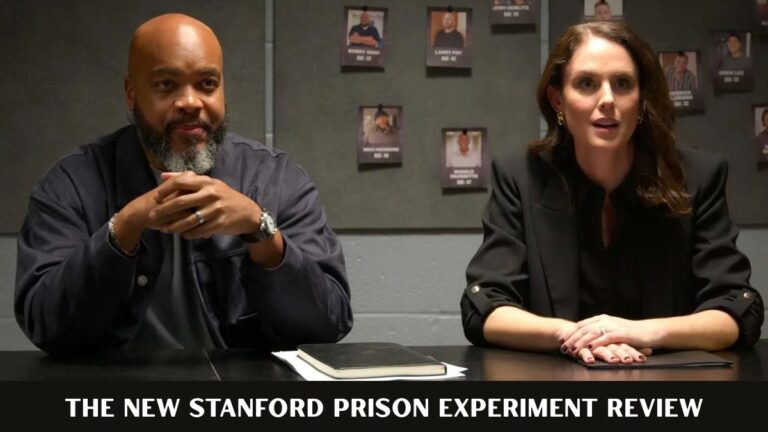
The New Stanford Prison Experiment Review: ★★½☆☆ (2.5/5)
The New Stanford Prison Experiment is easy to watch and has a few good moments, including a sweet twist near the end. But it never feels like real science, and it plays more like Big Brother with handcuffs.
Rating: ★★½☆☆ (2.5/5)
Platform: Netflix
Genre: Reality Series
Episodes: 6
Participants: 30
Some experiments are so famous that people keep trying to repeat them. In 1971, a professor named Philip Zimbardo placed 24 volunteers in the basement of Stanford University and randomly made them guards or prisoners.
The study was meant to last two weeks, but it was stopped after six days because the guards became so cruel to the prisoners. The fallout changed how universities run research. Now Netflix has turned that idea into a six-part reality show, and the reaction has been strongly mixed.
The setup is simple. Thirty people are locked inside a real, working county jail in Georgia. Eight of them are guards, three of whom are women, and 22 are male prisoners. The guards wear sleek grey uniforms, make the rules, and go to a hotel after their shifts.
The prisoners wear bright yellow jumpsuits, sleep on scratchy bunks, and eat tasteless food under harsh lights. Everyone can leave at any time by saying the safe word, pineapple, and several people do.
The biggest problem, according to one critic, is that this never feels like a real study. Everyone knows they are on TV, and they keep talking about the experiment. The show also uses classic reality TV tricks to cause trouble, like splitting the guards into day and night teams, asking them to pick a head guard, and switching some roles halfway through.
There is no game to win and no real prize, so little pushes anyone to stay. The same critic also points out that people who sign up for reality TV are not ordinary, which weakens the whole idea.
Even the three experts watching screens in a gallery, a psychologist, a former corrections officer, and a journalist, seem to be studying things that are not truly happening. The series could also be shorter, since the recaps feel patronising and could have been cut.
Another critic is kinder. This reviewer sees a straightforward reality show, a bit like Big Brother with handcuffs, that is easy to enjoy even if it is not science. Early on, the show says it wants to answer whether power corrupts, but the critic notes that we have been testing that in the real world for thousands of years. Still, it can be gripping.
Holding the participants in a real jail adds a sense of truth, and the opening scene, where new inmates hear screams from another wing, is a nice touch. One participant who has been in jail tells another, “This is how prison always is, bro.” The producers also keep things lively by changing roles and shaking up the groups, which may not be scientific but makes for fun television.
Not everything is surprising. Many people say they want freedom but pick safety and order when pushed. Prisoners often keep each other in line as much as the guards do, and the guards who seem kindest can turn the harshest once they are crossed.
Cliques form fast, with some inmates wanting to push the rules and others choosing to comply and survive. The groups also seem to split largely along racial lines, and one prisoner, Anthony Terry, explains why. As a Black man in America, he says, he has learned that denying and disobeying can end badly, so he does not want trouble with the guards.
The most interesting part, as one critic notes, is how reality contestants behave when they know exactly what they are. They are not people trapped by an institution. They are people who know they are helping to write a piece of entertainment and who clash over how the story should go.
Then comes a twist. As the experiment ends and chaos seems close, something more heartwarming happens, which leaves a small spark of hope for humanity.
So, is it worth six hours? Maybe not as a study, but as a TV watch, it has its moments.
If you want something with more feeling afterward, our review of Cyberpunk: Edgerunners 2 covers a darker, more tender anime. And if you want the full background on the show, our guide to The New Stanford Prison Experiment on Netflix explains how 30 strangers ended up in a real prison.
The New Stanford Prison Experiment is now streaming on Netflix.